
https://www.irishtimes.com/news/health/does-it-work-can-artemisia-help-to-cure-malaria-1.566666
Does it work? Can artemisia help to cure malaria?
BACKGROUND:Discussions about coalitions and collaborations sometimes ring a little hollow. But there are success stories that remind us that powerful organisations sometimes combine forces to help people in meaningful ways. The story of an inconspicuous herb that grows almost anywhere is a reminder of the healing potential within some plants.
Malaria continues to be a major health problem. About 250 million people are infected each year, resulting in almost one million deaths. Control of malaria requires a multifaceted approach that includes bed netting, land drainage and insecticides. Effective drugs have a role also, but are limited by resistance among parasites. The World Health Organisation (WHO) has recently changed its first-line treatment to drugs based on artemisinin, a compound found in the herb Artemisia annua.
As with other major advances with infectious diseases, this discovery was triggered by war. Malaria killed many soldiers during the Vietnam War, leading North Vietnamese leaders to appeal to China for help. New drug combinations were found, and a long-term search for new treatments initiated. This included an examination of herbs used in traditional Chinese medicine. The most promising one was a tea made by boiling Artemisia annua. This plant is known in the West as sweet or annual wormwood, or sweet Annie.
Chinese researchers found that the teas varied widely in their potency. In 1972, an extract made with cold ether was found to be highly effective against malaria in the lab and in patients. The active ingredient was isolated and called qinghaosu or artemisinin. The chemical structure was determined and scientists modified it to produce other effective antimalarial drugs, including artemether and artesunate.
EVIDENCE FROM STUDIES
The first clinical trial of artemisinin was conducted in 1979 with more than 2,000 malaria patients in China. It reported that all patients were cured, a remarkable finding. Dozens of other studies have since been conducted. Cochrane systematic reviews have found that various artemisinin-derived drugs are more effective and safer than other drugs used for various types of malaria.
While artemisinin rapidly removes malaria symptoms, they often reappear within a few weeks. Various combinations of artemisinin-related drugs were tested. In 1994, the first collaborative project between Chinese researchers and western scientists (from the company today called Novartis) was initiated. This has led to an effective combination product that works in six doses.
The success of combining related drugs has led to renewed interest in using the plant material itself. This could allow people to grow their own treatments rather than purchasing pharmaceuticals. Clinical trials have found that Artemisia annua remedies quickly reduce malaria symptoms.
However, the blood levels of artemisinin achieved were much lower than with pharmaceutical preparations and malaria symptoms often reappeared within a few weeks. For these reasons, these herbal remedies are not recommended.
PROBLEMATIC ASPECTS
The herb Artemisia annua is well tolerated, with few adverse effects. Trials of the semi-synthetic derivatives have also found only mild adverse effects. At suitable dosage, some of these products have been found safe to use in children and late pregnancy.
RECOMMENDATIONS
Pharmaceutical products made from artemisinin and its related compounds have quickly become important weapons in the fight against malaria. Specific combination products are now part of the WHO Essential Drugs List. This development has required international co-operation between experts in herbal remedies and pharmaceutical developers.
Although Artemisia annua is available in a growing number of herbal remedies and teas, the WHO discourages their use. The amount of active ingredient in these products is insufficient to provide long-term benefits. Using insufficient doses may even facilitate the development of resistance in malaria parasites.
In this particular case, combining traditional knowledge of herbal remedies with modern pharmaceutical research has led to better treatments being developed for malaria.
Dónal OMathúna has a PhD in pharmacy, researching herbal remedies, and an MA in bioethics, and is a senior lecturer in the School of Nursing, Dublin City University
https://www.modernhealthcare.com/article/20151005/BLOG/151009974/blog-ho-chi-minh-mao-zedong-and-the-full-story-on-this-year-s-nobel-prize-in-medicine
October 05, 2015 01:00 AM
Blog: Ho Chi Minh, Mao Zedong and the full story on this year's Nobel Prize in medicine
Artemisia annua Seeds,Sweet Wormwood, Sweet Annie, Sweet sagewort


1000 Artemisia annua Seeds,Sweet Wormwood, Sweet Annie, Sweet sagewort,
https://www.sigmaaldrich.com/life-science/nutrition-research/learning-center/plant-profiler/artemisia-annua.html
Sweet annie (Artemisia annua) | ||

Note: This monograph does not include information on (absinthe, Artemisia absinthium) or mugwort (Artemisia vulgaris).
Pharmacology:
- Constituents: The major active constituent of Artemisia annua, Artemisia apiacea, and Artemisia lancea is artemisinin. Derivatives of this compound include arteether, artemether, artemotil, artenimol, artesunate, and dihydroartemisinin, which, along with artemisin, are currently being used to treat drug-resistant and non-drug resistant malaria.2,3,4,1,5,6,7,8 The aerial parts of Artemisia annua contain 0.01-0.8 % of artemisinin per dry weight.27,9 Other constituents of Artemisia annua include deoxyartemisinin, artemisinic acid, arteannuin-B, stigmasterol, friedelin, friedelan-3 beta-ol, artemetin, and quercetagetin 6,7,3',4'-tetramethyl ether.22,16
- The essential oil of Artemisia annua aerial parts contains 44% camphor, 16% germacrene D, 11% trans-pinocarveol, 9% beta-selinene, 9% beta-caryophyllene, and 3% artemisia ketone.18
- Antiangiogenesis effects: In in vivo and in vitro studies, artesunate, a semi-synthetic derivative of artemisinin extracted from Artemisia annua, inhibited angiogenesis.10 In nude mice, artesunate decreased implanted tumor growth and lowered vascular endothelial growth factor expression on tumor cells and KDR/flk-1 expression. The mice showed no toxic effects. Artesunate also dose-dependently inhibited angiogenesis in vitro, and seemed to have a selective inhibitory effect on human umbilical vein endothelial cells.
- Antimicrobial effects: In vitro, the essential oil of Artemisia annua aerial parts inhibited the growth of Enterococcus hirae and two tested fungi.18
- Anticancer effects: Artemisinin and quercetagetin 6,7,3',4'-tetramethyl ether, constituents of Artemisia annua, have shown cytotoxic activity for cancer cells.11,16 Two analogs of Artemisia annua constituents have also been found to have anticancer properties in vitro. The artemisinin analog, dihydroartemisinin (DHA), has significantly reduced the number of Molt-4 cells (a human lymphoblastoid leukemia cell line)13,14, but did not significantly affect the number of normal human lymphocytes also in the culture13. When sodium butyrate was added, the combination killed the Molt-4 cells, but did not affect the lymphocytes.13 When artesunate was analyzed for its anti-cancer activity against 55 cell lines of the Developmental Therapeutics Program of the National Cancer Institute, it was most active against leukemia and colon cancer cell lines.12 When compared with standard cytostatic drugs, artesunate's cytotoxicity was comparable. In addition, artesunate induced apoptosis in human umbilical vein endothelial cells in vitro.15
- Antimalarial effects: According to laboratory tests using NHR spectroscopy, Artemisia annua extracts have antimalarial properties25, which agrees with earlier studies26. In one study in mice infected with Plasmodium berghei, a gelatin capsule of Artemisia annua had a ED50 of 11.9 ± 2.4g (crude drug) for clearance of parasitemia and a therapeutic index of 13.6, which was 3.5 times more than that of artemisinin.23 A combination of Artemisia annua and chloroquine was more effective in fever subsidence and disappearance of malarial symptoms, but the recrudescence rate was still high. This was inhibited by increasing the therapeutic dose or combining with primaquine.
- Antioxidant activity: According to laboratory tests, the essential oil of Artemisia annua aerial parts has an antioxidant activity equivalent to 18% alpha-tocopherol.18
- Antiviral activity: In an in vitro study, artemisinin reduced bovine epithelial cell death after the cells were exposed to the flavivirus bovine viral diarrhea virus.17
- Cardiovascular effects: Based on the toxicities found in a related species (Artemisia composita), Artemisia annua may have potential central nervous system and cardiovascular toxicities.21
- Immunosuppressive: In in vitro and in vivo studies, a water soluble derivative of artemisinin showed immunosuppressive activity.20
- Neurologic effects: Based on the toxicities found in a related species (Artemisia composita), Artemisia annua may have potential central nervous system toxicities.21
Pharmacodynamics/Kinetics:
- In a review, Haynes et al. concluded that artesunate is incompatible with basic quinolines by virtue of proton transfer and has intrinsic chemical instability.22 At pH 1.2, conversion to DHA is rapid, with t1/2 = 26 minutes, and at pH 7.4, t1/2 is about 10 hours. With a pK(a) of 4.6, over 99% of artesunate can be ionized at pH 7.4, and thus uptake by passive diffusion from the intestinal tract is thought to be minimal.
- In a pharmacokinetic study of 14 healthy male volunteers who ingested 1L of tea prepared from 9g of Artemisia annua leaves, Rath et al. took blood samples and detected the constituent artemisinin by reversed phase high-performance liquid chromatography.19 According to the authors, the mean ± SD maximum plasma concentration of artemisinin was 240 ± 75ng/mL and the mean ± SD area under the plasma concentration-time curve was 336 ± 71ng/mL per hour. Artemisinin was absorbed faster from herbal tea preparations than from oral solid dosage forms, but bioavailability was similar. One liter of an aqueous preparation of 9g of Artemisia annua contained 94.5mg of artemisinin.
- Chan et al. performed a high-performance liquid chromatography assay for the analysis of artemisinin, the antimalarial drug from Artemisia annua (Asteraceae) in human plasma.28 According to the authors, analysis of plasma samples from eight male volunteers given 10mg/kg of artemisinin orally as an aqueous suspension showed a mean peak plasma concentration (Cmax) of 580.89ng/mL-1 ± 88.64 SD at 2.5 hours ± 0.5 SD after dosing, and the mean area under the plasma concentration-time curve (AUC0-infinity) was 2,227.57ng h/mL-1 ± 677.22 SD. In addition, the elimination rate constant (Ke), elimination half-life (t1/2), and apparent volume of distribution (Vd) were calculated to be 0.2971/h-1 ± 0.0644 SD, 2.42h ± 0.46 SD, and 16.26L/kg-1 ± 3.44 SD, respectively.
- In another pharmacokinetic study of artemisinin and one of its derivatives, artesunate, Benakis et al. used oral forms of these two compounds in 250mg tablets in two parallel pharmacokinetic studies.24 According to Benakis et al., for artemisinin, the mean pharmacokinetic parameters were maximum drug concentration (Cmax)=0.36mcg/mL; peak time (tmax)=100 minutes; appearance half-life (t1/2 max)=0.62 hour; distribution half-life (t1/2 alpha)=2.61 hour; decline half-life (t1/2 beta)=4.34 hour; and total area under the concentration-time curve (AUC)=1.19mcg.hr/mL. For artesunate, its main metabolite, dihydroartemisinin, was measurable in the plasma. The mean pharmacokinetic parameters for dihydroartemisinin were appearance rate constant (Ka) = 2.11/h; elimination rate constant (Ke)=1.18/h; biotransformation half-life=0.33 hour; elimination half-life=0.65 hour; and AUC = 0.74mcg.hr/mL. Both pharmaceutical forms were well-tolerated and no undesirable side effects were observed in any of the subjects.
- Qinghaosu (QHS), also known as artemisinin and arteannuin, is a novel type of sesquiterpene with a peroxide linkage isolated from the Chinese herb Artemisia annua L.29 Since its discovery as an antimalarial with low toxicity, hundreds of derivatives have been synthesized; artesunate (ATS), artemether (ATM), and dihydroartemisinin (DHQHS) were found to be more active than QHS itself. A suppository of QHS, a dual-pack dosage form of ATS (artesunic acid to be dissolved in sodium bicarbonate solution just before intravenous injection), and an oil solution of ATM for intramuscular injection had been approved by the Chinese Ministry of Health for clinical use. However, a preparation for oral administration is still not available.
- According to Zhao et al., when dogs were given artemisinin tablets orally at the dose of 70mg/kg, no drug was detected in the serum, whereas appreciable serum concentration was found by the same method when dogs were given dihydroartemisinin tablets at a dose as low as 10mg/kg.29 When dihydroartemisinin in tablet form was given to human volunteers at doses of 1.1-2.2mg/kg, peak serum levels of 0.13-0.71mcg/mL were obtained in 1.33 hours with MRT of 2.26-2.36 hours. When artemisinin tablets were given at doses as high as 15mg/kg, however, the peak serum level found in 1.5 hour was only 0.09mcg/mL with MRT of 1.33 hour. Therefore, the authors concluded that the bioavailability of artemisinin tablets is only 1.62-10.08% that of dihydroartemisinin.
References
- Heide, L. Artemisinin in traditional tea preparations of Artemisia annua. Trans R Soc Trop Med Hyg 2006;100(8):802. 16701762
- Hsu, E. The history of qing hao in the Chinese materia medica. Trans R Soc Trop Med Hyg 2006;100(6):505-508. 16566952
- Li, Y. and Wu, Y. L. How Chinese scientists discovered qinghaosu (artemisinin) and developed its derivatives? What are the future perspectives? Med Trop (Mars) 1998;58(3 Suppl):9-12. 10212890
- Phan, V. T. [Artemisinine and artesunate in the treatment of malaria in Vietnam (1984-1999)]. Bull Soc Pathol Exot 2002;95(2):86-88. 12145966
- Lommen, W. J., Schenk, E., Bouwmeester, H. J., and Verstappen, F. W. Trichome dynamics and artemisinin accumulation during development and senescence of Artemisia annua leaves. Planta Med 2006;72(4):336-345. 16557475
- Berger, T. G., Dieckmann, D., Efferth, T., Schultz, E. S., Funk, J. O., Baur, A., and Schuler, G. Artesunate in the treatment of metastatic uveal melanoma--first experiences. Oncol Rep 2005;14(6):1599-1603. 16273263
- Van der, Meersch H. [Review of the use of artemisinin and its derivatives in the treatment of malaria]. J Pharm Belg 2005;60(1):23-29. 15828489
- Bertea, C. M., Freije, J. R., van der, Woude H., Verstappen, F. W., Perk, L., Marquez, V., De Kraker, J. W., Posthumus, M. A., Jansen, B. J., de Groot, A., Franssen, M. C., and Bouwmeester, H. J. Identification of intermediates and enzymes involved in the early steps of artemisinin biosynthesis in Artemisia annua. Planta Med 2005;71(1):40-47. 15678372
- Mueller, M. S., Karhagomba, I. B., Hirt, H. M., and Wemakor, E. The potential of Artemisia annua L. as a locally produced remedy for malaria in the tropics: agricultural, chemical and clinical aspects. J Ethnopharmacol 2000;73(3):487-493. 11091003
- Chen, H. H., Zhou, H. J., Wu, G. D., and Lou, X. E. Inhibitory effects of artesunate on angiogenesis and on expressions of vascular endothelial growth factor and VEGF receptor KDR/flk-1. Pharmacology 2004;71(1):1-9. 15051917
- Efferth, T. Molecular pharmacology and pharmacogenomics of artemisinin and its derivatives in cancer cells. Curr Drug Targets 2006;7(4):407-421. 16611029
- Efferth, T., Dunstan, H., Sauerbrey, A., Miyachi, H., and Chitambar, C. R. The anti-malarial artesunate is also active against cancer. Int J Oncol 2001;18(4):767-773. 11251172
- Singh, N. P. and Lai, H. C. Synergistic cytotoxicity of artemisinin and sodium butyrate on human cancer cells. Anticancer Res 2005;25(6B):4325-4331. 16309236
- Singh, N. P. and Lai, H. C. Artemisinin induces apoptosis in human cancer cells. Anticancer Res 2004;24(4):2277-2280. 15330172
- Wu, G. D., Zhou, H. J., and Wu, X. H. Apoptosis of human umbilical vein endothelial cells induced by artesunate. Vascul Pharmacol 2004;41(6):205-212. 15653096
- Zheng, G. Q. Cytotoxic terpenoids and flavonoids from Artemisia annua. Planta Med 1994;60(1):54-57. 8134418
- Romero, M. R., Serrano, M. A., Vallejo, M., Efferth, T., Alvarez, M., and Marin, J. J. Antiviral effect of artemisinin from Artemisia annua against a model member of the Flaviviridae family, the bovine viral diarrhoea virus (BVDV). Planta Med 2006;72(13):1169-1174. 16902856
- Juteau, F., Masotti, V., Bessiere, J. M., Dherbomez, M., and Viano, J. Antibacterial and antioxidant activities of Artemisia annua essential oil. Fitoterapia 2002;73(6):532-535. 12385883
- Rath, K., Taxis, K., Walz, G., Gleiter, C. H., Li, S. M., and Heide, L. Pharmacokinetic study of artemisinin after oral intake of a traditional preparation of Artemisia annua L. (annual wormwood). Am J Trop Med Hyg 2004;70(2):128-132. 14993622
- Shen, M., Ge, H. L., He, Y. X., Song, Q. L., and Zhang, H. Z. Immunosuppressive action of Qinghaosu. Sci Sin [B] 1984;27(4):398-406. 6379875
- Ho, N. K. Traditional Chinese medicine and treatment of neonatal jaundice. Singapore Med J 1996;37(6):645-651. 9104069
- Haynes, R. K. From artemisinin to new artemisinin antimalarials: biosynthesis, extraction, old and new derivatives, stereochemistry and medicinal chemistry requirements. Curr Top Med Chem 2006;6(5):509-537. 16719805
- Wan, Y. D., Zang, Q. Z., and Wang, J. S. [Studies on the antimalarial action of gelatin capsule of Artemisia annua]. Zhongguo Ji Sheng Chong Xue Yu Ji Sheng Chong Bing Za Zhi 1992;10(4):290-294. 1303339
- Benakis, A., Paris, M., Loutan, L., Plessas, C. T., and Plessas, S. T. Pharmacokinetics of artemisinin and artesunate after oral administration in healthy volunteers. Am J Trop Med Hyg 1997;56(1):17-23. 9063354
- Bailey, N. J., Wang, Y., Sampson, J., Davis, W., Whitcombe, I., Hylands, P. J., Croft, S. L., and Holmes, E. Prediction of anti-plasmodial activity of Artemisia annua extracts: application of 1H NMR spectroscopy and chemometrics. J Pharm Biomed Anal 4-1-2004;35(1):117-126. 15030886
- Fattorusso, E., Parapini, S., Campagnuolo, C., Basilico, N., Taglialatela-Scafati, O., and Taramelli, D. Activity against Plasmodium falciparum of cycloperoxide compounds obtained from the sponge Plakortis simplex. J Antimicrob Chemother 2002;50(6):883-888. 12461008
- Abdin, M. Z., Israr, M., Rehman, R. U., and Jain, S. K. Artemisinin, a novel antimalarial drug: biochemical and molecular approaches for enhanced production. Planta Med 2003;69(4):289-299. 12709893
- Chan, K. L., Yuen, K. H., Jinadasa, S., Peh, K. K., and Toh, W. T. A high-performance liquid chromatography analysis of plasma artemisinin using a glassy carbon electrode for reductive electrochemical detection. Planta Med 1997;63(1):66-69. 9063097
- Zhao, K. C. and Song, Z. Y. [Pharmacokinetics of dihydroqinghaosu in human volunteers and comparison with qinghaosu]. Yao Xue Xue Bao 1993;28(5):342-346. 8237378
https://www.sigmaaldrich.com/life-science/nutrition-research/learning-center/plant-profiler/artemisia-annua.html
https://www.ncbi.nlm.nih.gov/pmc/articles/PMC4323188/
Dried-leaf Artemisia annua: A practical malaria therapeutic for developing countries?
INTRODUCTION
Nearly three billion people are affected by malaria with almost a million deaths annually, especially in Africa and amongst children[1]. Currently extracted from Artemisia annua (A. annua) L., artemisinin (Figure 1) is delivered in concert with another antimalarial drug [artemisinin combination therapy (ACT)] as the preferred treatment to slow emergence of drug resistance. Despite these efforts, artemisinin resistance is appearing[2] and persistent and/or asymptomatic malaria may also be playing a role in disease transmission[3–5]. Moreover, for developing countries ACT is costly and the supply is inadequate[6–9].

Artemisia annua (single clone of Artemisia annua cultivar at approximately 2 m height at floral bud formation), artemisinin and plant-based artemisinin combination therapy tablets.
Artemisinin is a sesquiterpene lactone that is produced and stored in the glandular trichomes that are mainly on the leaves and floral buds of A. annua, a GRAS medicinal herb[10–12]. The plant also produces > 40 flavonoids[13], many polyphenols, and a variety of other terpenes including mono-, sesqui-, di-, and triterpenes[14]. As discussed later, many of these have weak antimalarial activity, and, based on transcriptome analyses, many also seem to be produced and/or stored in the glandular trichomes that also contain artemisinin[15].
We and others proposed direct consumption of A. annua either as a tea infusion[16–19] or by oral consumption of the leaves[20–24]. In contrast to the oral consumption of pure artemisinin, we showed that the presence of plant material significantly enhanced appearance of artemisinin in the serum of healthy and Plasmodium chabaudi-infected mice[22]. Because of the plethora of mild antimalarial compounds naturally present in the dried leaves of the plant, we have termed this orally consumed dried leaf therapeutic plant-based artemisinin combination therapy, or pACT. These whole plant approaches are similar to the more than 2000 year traditional use of the plant by the Chinese[25].
To produce a therapeutically effective drug using a complex material like a medicinal plant requires that a number of key factors be met: the medicinal herbal product must be therapeutically effective; levels of key chemical components in the herb must be verifiably consistent; production must also be cost effective. Here we summarize and update our recent review[26] on the effects of A. annua on malaria and further discuss the bioavailability and therapeutic efficacy of pACT and how such an herbal drug could inexpensively be produced with a consistent dose.
PROPHYLACTIC USE OF A. ANNUA
Tea infusion, its chemistry, and in vitro studies
Until recently, there have been, to our knowledge, few well-controlled studies examining extraction, recovery, and stability of artemisinin and other compounds in A. annua tea infusion. A systematic study of preparations of A. annua therapeutic tea infusion was performed by van der Kooy et al[27] and showed that nearly 93% of available artemisinin was extracted from dried A. annua leaves, but only under certain conditions. Best preparation method was: 9 g DW leaves/L, for 5 min at 100 °C. Subsequent storage of the tea infusion at room temperature showed that artemisinin concentration was stable for > 24 h, important for malaria-endemic locations where there is no refrigeration. Artemisinin water solubility is approximately 50 mg/L[27], so the amount of artemisinin recovered from hot water tea infusions is reasonable. Other studies using the same extraction protocol also measured extraction and stability of artemisinin and some key flavonoids in the tea. Artemisinin was found to be stable at room temperature for up to 48 h[28] ; however, some flavonoids were poorly extracted and not stable at room temperature[29].
Carbonara et al[28] detected an assortment of phenolics, including 0.06 mg/g DW cirsilineol, in an A. annua tea infusion prepared at about a 4–10 fold higher proportion (approximately 38 g DW/L) than that proposed as optimal (9 g DW/L) by van der Kooy et al[27]. Most of the measured phenolics in the tea remained constant at room temperature for 48 h post-infusion. More recently, Suberu et al[19] identified milligram amounts of phenolic acids, flavonoids, and sesquiterpenes in a liter of A. annua tea, all of which demonstrated IC50 values in the micromolar or less range (Table 1). Indeed, the IC50 of the tea infusion itself was 7.6 and 2.9 nmol/L for the chloroquine (CQ)-sensitive HB3 and CQ-insensitive Dd2 strains of P. falciparum, respectively, and better than artemisinin alone suggesting synergism of constituents in the tea mixture. Clearly if a tea infusion is to be a therapeutic option, it must be consistently and reliably prepared and ingested. As suggested by van der Kooy et al[27], ideally a liter of tea infusion would be prepared daily and consumed in equal aliquots of about 250 mL over 24 h for several days.
Table 1
Antimalarial compounds in Artemisia annua vs falciparum malaria
| Compound | Compound IC50 (µmol/L) | Compound + artemisinin IC50 (nmol/L) | Ref. |
|---|---|---|---|
| Terpenes | |||
| Artemisinin | 0.033 0.022, 0.0231 | Not applicable | Liu et al[52] |
| Artemisinic acid | 77.8, 61.61 | No numerical value provided; response depended on | Suberu et al[19] |
| Arteannuin B | 3.2, 4.81 | concentration of compound tested with artemisinin | |
| Dihydroartemisinic acid | 21.1, 17.71 | ||
| Nerolidol | 94 | Interaction with artemisinin | van Zyl et al[55] |
| α-pinene | 14 | not yet tested | |
| 1,8-cineole (eucalyptol) | 704 | ||
| Limonene | 5334 | ||
| Phenolic acids | |||
| Chlorogenic acid | 69.4, 61.41 | No numerical value provided; response depended on | Suberu et al[19] |
| Rosmarinic acid | 65.1, 65.01 | concentration of compound tested with artemisinin | |
| Flavonoids | |||
| Artemetin | 26 | 26 | Liu et al[52] |
| Casticin | 24 | 26 | |
| Cirsilineol | 23 | 22.5 | |
| Chrysoplenol-D | 32 | 15 | |
| Chrysoplenetin | 36 | 16 | |
| Eupatorin | 65 | 30 | |
| Isovitexin | 72.5, 48.11 | Interaction with artemisinin | Suberu et al[19] |
| Luteolin | 11, 122 | not yet tested | Lehane et al[54] |
| Kaempferol | 33, 252 | ||
| Myricetin | 40, 762 | ||
| Quercetin | 15, 142 14.7, 4.11, 2.943 | Ganesh et al[58] | |
| Rutin | 7.1, 3.5, 10.383 |
Tea infusion clinical trials
Ogwang et al[30,31] tested Artemisia tea as a prophylaxis against malaria in 132 adult farm workers, aged 18–60 years, for 12 mo in a randomized clinical trial in Uganda. Tea infusion was consumed once a week at 2.5 g dried leaves per adult infusion dose with 55–100 mg artemisinin/L. Malaria was tracked for 9 mo while adverse clinical effects were tracked for 12 mo. Among those who used Artemisia tea there were 80% fewer fever-related hospital visits. Indeed, some patients reported using A. annua tea for > 7 years with no incidence of malaria and no serious adverse events. Although this study suggested that once weekly consumption of A. annua tea infusion may offer prophylactic protection, there were no children or elderly in the study, so additional clinical trials need to be conducted with different populations and age groups. Authors argued that since a single weekly dose was effective, compounds other than artemisinin may have played the prophylactic role since artemisinin itself has short plasma half-life.
THERAPEUTIC USE OF A. ANNUA
Tea infusion
Reports on the efficacy of A. annua (cv. Artemis) tea on human malaria patients by Mueller et al[17,32] and Blanke et al[33] yielded at times conflicting results. Their tea infusions contained 47–94 mg artemisinin/L, but recrudescence was much lower in the quinine-treated control group, so parasite reappearance in the tea-treated patients was ascribed to recrudescence and not re-infection[17]. In the Blanke et al[33] trial that included a placebo tea, recrudescence was consistently lower in the tea patients than in those treated with 500 mg pure artemisinin. More recently, however, De Donno et al[34] showed that 5 g dried leaves in one liter of A. annua tea infusion was effective against both CQ-resistant (W2) and CQ-sensitive (D10) strains of P. falciparum with IC50 values of 5.60 nmol/L and 7.08 nmol/L, respectively, results also consistent with those of Suberu et al[19] as already highlighted. These latter in vitro studies suggested that tea should be efficacious, so why the discrepancy with the earlier human trials? Preparation methodology is crucial for preserving as much biochemical integrity of the plant as possible[27]. The more recent in vitro studies likely used more consistently prepared tea infusions than the earlier human trials, so variations in chemical composition of the infusions and in the plant source material could explain the different responses.
The argument that tea is a monotherapy is unsubstantiated considering the now well-established chemical complexity and related antiplasmodial activity of tea infusions of A. annua and its components. Although data from therapeutic tea trials in animals and in humans correlate well, unfortunately, they do not support use of A. annua tea for treating malaria because animal and human data are comparably negative, the artemisinin dose is not easily controlled, and other potentially synergistic components in the tea are not readily controlled or extracted. Nevertheless, use of the tea could play a role in malaria prophylaxis to reduce incidence of malaria in different communities, or in temporary relief from malaria, mainly in prevention of coma or “to buy time” to enable an infected person from a rural area to travel to a hospital or clinic stocked with ACT.
Dried leaf A. annua - pACT
Recently, Elfawal et al[23] measured parasitemia in mice infected with P. chabaudi that were fed two different doses (0.6 or 3.0 mg artemisinin; 24 and 120 mg/kg) of either pure artemisinin in mouse chow or as pACT. Artemisinin delivered via pACT was at least five times more effective, and with a longer lasting response, than pure artemisinin in reducing parasitemia. Excluding artemisinin there are > 600 phytochemicals that have been identified in Artemisia annua[35], but there is currently a lack of information on the chemistry, effect of the preparation method (harvesting, drying, storage, etc.), and overall bioavailability of these chemicals[36].
Clinical trials using dried leaf A. annua are scarce in the scientific literature and few, other than those in Democratic Republic of Congo by Mueller et al[17,32], are published. Despite the fact that WHO does not encourage either whole plant or tea infusion clinical trials[37], some African universities have been conducting their own trials, many of which have not been published nor results assessed by polymerase chain reaction (PCR) as later done for clinical trials with ACTs (personal comm from C. Kasongo to P. Lutgen). Many of these trials used A. annua infusions, and compared to controls or even other antimalarial drugs, e.g., artesunate-amodiaquine, showed significantly greater sensitivity of the infusion with fewer late therapeutic failures. For example, in Democratic Republic of Congo, 54 malaria-infected volunteers were treated for 10 d with capsules containing powdered leaves of A. annua. Each patient was given 15 g dried leaves containing 15 mg of artemisinin (artemisinin content in leaves = 0.1%[38]). After 2 d all were free of fever and 51 (or 94%) were parasite free after 10 d.
In a study aimed at preventing severe post-operative malaria at Bangui, Central Africa, powdered leaves of A. annua were administered in capsules to 25 patients, 22 of them children aged 1–16 years[24]. Treatment duration ranged from 3–4 d with a dose of 0.4–0.5 g/d of A. annua dried leaves (0.1% artemisinin leaf content) delivering 0.4–0.5 mg/d artemisinin. In spite of the very low administered daily dose of artemisinin, average parasitemia dropped by 62% in the patients with an added benefit of a strong antinociceptive response, especially beneficial to post-operative patients.
The most clinically definitive study to date of pACT efficacy was conducted at the International Centre of Insect Physiology and Ecology (ICIPE) Mbita Field campus, Suba District, in Western Kenya. This was a collaborative project between ICIPE and Kenya Medical Research Institute[20] (Table 2[39]) and was an open-label, non-randomized clinical trial mainly targeted to assess efficacy, safety, and tolerance of increasing doses of pACT delivered as tablets. The tablets were made by a Tanzania-based NGO, Natural Uwemba System for Health, from a hybrid of A. annua grown in the Tanzania highlands (2000–2200 m altitude). Leaves were harvested just before flowering, dried for approximately 3 wk under shade, then crushed, powdered, homogenized, and pressed into 500 mg tablets under ambient temperature. Tablets were robust with no excipient required. Using HPLC with diode array detector, analysis of hexane extracts of randomly selected batches of 100 tablets showed artemisinin content of the tablets was consistent at 0.74% ± 0.06% (i.e., approximately 3.7 mg per tablet).
Table 2
Kenyan human trial data[20] for orally delivered dried leaf Artemisia annua (plant-based artemisinin combination therapy)
| pACT (dried leaf A. annua tablets, ea 500 mg, 3.7 mg artemisinin/tablet) | |||||
|---|---|---|---|---|---|
| Artemisinin dose (mg) | No. of patients | Leaf DW (g) | % Recrudescence | ||
| Day 1 | Days 2–6 | Day 1 | Days 2–6 | ||
| 7.4 × 2 | 3.7 × 2 | 12 | 2 | 1 | 25 |
| 11.1 × 2 | 7.4 × 2 | 12 | 3 | 2 | 9.1 |
| 14.8 × 2 | 11.1 × 2 | 12 | 4 | 3 | 16.7 |
| 18.5 × 2 | 14.8 × 2 | 12 | 5 | 4 | 9.1 |
| Compare to orally delivered pure artemisinin[39] | |||||
| Day 1 | Day 2–7 | ||||
| 500 × 2 | 500 | 227 | NA | 24 | |
A. annua Artemisia annua; pACT: Plant-based artemisinin combination therapy; NA: Not available.
The four cohorts of the trial each had 12 consenting patients aged 15–56 years (average 23.42) with P. falciparum malaria. Based on Giemsa-stained blood smears counted against 200 wbc, parasitemia was 0.02%-4% and hemoglobin levels > 8 mg/dL. Each cohort received one of four increasing numbers of A. annua tablets, ranging from 2–5 tablets twice on day 1, followed by 1–4 tablets twice daily for the next 5 d (Table 2). A week following the treatments, three patients scattered throughout different cohorts showed re-appearance of parasites in blood smears; however, all doses were effective in clinical and parasitological regression of malaria, with 9%-20% recrudescence at day 28 and no measurable toxicity.
Compared to the usual large pure artemisinin doses of 1000 mg on day 1 followed by 500 mg on each of days 2–7 that were administered to 227 malaria patients[39], patients treated with pACT had generally better therapeutic outcomes (Table 2). The measured pACT cure rate also was comparable to or exceeded other results using pure artemisinin[40,41], and similar levels of artemisinin (artesunate, artemether, etc.[42]). Furthermore, the positive therapeutic response using pACT appeared somewhat independent of dose beyond the second level of dose tested (Table 2[20]). Although oral doses used in the ICIPE[20] trials were far less than any tea studies, levels of recrudescence were much lower than tea and often better than in studies using pure artemisinin[39] (Table 2). Indeed, about 100 total mg of total artemisinin delivered via pACT for a full malaria treatment yielded a better recrudescence rate than the 4000 mg of pure artemisinin used by Giao et al[39] (Table 2). This 40-fold difference correlates well with the early pharmacokinetic studies by Weathers et al[21] that showed 45-fold enhanced bioavailability of the drug when delivered as pACT.
These results suggest that the natural phytochemical blend in pACT is important especially when orally administered as tablets. The results are also consistent with a study in China on mice infected with P. berghei, which compared the effects of pure artemisinin with crude A. annua extracts[43], and the studies by Elfawal et al[23] and Weathers et al[22]. In all three studies the administered products had comparable levels of artemisinin, but crude preparations and pACT were at least 3.5 times more effective in reducing parasitemia than pure artemisinin, suggesting a synergistic role for non-artemisinin constituents in the extracts and orally consumed dried leaves.
COMPARATIVE PHARMACOKINETICS AND BIOAVAILABILITY
Orally delivered artemisinin
When given orally or rectally, dihydroartemisinin showed higher bioavailability in humans than artemisinin in an early pharmacokinetic study by Zhao et al[44]. The Cmax, Tmax, and T1/2 for orally delivered dihydroartemisinin were 0.13–0.71 mg/L, 1.33 h, approximately 1.6 h, respectively; for pure artemisinin they were 0.09 mg/L, 1.5 h, and 2.27 h, respectively. Alin et al[45] compared orally delivered artemisinin and artemisinin-mefloquine combination therapy for treatment of P. falciparum malaria. Infected and uninfected patients had similar pharmacokinetic parameters. After a single dose, bioavailability of artemisinin was not altered. Interestingly, pharmacokinetics were similar when comparing treatment failures with successes, suggesting that studies that only measure artemisinin pharmacokinetics were inadequate for predicting therapeutic success[45]. Ilet et al[46] also reviewed artemisinin pharmacokinetics in patients with falciparum malaria and reported a dose of 9.1 mg/kg, which was comparable to that of Alin et al[45]. Cmax and Tmax values did not differ much from those reported by Alin et al[45].
In the Ilet et al[46] review of pharmacokinetic parameters of artemisinin and its derivatives, oral pure artemisinin doses ranged from about 6–11 mg kg/L in healthy subjects and Cmax was 0.15–0.39 mg/L. Dose seemed to have no major effect. An earlier study by Ashton et al[47] compared increasing artemisinin doses of 250, 500, and 1000 mg per person and both Cmax and T1/2 showed dose-dependent increases of 0.21, 0.45, and 0.79 mg/L, and 1.38, 2.0, and 2.8 h, respectively, but Tmax remained relatively constant at 2.3–2.8 h.
Diet is an important consideration for any orally delivered drug, and when Dien et al[48] compared artemisinin oral doses given with and without food, Cmax values were similar between subjects who fasted and those who did not. Food consumption along with artemisinin did not seem to affect artemisinin absorption. In contrast, a later rodent study by Weathers et al[21] observed that when artemisinin was consumed as part of a complex plant material, pACT, approximately 45-fold more drug entered the serum of mice than orally administered pure drug. Similarly, when pure artemisinin was fed to mice, it was not detectable in the serum after 60 min. However, artemisinin was detected in the serum when consumed in conjunction with mouse chow, which consists of a variety of plant materials including soy, oats, wheat, alfalfa, beet pulp, corn, etc[22].
In a study by Ashton et al[49], artemisinin at 9.1 mg/kg was given daily for 7 d, and measurements taken on days 1, 4, 7, and 21. On day 1 plasma Cmax and T1/2 were similar and comparable to data from other studies using a similar dose. On day 4 and 7, however, Cmax decreased, while T1/2 increased, indicating that although artemisinin was delivered daily for 7 d, it was either not readily absorbed or it degraded after the first dose. After the third dose, Cmax fell from 0.31 to 0.11 mg/L, and T1/2 increased from 3.0 to 4.8 h. These results suggested that either artemisinin was metabolized or accumulated elsewhere in the body.
In the liver, cytochrome P450 (CYP450) enzymes metabolize artemisinin to deoxyartemisinin, deoxydihydroartemisinin, 9,10-dihydrodeoxyartemisinin, and a metabolite named “crystal 7”[50]. Extended artemisinin dosing may not be beneficial as shown by Svensson et al[50] using human liver microsomes where activity of CYP450s, CYP2B6 in particular, correlated with decreasing artemisinin serum levels. In intermittent dosing studied by Ashton et al[49], the P450 levels were allowed to decline for 14 d before delivery of another dose, and Cmax rose from 0.11 to 0.20 mg/L, and T1/2 decreased from 4.8 to 2.7 h. Generally, maximum concentration of artemisinin in the body increased with increasing doses with T1/2 ranging from about 1.4–4.8 h for reported trials using oral pure artemisinin. Thus, increased and extended artemisinin treatment may reduce recrudescence.
Tea infusion delivered artemisinin
Other than Räth et al[16], there are few reports on the pharmacokinetics of tea infusion artemisinin delivered in humans. In the Räth et al[16] study, artemisinin Cmax was 0.24 mg/L at 0.6 h post consumption. Tea infusion containing 94.5 mg artemisinin had a Cmax equivalent to a dose of 250 mg pure artemisinin, but at a significantly shorter Tmax, 0.6 h vs 2.8 h[47]. Compared to pure artemisinin, the shorter half-life of artemisinin in the tea infusion may account for the observed higher recrudescence. Although tea-delivered artemisinin seemed more bioavailable, its shorter T1/2 of 0.9 h compared with about 2 h for pure artemisinin, suggested that more than two doses per day may be more beneficial; indeed, four doses a day were recommended.
The unacceptably high recrudescence rates in clinical tea infusion trials were attributed to low plasma concentrations, almost 40% lower than that for traditional doses (500 mg per person of 60 kg or 8.3 mg artemisinin/kg) of pure artemisinin. Although not specified, tea trial doses have been estimated at about 1.5 mg/kg, close to the 1.1 mg/kg dose of pure artemisinin used by Zhao et al[44], which is far below the 8.3 mg/kg that is traditionally accepted as pharmacologically effective. Nevertheless, the Cmax of 0.24 mg/L artemisinin for the tea dose is nearly twice that for pure artemisinin (Cmax = 0.13 mg/L) as measured by Zhao et al[44]. A. annua tea also showed potent antiplasmodial activity against 40 field isolates of P. falciparum collected in Pikine, Senegal (mean IC50 0.095 µg/mL[51]).
Dried leaf (pACT) delivered artemisinin
There are as yet no pharmacokinetic studies of pACT in humans. In a small PK study of healthy mice fed artemisinin there was about 45-fold more artemisinin delivered via pACT than when delivered as the pure drug[21]. More recently, pharmacokinetics of artemisinin and one of its liver metabolites, deoxyartemisinin, were compared over 120 min in healthy and P. chabaudi-infected mice treated with dried A. annua leaves at a 100 mg/kg body weight dose of artemisinin[22]. In pACT-treated healthy mice, the first order elimination rate constant for artemisinin was estimated to be 0.80/h, corresponding to a T1/2 of 51.6 min. Cmax and Tmax were 4.33 mg/L and 60 min, respectively. The AUC was 299.5 µg min/mL. The first order absorption rate constant was estimated at 1.39/h. In contrast, the AUC for pACT-treated infected mice was greater at 435.6 µg·min/mL. Serum levels of artemisinin in the infected mice continued to increase over the 120 min of the study period. As a result, the elimination half-life, T1/2 could not be determined, so Cmax and Tmax could only be estimated at ≥ 6.64 mg/L and ≥ 120 min, respectively. Nevertheless, both Cmax and Tmax of artemisinin were greater in infected than in healthy mice.
Generally, artemisinin concentrations decreased with a concomitant rise in deoxyartemisinin levels only in healthy subjects[22]. In contrast, artemisinin levels in infected mice continued to rise over the study period whilst deoxyartemisinin levels fell and then leveled, so infection seemed to retard the capacity of the mice to process artemisinin into deoxyartemisinin over the two-hour period. Many compounds in A. annua inhibit P. falciparum[52–55] and CYP34A[56]. At the high (100 mg/kg) dose used in the study, nearly equal amounts of artemisinin and deoxyartemisinin were measured in the serum, indicating that an excessive dose of artemisinin was used.
The presence of plant material affected artemisinin pharmacokinetics. At 60 min no artemisinin was detected in serum of mice fed pure artemisinin at 100 mg/kg body weight. When plant material was present, however, as mouse chow or A. annua pACT, artemisinin level in the serum rose to 2.44 and 4.32 µg/mL, respectively, demonstrating that the presence of plant material, even mouse chow, had a major positive impact on the appearance of artemisinin in the blood[22]. To our knowledge, these are the only data available on pharmacokinetics for orally delivered A. annua in animals or humans.
NON-ARTEMISININ THERAPEUTIC COMPOUNDS IN A. ANNUA
Flavonoids
A. annua is rich in essential oils, coumarins, polyphenols, polysaccharides, saponins, terpenes, and flavonoids. The levels of flavonoids and other compounds in A. annua change with developmental growth stage, with some being highest during full bloom[57]. There are > 40 flavonoids[13], and at least 11, including artemetin, casticin, chrysoplenetin, chrysoplenol-D, cirsilineol, eupatorin, kaempferol, luteolin, myricetin, quercetin, and rutin, are reported to have weak therapeutic efficacy against falciparum malaria (Table 1[52–54,58]). Some of these flavonoids were shown to improve the IC50 of artemisinin against P. falciparum in vitro by as much as 50%, suggesting synergy (Table 1[52]). Elford et al[53] also showed that while casticin (5-hydroxy-2-(3-hydroxy-4-methoxyphenyl)-3,6,7-trimethoxychromen-4-one) showed synergism with artemisinin, it did not synergize with chloroquine, suggesting a different interactive mechanism. Combining casticin with artemisinin inhibited parasite-mediated transport systems that control influx of myoinositol and L-glutamine in malaria-infected erythrocytes. These apparent synergistic actions between flavonoids and artemisinin suggest that flavonoids are likely to be important for efficacious use of A. annua consumed either as whole dried leaves or as tea.
Many flavonoids have antiplasmodial effects and inhibit P. falciparum growth in liver cells in vitro as reported for dietary flavonoids[54]. To our knowledge, there are no reports on pharmacokinetics of A. annua delivered flavonoids. Some flavonoids are reported to have long plasma half-lives; e.g., quercetin, found in A. annua and most fruits, has a plasma half-life of 27 h[59]. Quercetin [2-(3,4-dihydroxyphenyl)-3,5,7-trihydroxy-4H–chromen-4-one], also found in garlic, inhibits parasite growth with differential activity against different strains of Plasmodium (Table 1[54,58]). Rutin, which is a rutinose [α-L-rhamnopyranosyl-(1→6)-β-D-glucopyranose] glycoside of quercetin, showed similar results, suggesting that the sugar moiety did not significantly affect antimalarial activity (Table 1[58]). Flavonoids are known to persist in the body for > 5 d; this may explain the once a week dose inducing a prophylactic effect from A. annua tea infusion that was reported by Ogwang et al[30,31]. Many dietary flavonoids inhibit Plasmodium growth in vitro, but amounts in the diets are reportedly insufficient to offer protection against malaria[54]. Plants such as A. annua with high concentrations of flavonoids (e.g., up to 0.6%) may, however, work in concert with artemisinin to prevent malaria when consumed regularly.
The flavone luteolin [2-(3,4-Dihydroxyphenyl)-5,7-dihydroxy-4-chromenone] comprises up to 0.0023% DW in Artemisia[14] and has been used for a variety of ailments including cough, diarrhea, dysentery, diabetes, cancer, and malaria. Although luteolin has an IC50 value around 11 µmol/L[54] and is one of the more active antiplasmodial flavonoids found in A. annua, one cannot compare its role between studies as indicated by Ganesh et al[58] (see Table 1). The antimalarial response of different flavonoids seems to be affected by the strain of Plasmodium being tested. Luteolin also prevents completion of a full intra-erythrocytic cycle by inhibiting progression of parasite growth beyond the young trophozoite stage. The mechanism of this antiplasmodial activity seems to be related to the inhibition of parasite fatty acid biosynthesis. These lipids are required by the parasite to detoxify heme into hemozoin[60]. Independent of the human host, apicomplexan parasites use a fatty acid biosynthetic pathway. Enzymes in the pathway, like the NADPH-dependent b-ketoacyl-ACP reductase (FabG), are potential antimalarial targets. Among 30 flavonoids studied, luteolin and quercetin had the lowest IC50 values for the inhibition of these enzymes and also showed in vitro activity in the sub-micromolar range against multiple strains of P. falciparum[60].
Isovitexin {5,7-dihydroxy-2-(4-hydroxyphenyl)-6-[(2S,3R,4R,5S,6R)-3,4,5-trihydroxy-6-(hydroxymethyl) oxan-2-yl]chromen-4-one} is another flavone, the 6-C-glucoside of apigenin, that was found in A. annua tea infusion at > 100 mg/L with micromolar antiplasmodial activity (Table 1[19,28]). Isovitexin inhibits lipid peroxidation and xanthine oxidase activity and protects cells from ROS damage with an overall LD50 > 400 µmol/L[61].
Terpenes
Limonene (1-Methyl-4-(1-methylethenyl)-cyclohexene) is part of the “cineole cassette” that includes 1,8-cineole (eucalyptol), limonene, myrcene, α-pinene, β-pinene, sabinene, and α-terpineol[62]; many of these affect particular stages of Plasmodium species. For example, limonene is often present at 7 mg/kg in A. annua[14] and inhibits isoprenoid biosynthesis in Plasmodium[63] and development at the ring and trophozoite stages[64]. Eucalyptol affects the trophozoite stage[65]. Limonene also arrests protein isoprenylation in P. falciparum, halting parasite development within 48 h of treatment[64]. The IC50 against in vitro Plasmodium in these trials was 2.27 mmol/L, more than twice the IC50 of 533 µmol/L measured by van Zyl et al[55]. Limonene and its metabolites remain in the plasma for at least 48 h[66], so the pharmacokinetics is favorable, which is important for elimination of gametocytes and malaria transmission.
The volatile monoterpene α-pinene (4,6,6-trimethylb-ficyclo[3.1.1]hept-3-ene) is present in the plant at levels up to 0.05% of dry weight[14]; it has an IC50 of 1.2 µmol/L, in the range of quinine at 0.29 µmol/L[55]. Eucalyptol (1,8-cineole) may comprise up to 30% [0.24%-0.42% (V/DW)] of the essential oil in A. annua[67] and is a strong inhibitor of the pro-inflammatory cytokines tumor necrosis factor (TNF)-α, interleukin (IL)-6 and IL-8[68]. Both chloroquine-resistant and chloroquine-sensitive Plasmodium strains are affected at the early trophozoite stage[65].
Eucalyptol (1,3,3-Trimethyl-2-oxabicyclo[2,2,2]octane) is also volatile and rapidly enters the blood when delivered either as an inhalant or orally [69,70]. At an IC50 of 0.02 mg/mL and low toxicity (LD50 of approximately 25 mg/mL), either oral or inhalation delivery is reasonable[65,71]. Indeed eucalyptol concentrations can reach 15 µg/mL in 60 min[69] suggesting its possible use as an antimalarial inhalant.
Artemisia ketone (3,3,6- trimethyl-1,5-heptadien-4-one), a major constituent of some cultivars of A. annua, has barely been studied. Other ketones like curcumin[72] have been implicated as inhibitors of β-hematin synthesis, so artemisia ketone may play a similar role and affect hemozoin formation. Although hemoglobin is required for Plasmodium survival and multiplication in merozoites inside the red blood cell, it leaves toxic debris like heme. The parasite subsequently oxidizes Fe2+ in heme to Fe3+ forming hematin, a nontoxic insoluble polymeric crystal called β-hematin (also known as hemozoin), which also inhibits cell-mediated immunity against the parasite. Water extracts of A. annua inhibit hemozoin synthesis[73].
Essential oils often contain a large amount of monoterpenes that may enhance the antimalarial effect of artesunate and even reverse the observed resistance of P. berghei against artesunate[74]. Monoterpenes tend to be higher in the pre-flowering phase of A. annua[75], but are drastically reduced by high drying temperatures or drying in the sun[13,76] and, of particular concern, during compression of dried leaves into tablets[77]. Although monoterpenes have some antimalarial potential, most are rather volatile and thus they may be therapeutically less important than the nonvolatile flavonoids, phenolic acids, and higher molecular weight sesquiterpenes.
Unlike α-pinene and eucalyptol, camphor (1,7,7-Trim ethylbicyclo[2.2.1]heptan-2-one) has no reported antimalarial activity, but it may comprise as much as 43.5% of the essential oil of A. annua[78]. Considering camphor is less volatile than either eucalyptol or α-pinene (melting points of 204 °C, 176 °C, and 155 °C, and flash points of 54 °C, 49 °C, and 33 °C, respectively), it may instead play a role in enhanced transport of hydrophobic molecules like artemisinin from pACT across the intestinal wall into the bloodstream[21,22]. Camphor may also affect thymocyte viability and aid in developing malaria immunity through production of T-cells[79]. At 50 µg/mL, camphor increased viability of cultured thymocytes[80].
The sesquiterpene nerolidol (3,7,11-Trimethyl-1,6,10-dodecatrien-3-ol) has an IC50 of 0.99 µmol/L and arrests development of the intraerythrocytic stages of the parasite (Table 1[55] ). Indians of the Amazon basin in Brazil treated malaria using the vapors of the leaves of Viola surinamensis; nerolidol was identified as the active constituent leading to 100% growth inhibition at the schizont stage[81]. Nerolidol levels vary with the cultivar tested, with one of the highest values found in plants from Ethiopia[82]. There is a greater concentration of this sesquiterpene in stems than leaves of A. annua[83].
Other sesquiterpenes found in the artemisinin biosynthetic pathway were only recently shown to have antiplasmodial activity at µmol/L levels, similar to that of other compounds found in the plant (Table 1[19]). These artemisinic compounds were extracted into A. annua tea infusions and showed varying interactions with artemisinin depending on their relative concentrations and the target parasite strain. For example, arteannuin B showed an additive interaction with artemisinin against the CQ-sensitive Plasmodium HB3 strain, while against the CQ-insensitive Dd2 strain the interaction was synergistic.
Phenolic acids
Rosmarinic ((2”R”)-2-[[(2”E”)-3-(3,4-Dihydroxyphenyl)-1-oxo-2-propenyl]]oxy]-3-(3,4-dihydroxyphenyl) propanoic acid) and chlorogenic ((1S,3R,4R,5R)-3-{[(2Z)-3-(3,4-dihydroxyphenyl)prop-2-enoyl]oxy}-1,4,5-trihydroxycyclo-hexanecarboxylic acid) acids are strong antioxidants found in a wide variety of A. annua cultivars[56]. In Caco-2 studies, these acids significantly inhibited activity of CYP3A4, one of the hepatic P450s responsible for metabolism of artemisinin to deoxyartemisinin, an inactive form of the drug[50]. These and other phenolic acids are present in A. annua tea infusion[19]. Both phenolic acids have an IC50 of about 65 µmol/L (Table 1) and also significantly reduced secretion of cytokines IL-6 and IL-8, and thus enhanced antimalarial activity while reducing inflammation[56].
Other compounds often found in A. annua and that may affect pACT efficacy
Although polysaccharides in other medicinal plants have been more extensively studied, they seem to have been rather overlooked in A. annua, probably because most Artemisia extracts are obtained using organic solvents and polysaccharides are only soluble in water. Polysaccharides extracted from Artemisia iwayomogi showed hydroxyl radical scavenging activity three times stronger than glutathione or caffeic acid, and ROS inhibition was twice as strong as ascorbic acid[84]. In A. iwayomogi, more polysaccharides were found in stems than in leaves and their solubility was also higher from stem than from leaf tissue[84].
The combination of polysaccharides with lipophilic molecules like artemisinin may lead to a higher bioavailability of the antimalarial constituents when delivered via A. annua, which may explain the lower effective therapeutic dose against malaria observed for pACT than for pure artemisinin[20,23,26]. Indeed, Han[85] showed that ginseng polysaccharides had preventive and curative antimalarial activities and synergized with artesunate in malaria-infected mice. Sulfated polysaccharides inhibited the in vitro invasion of merozoites into erythrocytes and interfered with merozoite surface protein[86–88]. Heparin and other sulfated polysaccharides have been shown to inhibit blood-stage growth of plasmodium[89,90]. Some sulfated polysaccharides inhibited the formation of rosettes between infected red blood cells (iRBC) and uninfected RBCs, as well as adhesion of iRBCs to placental chondroitin sulfate A, which is linked to severe disease outcome in pregnancy-associated malaria[91].
Saponins, common in many plants, have an important role in human and animal nutrition and are reportedly present in A. annua, but only as measured in alcoholic extracts using the nonquantitative foaming test[92,93] (Weathers, unpublished). These soap-like amphiphilic (lypo- and hydrophilic) bioactive compounds are mainly produced by plants. Recently, there has been interest in the clinical use of saponins as chemotherapeutic agents[94], and as adjuvants for vaccines[95]. At very low doses saponins are efficient, have hemolytic properties, produce 40–50 Å pores in erythrocyte membranes, and modulate the sodium pump and ATPase[96]. Saponins also have a hypoglycemic effect mainly by inhibiting intestinal permeability and absorption of glucose and may therefore inhibit the growth of P. falciparum, which needs glucose to grow[97]. Better identification, quantification, and investigation into the role of saponins in pACT efficacy are warranted.
The coumarin, scopoletin (7-hydroxy-6-methoxychromen-2-one), also known for its antinociceptive properties[98,99], is commonly found in most Artemisia species at, for example, about 0.2% (w/w) in a Luxembourg cultivar. Known for its anti-oxidant, hepatoprotective, and anti-inflammatory activities, scopoletin scavenging capacity for hydroxyl radical, DPPH, superoxide anion, hydrogen peroxide, and Fe2+ chelating activity is almost at the level of α-tocopherol (Vitamin E)[100].
Although not antiplasmodial, scopoletin inhibits TNF-α, IL-6, and IL-8 at millimolar concentrations, and is thus likely one of the major anti-inflammatory and antipyretic constituents of A. annua[101]. Coumarins can activate lymphocytes, thereby stimulating immunological functions[102]. Indeed, scopoletin induced cell proliferation in normal lymphocytes with an immunomodulatory effect[101]. In uninfected erythrocytes internal Na concentration is much lower than external concentration, but the K concentration is higher; in infected blood cells this situation is drastically reversed[103]. Scopoletin significantly stimulated erythrocyte membrane ATPases at 0.1 µmol/L, in particular Na-K-ATPase vs Ca-ATPase or Mg-ATPase[104], so scopoletin may affect malaria infection. A significant hormetic effect was also noticed; stimulation was higher at scopoletin concentrations of 10 µg/mL than at 1 or at 100 µg/mL. In addition scopoletin also inhibited ADP-platelet aggregation at a range of 0.1 to 5 µmol/L and improved blood rheology[105].
Scopoletin may also affect the interaction between malaria and uric acid. Cyclical fevers and high levels of inflammation characterize malaria and this likely aids parasite clearance. Excessive and persistent inflammation, on the other hand, can lead to severe malaria[106]. In the cytoplasm of their parasitophorous vacuole, Plasmodium-infected erythrocytes contain uric acid precipitates that are released upon erythrocyte rupture. Uric acid precipitates are mediators for inflammatory cytokines IL-6, IL-8, and are considered a danger signal for innate immunity. Uric acid is also the causative agent in gout. These precipitates could offer a novel molecular target for anti-inflammatory therapies in malaria. Scopoletin inhibits the activity of xanthine oxidase in hyperuricemic mice after peritoneal administration, and this hypouremic effect is fast and dose-dependent[107].
Toxicology
Although many of the compounds in A. annua have not been tested for their toxicity in, a survey of available MSDS data showed that the LD50 levels for orally administered compounds in rodents ranged from about 160 mg/kg for quercetin to > 8000 mg/kg for nerolidol. The artemisinin LD50 measured via oral dose in a mouse was 4228 mg/kg. Therefore, at the estimated amounts of dried leaves of pACT that may be orally consumed by a malaria patient, most of the compounds reported thus far in A. annua are at concentrations that are orders of magnitude below their LD50 toxicity values.
Toxicology of the dried leaf tablets used in the Kenyan human trial measured the following components: serum levels of urea, serum proteins, creatinine, γ-glutaryl transferase, serum glutamic pyruvic transaminase, serum glutamic oxaloacetic transaminase, or alkaline phosphatase levels, hemoglobin, and pre- and post-electrocardiograms[20]. Compared to levels prior to treatment with pACT, there was no significant change post-treatment.
PRODUCTION CONSIDERATIONS
Production comparisons with traditional extraction
Because production costs are usually closely held secrets, there are few cost estimates that are publicly available to compare pACT production with extracted artemisinin. However, costs can be estimated from a study by de Vries et al[108] where they reported a 1 kg recovery of artemisinin from A. annua containing 0.6% artemisinin. Downstream processing costs and product losses increase with increasing number of unit operations (unit ops), a fact often not generally appreciated[109]. Indeed for biotechnology processes, recovery can be anywhere from 9%-51%[110]. As an example, if each step of a 4 step process is 95% efficient, then the overall process has a final efficiency of about 81%, while a single step process at 95% efficiency has a 95% overall recovery. The described process steps for extracted artemisinin (eAN) vs pACT-AN are shown in Figure 2. From the point of harvested dried leaves to material ready for packaging or conversion to the delivered drug (e.g., artesunate or artemether), pACT has one unit op and eAN has eight[108]. Extraction solvents and other chemicals are clearly no longer part of the cost. Because there is one vs eight unit ops for eAN and at least two of the eAN unit ops involve significant amounts of heat, pACT energy cost is significantly reduced by at least 90%. Costs for labor, interest, depreciation, and maintenance are all also affected by the number of unit ops[109], so we estimated that with seven fewer unit op steps those costs would reduce by approximately 88%. Although better extraction processes may be in play[111], using the de Vries et al[108] analysis our estimate of cost reduction for producing pACT is about 30% less than the cost of producing eAN. Data provided by de Vries et al[108] was based on 0.6% artemisinin content, so if a higher producing cultivar was harvested, costs would drop proportionately. Moreover, cost drops again because with pACT there is no need to convert artemisinin to artesunate or artemether; those conversions were necessary because they have higher bioavailability than pure artemisinin, which is not an issue with pACT[21,22].

Comparison between plant-based artemisinin combination therapy production and extracted artemisinin from dry harvested leaves to product ready either for packaging (plant-based artemisinin combination therapy) or conversion to artemether or artesunate (extracted artemisinin). AN: Artemisinin; eAN: Extracted artemisinin; pACT: Plant-based artemisinin combination therapy.
The de Vries et al[108] process cost estimation focuses on a production yield of 1 kg of artemisinin from 500 kg dried leaves, so per Giao et al[39] that amount of pure artemisinin would treat only 250 patients. Based on the data shown in Table 3 from Kenyan or WPI A. annua at 0.7 and 1.4% artemisinin, 15 and 7.5 g DW leaves, respectively, are required for a total adult pACT treatment; so from 500 kg leaves, 33300 and 66600 patients could be treated, respectively. This represents more than a 130-fold increase in patients treated compared to pure artemisinin with proportionate reduction in price.
Table 3
Estimated numbers of adult patients treatable from plant-based artemisinin combination therapy1
| For A. annua cultivar containing | Number of patients treated at various dry leaf tonnage | |||
|---|---|---|---|---|
| 2 T/ha2 | 3 T/ha | 4 T/ha3 | 5 T/ha | |
| 0.7% artemisinin/g DW (Kenyan cultivar) | 127260 | 190890 | 254520 | 318150 |
| 1.4% artemisinin/g DW (WPI cultivar) | 254520 | 381780 | 509040 | 636300 |
A. annua dry leaf production varies around the globe. “In East Africa yields average 2.5 T/ha (range = 0.75–4.2)…”[112]. Based on our field trials[113], the reported average A. annua leaf production in E. Africa[112], and the doses used in the Kenyan human trial[20], one can estimate the amount of dry leaf production, and depending on the amount of artemisinin in the biomass, estimate possible number of adult patients that could be treated with pACT (Table 3).
Current ACT drugs vs pACT
Using the dosing information obtained from the Kenyan human malaria trial[20], each adult needs about 100 mg artemisinin total over 6 d for a malaria treatment, so for A. annua leaves with 0.7% artemisinin, 15 g of dried leaves would be needed for a 6 d treatment course. At 2 ton of dried leaves harvested per hectare, 127260 adult patients could be treated for malaria (Table 3). For leaves containing 1.4% artemisinin, only 7.5 g of dried leaves are required, so from a hectare of land producing 2 tons of leaves twice as many patients could be treated (Table 3). Clearly choosing cultivars that have higher levels of artemisinin in their leafy biomass will dramatically increase the number of patients that can be treated from 1 ha.
According to Roll Back Malaria, from one ton of purified artemisinin current ACT therapy can provide 1.76 million adult malaria treatments using artemether/lumefantrine, and 2.5 million adult treatments using artesunate/amodiaquine[114] (Table 4). Using the same one ton artemisinin equivalent, but delivering the drug via pACT with 0.7% artemisinin content, one would have harvested about 142.8 tons of dried A. annua leaves. Assuming 15 g dried leaves per patient from the dosing data in the Kenyan human malaria trial (Table 2[20]), 8.64 million adult patients could be treated, about a four-fold increase over either of the current ACT drugs. The actual cost of pACT, therefore, mainly depends on the cost of the dried leaves and their artemisinin content.
Table 4
Estimated number of patient treatments by current artemisinin combination therapy vs plant-based artemisinin combination therapy
| Combination therapy drug | Adult treatments per ton of artemisinin |
|---|---|
| AL1 | 1.76 million |
| AS/AQ1 | 2.5 million |
| pACT leaves with 0.7% artemisinin | 8.6 million |
As yet unpublished data from the Rich and Weathers labs demonstrated that pACT prevents emergence of artemisinin drug resistance; the plant itself seems to function as its own ACT (pACT). This would obviate the need for inclusion of a co-drug as used in currently administered ACTs. The co-drug costs at least as much as the artemisinic portion of the drug[6]. Consequently, elimination of the added co-drug could result in at least an additional 50% reduction in cost, so that the final pACT cost reduction is conservatively estimated to be far below that of a current course of ACT therapy.
Considering that A. annua is nontoxic and safe to consume orally, dose may not have to be adjusted for children. On the other hand, the leaves taste bitter, so masking the taste, perhaps with sugar, should help with pediatric treatment. Our recent simulated digestion study showed that adding table sugar (sucrose) to pACT did not significantly alter the amount of artemisinin released after digestion, with the added benefit of doubling the amount of flavonoids released[115].
Comparison with emerging artemisinin sources or other newer antimalarial drugs
There are at least three other emerging antimalarial therapeutic technologies: synthetic artemisinin[116], semi-synthetic artemisinin (SSA) production from genetically engineered microbes[117], and a single dose drug, OZ439[118]. In early 2013, Sanofi/PATH Drug Development Programme, announced they would have the capacity to produce up to 60 MT of SSA in 2014 at about $400/kg, depending on quantity; Sanofi now has WHO prequalification for its SSA[119]. Although not much cheaper than the current price of about $550/kg[120], supply would be more or less unlimited. Despite what might seem as an advantage to large amounts of SSA production, there are also some serious disadvantages, and comparison of some advantages and disadvantages for each of these new synthetic antimalarial drugs and pACT is noted in Table 5.
Table 5
Comparison of emerging antimalarial therapeutic technologies with plant-based artemisinin combination therapy
| Technology | Advantages | Disadvantages |
|---|---|---|
| Synthetic AN[116] | Fully synthetic method giving AN = compound Lowers AN cost compared to extraction | Requires co-drug to obviate emergence of AN drug resistance Not yet in production Needs sophisticated process Likely all under Western control Challenging patient compliance due to multiday dosing |
| Semi-synthetic AN[117] | Semi-synthetic method giving authentic AN Lowers AN cost compared to extraction | Requires co-drug to obviate emergence of AN drug resistance Production began via Sanofi Needs sophisticated process Likely all under Western control Challenging patient compliance due to multiday dosing |
| OZ439[118] | Single dose cure insures patient compliance In successful Phase 2 trials Mechanism of action not the same as AN Probably low cost due to full synthesis | Requires co-drug to obviate emergence of AN drug resistance Not yet in production Needs sophisticated process Likely all under Western control |
| pACT[20–24] | Has its own in planta co-drug to obviate emergence of AN drug resistance Very low cost Very consistent product Can be used to treat other diseases Can be locally owned, produced, managed, and distributed | Not yet in production Likely to meet push back from pharmaceutical industry Challenging patient compliance due to multiday dosing |
AN: Artemisinin.
QUALITY ASSURANCE CONSIDERATIONS
Agricultural quality
The traditional and least costly method for cultivating A. annua uses seeds and in developing countries farmers prefer to save seeds from one growing season to the next. However, seed generated plants of A. annua will vary widely from generation to generation even with high quality starting stock (see review by Ferreira et al[10]). Stem cuttings of A. annua readily root in about two weeks, so clonal propagation via rooted cutting is recommended to eliminate this variability. Although this method of propagation is not cost effective for large plantations, it would work for a few hectares or for controlled environment agriculture. Given the large numbers of patients that could be treated from growing just a few hectares of A. annua (Table 3), clonal propagation by rooted stem cuttings is recommended. Since pACT therapy involves the direct consumption of the dried leaves of the plant, harvested leaf material must be kept clean, which is easiest to do in controlled environment agriculture and following Good Agricultural Procedures[121], particularly as applied to fresh produce[122]. However, controlled agriculture would probably result in loss of agricultural jobs, a concern to be assessed locally. Alternatively, great care must be taken during field harvest and post-harvest storage, so as not to affect the quality of the product. WHO has established good agricultural practices specifically for A. annua for purposes of artemisinin extraction[123], for general medicinal plants[124], and to minimize contamination of herbal medicines[125].
Chemical consistency and quantification
To deliver a reliable dose of therapeutics to a patient, the dried leaves of harvested A. annua must have a reliable and consistent composition. Clonal propagation provides the required consistency. Recently we showed that of 10 crops harvested from vegetative and early flowering plants grown over three years under diverse conditions in the lab, field, and home garden, the artemisinin content of a single clone of A. annua (SAM) was 1.38% ± 0.26% (w/w)[77]. Thus, despite variations in culture and environmental conditions, a consistent level of the main therapeutic constituent can be achieved. Moreover, the content of harvested leaves is certainly not a guarantee of finished product, e.g., compressed leaf tablets. Analyses by Weathers et al[77] showed that although artemisinin content was very stable after tablet compression, other constituents vaied significantly. For example, although flavonoids increased with tablet compression, the more volatile monoterpenes decreased substantially. Thus, it is critical to monitor the composition profile of both incoming harvested material as well as the final product.
Complex and expensive analytical procedures have been used to analyze the many products found in A. annua, but they are not necessary to measure and assure product quality. Artemisinin is easily extracted and then can be quantified using a variety of thin layer chromatography (TLC) methods and visualized with p-anisaldehyde stain[126,127]. Other key constituents like the flavonoids are also readily separated using TLC and visualized under either UV ± AlCl3 reagent[128]. Total flavonoids also can be quantified using inexpensive visible spectroscopy via the AlCl3 method with quercetin used as an inexpensive standard. To our knowledge no inexpensive, reliable spectrophotometric assay is available to measure artemisinin in complex plant extracts.
SOCIOECONOMIC BENEFITS
Other diseases
Artemisinin and its derivatives are also effective against a number of viruses[129], a variety of human cancer cell lines[130–133], and several neglected tropical diseases including schistosomiasis[134], leishmaniasis[135,136], trypanosomiasis[137], and some livestock diseases[133,138].
Although they rank below malaria in terms of public health importance, schistosomiasis, leishmania, and trypanosomiasis result in estimated annual infections of about 240 million, 1.3 million (0.3 visceral and 1.0 cutaneous), and 30000, respectively[139]. These diseases along with many others respond to treatment with artemisinins. Although the IC50 is about 1000-fold greater than for Plasmodium sp., the greater apparent bioavailability of artemisinin via oral pACT[20–22] would likely reduce the amount of drug required for treatment. At present, pACT has not been tested in vivo for diseases other than malaria.
Malaria treatment is further complicated for Human immunodeficiency virus/acquired immune deficiency syndrome (HIV/AIDS) patients. Malaria and HIV co-infection represents a major health burden in Africa mainly because it is now “well established that HIV infection results in a higher incidence and more severe manifestations of malaria”[140]. With a weakened immune system, AIDS patients are more susceptible to malaria and also respond slower to malaria therapy[140–142]. Furthermore, in a meta-analysis by Tusting et al[143], socioeconomic development strongly correlated with better malaria therapeutic outcomes. Recently, A. annua has demonstrated anti HIV activity[126,144] and thus oral consumption of the dried leaves of this herb will not only treat malaria, but should also enhance the well-being of HIV/AIDS patients.
Agriculture, jobs and self-determination
A. annua is grown in more than 75 countries[145]. In 2011 about 163 MT of artemisinin were extracted from plantations and small stakeholder farms mainly located in China, Vietnam, and Eastern Africa including Madagascar; value was about $550/kg[120]. With the advent of the production of semi synthetic artemisinin by Sanofi, 60 MT were projected for 2014 with an anticipated price of about $400/kg[119]. As this new source of artemisinin becomes available, the Netherlands Royal Tropical Institute projected that the market for natural Artemisia will significantly destabilize, undermining the security of farmers. The Tropical Institute was further concerned that “pharmaceutical companies will accumulate control and power over the production process; Artemisia producers will lose a source of income; and local production, extraction and (possibly) manufacturing of ACT in regions where malaria is prevalent will shift to the main production sites of Western pharmaceutical companies”, disrupting the fragile economics of these already impoverished countries[120]. The average small stakeholder crop area is about 0.2 ha in China and Africa[120], so while implementation of pACT may not require as much agricultural land as for extracted artemisinin, it could still help provide small stakeholders with a source of income. We have estimated that localized micro manufacturing plants could be constructed for < $50000 USD, and produce quality-controlled pACT tablets with readily verifiable contents. Our overall approach, schematically illustrated in Figure 3, leads to local control of malaria and possibly other artemisinin susceptible diseases while also improving the socioeconomic status of the populations.

CONCLUSION
Evidence is mounting for the therapeutic efficacy of the use of dried leaves of A. annua, pACT, to treat malaria and possibly other diseases. The complex mixture of antiparasitic compounds in the plant seems to account for its therapeutic activity with animal and human trials supporting this claim. It is also clear that the cost of using pACT is a fraction of that for any other current or emerging antimalarial therapeutic. Likewise, the recent evidence of persistent and/or asymptomatic malaria suggests that a more prophylactic approach to malaria using pACT or even A. annua tea may be warranted. Considering that for > 2000 years this plant was used in traditional Chinese medicine for treatment of fever with no apparent appearance of artemisinin drug resistance, taken together the cumulative evidence argues for inclusion of pACT into the arsenal of drugs to combat malaria, and very likely, other diseases.
Acknowledgments
Supported by Worcester Polytechnic Institute and University of Massachusetts Center for Clinical and Translational Science partially; partially by Award Number NIH-R15AT008277-01 from the National Center for Complementary and Alternative Medicine
Footnotes
Author contributions: Weathers PJ, Towler M, Hassanali A, Lutgen P and Engeu PO all participated in writing the article; Hassanali A, Lutgen P and Engeu PO provided clinical data; Weathers PJ and Towler M conducted analyses of lab and field samples.
Contributor Information
Pamela J Weathers,
Melissa Towler,
Ahmed Hassanali,
Pierre Lutgen,
Patrick Ogwang Engeu,
REFERENCES
https://www.ncbi.nlm.nih.gov/pmc/articles/PMC4665448/
Antioxidant Properties of Artemisia annua Extracts in Model Food Emulsions
1. Introduction
Lipid oxidation is of great concern to the consumer because it causes physical and chemical deterioration of food quality, such as undesirable changes in taste, texture, appearance and development of rancidity, losses of important nutritional values and formation of potentially harmful components including free radicals and reactive aldehydes [1,2]. Especially, this process is favored in oil-in-water emulsions because of the large contact surface between the oxidizable lipid hydroperoxides in emulsion droplets and water-soluble prooxidants resulting in the propagation of oxidation reactions [3]. To avoid this problem, synthetic antioxidants are commonly used, such as butylated hydroxytoluene and butylated hydroxyanisole [4]. However, in recent years there has been an increasing interest in the use of naturally occurring substances for the preservation of food. Aromatic plants have been the subject of study, particularly by the chemical, pharmaceutical and food industries, because of their potential use in food for two principal reasons: (i) safety considerations regarding the potentially harmful effects of the chronic consumption of synthetic compounds in food and beverages; and (ii) “natural” additives are perceived as beneficial for both quality and safety aspects and also possible beneficial effects on human health [5].
Artemisia annua (Asteraceae family) commonly known as “annual wormwood” is a plant used for many centuries in Chinese folk medicine for the treatment of malaria and fever. Its health-promoting effects have been mainly attributed to its content of artemisinin, a sesquiterpene lactone used as the raw material for production of artemisinin-based combination therapy, used against drug-resistant Plasmodium falciparum in areas where malaria is endemic. A. annua is also a rich source of antioxidant flavonoids that are thought to play an important role in potentiating the effects of artemisnin drugs against cancer and parasitic diseases [6]. Moreover, A. annua leaves have a high content of essential oil (EO) containing cineole, α-pinene, camphene, camphor and artemisia ketone [7]. The essential oil of A. annua is referenced as having antifungal and antimicrobial activity [8]. A. annua also shows anti-inflammatory, antipyretic [9], antioxidant [10], anticancer [11,12] and cytotoxic [13] activities. Although not yet reported in the literature, A. annua extracts, being a rich source of various phenolic compounds could therefore be incorporated in model emulsions as a source of natural antioxidant to prolong quality and stability.
The aim of this paper is to report a study of the antioxidant properties of Artemisia annua extracts in model emulsions stored for long periods, which can be representative of real food systems and their expected shelf life. Lipid oxidation was determined by following the formation of peroxide values (PV) as the primary oxidation products and thiobarbituric acid reactive substances (TBARs) as the secondary products.
2. Experimental Section
2.1. Materials
Artemisia annua was grown in a greenhouse (Balaguer, Spain). Leaves of A. annua were collected, dried and ground to a homogenous powder in collaboration with the company Pàmies Hortícoles. Refined sunflower oil was purchased in a local market. All reagents and chemicals were of analytical grade supplied by Sigma–Aldrich Company Ltd. (Gillingham, UK) or Panreac (Barcelona, Spain).
2.2. Extraction
Air-dried and finely ground Artemisia annua was weighed (2 g) and extracted with 50 mL of ethanol-water mixture at 50:50 (v/v). The mixture was stirred continuously for 24 h at 4 °C. After that, all samples were centrifuged (Sigma 6K10, Osterode am Harz, Germany). Part of the supernatant was used to determine the antiradical capacity. The volume of the remaining supernatant was measured and the solution was evaporated, frozen at −80 °C for 24 h and lyophilized for 3 days. Samples were then weighed and kept protected from light in a desiccator until used to prepare an oil-in-water emulsion system.
2.3. Total Phenol and Flavonoid Content
Total polyphenol content (TPC) of extracts was determined by colorimetry following the Folin-Ciocalteu method [14]. The absorbance was measured at 725 nm using a UV–vis spectrophotometer (Fluostrar Omega, Perkin-Elmer, Paris, France) and the results were expressed in gallic acid equivalents, GAE, using a gallic acid standard curve (10–70 µM).
Total flavonoid content (TFC) of extracts was measured according to the method of Zhishen et al. [15]. The absorbance at 510 nm was measured using spectrophotometer UV-4201/20 (Zuzi, AuxiLab, S.L., Navarra, Spain). Values were determined from a calibration curve prepared with catechin (ranging from 6 to 60 mg/L) and expressed as mg of catechin equivalent per gram of dry weight of plant (CE/g DW).
2.4. Antioxidant Capacity Determination
Three different methods were used for the evaluation of the antioxidant activity of the extracts: 2,2′-azino-bis-(3-ethylbenzthiazoline)-6-sulphonic acid (ABTS●+) assay [16], Oxygen Radical Absorbance Capacity (ORAC) assay [17] and Ferric Reducing Antioxidant Power (FRAP) method [18]. Results were expressed as µM of Trolox equivalent (TE) per gram of dry weight of plant (DW).
2.5. Liquid Chromatography-Mass Spectrometry
LC-MS analyses of the A. annua extracts were carried out using LC-QTOF-MS instrument, acquired from Agilent (Wilmington, DE, USA). The LC was an Agilent 1200 Series, consisting of a vacuum degasser unit, an autosampler, two isocratic high pressure mixing pumps and a chromatographic oven. The QTOF mass spectrometer was an Agilent 6520 model, furnished with a Dual-Spray ESI source. The mobile phase was composed of 0.1% formic acid (v/v) in water (eluent A) and 0.5% formic acid (v/v) in acetonitrile (eluent B). Separations were performed on a reversed-phase Zorbax Eclipse XDB-C18 column (100 mm × 2.1 mm, 3.5 µm) acquired from Agilent and connected to a C18 (4 mm × 2 mm) guard cartridge supplied by Phenomenex (Torrance, CA, USA). The temperature of the column was maintained at 30 °C, the mobile phase flow was 0.2 mL/min, and the following gradient was used: 0–10 min, 3% B; 10–25 min, 100% B; 27–38 min, 3% B. The injection volume for samples was 10 µL. Nitrogen (99.999%), used as nebulizing (35 psi) and drying gas (330 °C, 10 °C/min) in the dual ESI source, was provided by a high purity generator (ErreDue srl, Livorno, Italy). Nitrogen (99.9995%), for collision-induced dissociation experiments (MS/MS measurements), was purchased from Carburos Metálicos (A Coruña, Spain). The QTOF instrument was operated in the 2 GHz (Extended Dynamic Range, mass resolution from 4500, at m/z 100, to 11,000, at m/z 900) mode and compounds were ionized in positive ESI, applying capillary and fragmentor voltages of 3500 and 160 V, respectively. A reference calibration solution (Agilent calibration solution A) was continuously sprayed in the source of the QTOF system, through a second nebulizer. The Mass Hunter Workstation software was used to control all the acquisition parameters of the LC-ESI-QTOF-MS system and also to process the obtained data. Full scan MS spectra were acquired in the range from 100 to 1700 m/z units, during the whole chromatographic run, considering an acquisition rate of 1.4 spectra/s. The identification (caffeic acid, apigenin and rutin) was based on the accurate masses, isotopic abundances and spacing of signals in their ([M + H]+) cluster of ions, obtained in the MS mode, as well as, on their MS/MS fragmentation patterns and the exact mass of products ions.
2.6. Oil-in-Water Emulsion System
2.6.1. Removal of Tocopherols from Sunflower oil
Tocopherols were removed from sunflower oil by column chromatography using activated alumina, as described by Yoshida et al. [19]. The oil was stored at −80 °C prior to emulsion preparation (up to 2 days).
2.6.2. Preparation of Emulsions and Storage Conditions
Oil-in-water emulsions were prepared with 1% of Tween 20 as emulsifier and 10% of sunflower oil (2.7.1). Emulsions were prepared by dropwise addition of oil to the water phase, with sonication using a UP200S ultrasonic (Hielscher Ultrasonics GmbH, Teltow, Germany) while cooling in an ice bath for 10 min. It was necessary to repeat sonication 7 times (7 × 10 min) to have enough volume of emulsion. Freeze-dried powder of the A. annua extract was redissolved in ethanol 50% (v/v) and added directly to the emulsion and homogenized, obtaining final concentrations of 0.20, 0.65 and 2 g/L (C1, C2 and C3, respectively). For the negative control no extract was added, and the positive controls were prepared with Trolox (0.02 g/L) and BHA (0.02 g/L) dissolved in ethanol.
All emulsions were stored in triplicate in 30 mL amber bottles in the dark, with constant elliptical movement and allowed to oxidize at 32 ± 1 °C for 45 days.
2.6.3. Measurement of Primary Oxidation by Peroxide Value (PV) and pH
Peroxide value (PV) was measured periodically (every 2 or 3 days during the time of storage) using aliquots of 0.007–0.01 g of each sample and determined by the ferric thiocyanate method [20], after calibrating the procedure with a series of oxidized oil samples analyzed by the AOCS Official Method Cd 8-53 [21].
The pH of the samples was measured (pH-meter GLP21, Criston Instruments, Barcelona, Spain) as a parameter to investigate its correlation with PV.
2.6.4. Measurement of Secondary Oxidation by TBARs Method
The thiobarbituric acid reactive substances (TBARs) assay was performed as described by Maqsood and Benjakul [22] with some modifications. One mililiter of oil-in-water emulsion sample was mixed with a TBARs solution containing 0.375% thiobarbituric acid and 15% trichloroacetic acid in 0.25 N HCl solution (5 mL). The samples were placed immediately in an ultrasonic bath (Prolabo brand equipment, Lutterworth, UK) for 5 min and then heated in a water bath (95 °C) for 10 min. The mixture was centrifuged (Sigma 3K30, Sigma Laborzentifugen GmbH, Osterode am Harz, Germany) at room temperature at 4000 rpm for 10 min. The absorbance of the supernatants was measured at 532 nm (Spectrophotomter UV-4201/20, Zuzi, Navarra, Spain). The TBARs values were expressed as mg of malondialdehyde (MDA) per kg of emulsion calculated using 1,1,3,3-tetraethoxypropane (Sigma-Aldrich, St. Louis, MO, USA) as the standard.
2.7. Statistical Analysis
TPC, TFC, ABTS+, ORAC and FRAP measurements were performed in triplicate on triplicate samples. PV and TBARs measurements were performed once on triplicate samples.
Mean values for different parameters were calculated and compared by analysis of variance (one-way ANOVA) using commercial software (Minitab 16). Moreover, statistical differences between mean values were identified at the 95% of confidence level (p < 0.05). Person’s correlation analysis was performed using the same statistical package.
3. Results and Discussion
3.1.Phenolic Content and in-Vitro Antioxidant Activity of Extract
The total polyphenols (TPC) and flavonoids (TFC) in extracts of A. annua leaves obtained with 50% ethanol are shown in Table 1. The A. annua extract contained 23.36 ± 0.92 mg gallic acid (GAE)/g dry weight (DW) and 2.68 ± 0.07 mg catechin/g DW (TPC and TFC, respectively).
Table 1
Polyphenol and flavonoid content and antioxidant activity of A. annua extracts.
| Method | Amount detected * |
|---|---|
| Total polyphenol content (mg GAE/g DW) | 23.36 ± 0.92 |
| Total flavonoid content (mg CE/g DW) | 2.68 ± 0.07 |
| ABTS (µM TE/g DW) | 314.99 ± 7.70 |
| ORAC (µM TE/g DW) | 736.26 ± 17.55 |
| FRAP (µM TE/g DW) | 212.18 ± 6.02 |
* Results are expressed as mean ± standard deviation (n = 3).
A recent paper on the analysis of extracts of A. annua [23] found a TPC values (384.1 ± 6.7 to 521.2 ± 5.4 mg GAE/100 g DW) for methanol and acetone extraction, respectively, much lower than what we report here for ethanolic extract. However, studies involving hexane and methanol extraction of A. annua leaves have reported higher values than those obtained in the present study, in the range of 90.12–134.50 mg GAE/g DW [24]. In addition the same authors found higher TFC value (6.14 mg epicatechin/g DW) in the methanolic extract. Consequently, the extraction method and the solvent used play a key role in the extraction of polyphenols and flavonoids from plant material.
Antioxidant activity of the extracts from A. annua was assessed by three different methods: ABTS, ORAC and FRAP. The use of several methods provides more comprehensive information about the antioxidant properties of the original product because there are substantial differences in sample preparation, extraction of antioxidants (solvent, temperature, etc.), selection of end-points and expression of results [5]. For the ABTS assay the value obtained was 314.99 ± 7.70 µM TE/g DW, a value 2 times lower than that found in the ORAC assay which was 736.26 ± 17.55 µM TE/g DW. It is quite usual to obtain higher values in the ORAC test, due to differences in the sensitivity of these methods. Finally, for the FRAP assay the value found was 212.18 ± 6.02 µM TE/g DW. Gouveia and Castillo [23] found the ABTS value of 477.0–2197.3 µM TE/100 g DW in A. annua leaves using extraction with methanol and acetone, respectively, which is much lower than that we found in the current study. Also Zheng and Wang [25] found the ORAC value (15.69 ± 0.57 µM TE/g fresh weight) in the phosphate buffer extract much lower than what we report here for the alcoholic extract. Viuda-Martos [5] described the ferric reducing capacity and metal chelating ability of the A. annua, finding strong reducing power and effectivity in metal chelating (62.25%–98.03%) of essential oils from A. annua. They also reported determination of oxidative stability of fat (Rancimat assay), finding that 5–50 g/L A. annua essencial oils showed pro-oxidant activity.
A few recent reports indicated that A. annua was one of the four medicinal plants with the highest ORAC level, the ORAC value of A. annua leaves and inflorescences extracts was reported as 1125 and 1234 µM TE/g, respectively, which is half to two thirds of the ORAC of oregano extracts [6].
LC-MS analysis of the plant extract of A. annua showed the presence of several phenolic compounds quantified in the following increasing order: caffeic acid, rutin and apigenin (Table 2). The concentrations of caffeic acid (1.352 µg/g DW), rutin (0.765 µg/g DW) and apigenin (0.135 µg/g DW) in A.annua extract were lower than those reported in the literature. Carvalho et al. [26] reported that the A. annua leaves conteined 80 µg/g of DW of catechins, 2 µg/g of DW of flavonols, 75 µg/g of DW of hydroxycinnamic acids and 430 µg/g of DW of hydroxybenzoic acids. Carbonara et al. [27] found in water extracts of A. annua 3.11 ± 0.02–4.10 ± 0.06 mg/g DW of caffeic acid. Morover, Ivanescu et al. [28] reported that A. annua had 1.144 mg/100 g DW of apigenin.
Table 2
Liquid chromatography-mass spectrometry (LC-MS) parameters and amount of selected antioxidant compounds in A. annua extracts.
| Compounds | Rt (min) | Linear regression equation | R2 | Linear range (ppm) | MS (m/z) [M − H] | Content µg/g DW |
|---|---|---|---|---|---|---|
| Rutin | 5.33 | y = 333.54x + 2184.6 | 0.998 | 0.1–1 | 609 | 0.764 |
| Caffeic acid | 5.41 | y = 588.03x + 198.38 | 0.999 | 0.1–1.5 | 179 | 1.353 |
| Apigenin | 7.85 | y = 1028.4x + 37085 | 0.991 | 0.1–0.5 | 269 | 0.135 |
3.2. Antioxidant Activity of Extracts in Model Emulsion System
In this study, to accelerate the oxidative damage, emulsions were stored at 32 ± 1 °C. Oxidative stability was assessed by periodic analysis of primary and secondary oxidation products (measured by the peroxide and the thiobarbituric acid reactive substances values, respectively). In addition the change in pH was monitored, since pH tends to fall during oxidation.
Peroxide values in the oil emulsions increased significantly faster in the sample without any antioxidant addition (Figure 1), reaching 10 meq hydroperoxides/kg of emulsion (this value is the allowed limit for products containing edible fats) after four days. The next samples to reach this level of deterioration were Trolox at 0.02 g/L (after 10 days), Art_C1 at 0.20 g/L (after 16 days) and Art_C2 at 0.65 g/L (after 28 days). Other samples: Art_C3 and BHA were stable until the end of the experiment (after 45 days, PV was <10 meq/kg). A. annua extracts added to oil-in-water emulsions were very effective in stablilzing the emulsion with 2 g/L A. annua extract being similar to BHA (0.02 g/L) in activity during 45 days of storage at 32 °C. Kiokias et al. [29] reported peroxide values between 45.60 and 51.15 meq/kg after two months in 10% sunflower oil-in-water emulsions with 2 g/L of different carotenoids including β-carotene, lycopene, paprika, lutein and bixin. Ramful et al. [30] found that Eugenia pollicina leaf extract at a concentration of 0.02% was also effective in slowing down hydroperoxide formation in soybean oil emulsion during 13 days of storage at 40 °C. Roedig-Penman et al. [31] reported that tea extracts added to sunflower oil-in-water emulsion were very effective in its stabilization, the tea extract (0.03%) being similar to BHT (0.02%) and taking 40 days of storage at 30 °C to reach a PV of 30 meq/kg.

Evaluation of primary oxidation (peroxide value) in a model food system (O/W emulsion 10% of oil) with different concentrations of A. annua (C1: 0.20 g/L; C2: 0.65 g/L and C3: 2 g/L).
pH can affect oxidative reactions by influencing prooxidant (e.g., iron solubility increases with decreasing pH) and antioxidant (the pH can alter the charge of antioxidants, which can affect solubility and chelation capacity) activity. The pH of oxidation models should therefore be similar to the food of interest [32]. In addition, since it is known that many antioxidant molecules are less effective when the pH is low [33], this parameter was also measured as a potential indicator of oil-in-water emulsions oxidation. From an initial average value of 5.5, the samples without any antioxidant addition and with Trolox tended to stabilize their pH at 2.60 and 2.74, respectively, after 45 days (Figure 2). In the Art_C1, Art_C2, Art_C3 and BHA samples the pH slowly decreased during storage, but in Art_C1 and Art_C2 it decreased rapidly after 25 and 33 days, reaching the value of 2.90 and 3.24, respectively. Observing this relationship confirmed that the pH fell as PV increased. Gallego et al. [18] and Sorensen et al. [34] reported that lipid oxidation increased when pH was decreased from 6 to 3 in a 10% oil-in-water emulsion.

Evaluation of pH in a model food system (O/W emulsion 10% of oil) with different concentrations of A. annua (C1: 0.20 g/L; C2: 0.65 g/L and C3: 2 g/L).
Secondary oxidation products in the emulsions were monitored by measurement of the TBARs (Figure 3). After 6 weeks, TBARs values in emulsions containing A. annua extracts and BHA were lower than that those in the control (4.27 mg MDA/kg) and the Trolox-containing sample (3.80 mg MDA/kg). BHA was the most effective antioxidant followed by A. annua extract Art_C3, Art_C2 and Art_C1. Garcia-Iñiguez et al. [35] reported that a lyophilized aqueous extract of Melissa officinalis (lemon balm) at 620.6 ppm was as efficient as BHA at 200 ppm in controlling the TBARs formation in oil-in-water emulsions made with a mixture of algae and lineseed oils upon storage during 15 days at 20 °C. Dimakou and Oreopoulou [36] found that polar (paprika, marigold, bixin) and hydrophobic (β-carotene, lycopene) carotenoids exerted antioxidant effect measured by TBARs test during thermally accelerated autooxidation (60 °C) of sunflower oil-in-water emulsions stabilized by Tween 20.

Evaluation of secondary oxidation (TBARs) in a model food system (O/W emulsion 10% of oil) with different concentration of A. annua (C1: 0.20 g/L; C2: 0.65 g/L and C3: 2 g/L).
In the present study positive correlation between PV and TBARs (R2 = 0.9200) levels in oil-in-water emulsions was found.
The activity of phenolic compounds as antioxidants in food systems (such as oil-in-water emulsions) depends not only on the structure (i.e., number and position of hydroxyl groups bound to the aromatic ring) and chemical reactivity of the phenolics but also on other factors such as their physical location, interactions with other food components, and environmental conditions, for example pH [2,34,37]. Natural plant antioxidants can protect food components from oxidation under the stress of heating and storage. The most effective antioxidants are those that interrupt the free radical chain reaction. Usually containing aromatic or phenolic rings, these antioxidants donate H• to the free radicals formed during oxidation becoming radicals themselves. These radical intermediates are stabilized by the resonance delocalization of the electron within the aromatic ring and formation of quinone structures. In addition, in many of the phenolics positions suitable for molecular oxygen attack are not available. Both synthetic (BHA and BHT) and natural plant antioxidants contain phenolic (flavonoid) functions. Plant extracts with antioxidant activity generally quench free radical oxygen with phenolic compounds as well [4]. However, the addition of polyphenols to lipid dispersions has been shown to result not only in antioxidant effects [38], but also in pro-oxidant activity [39].
Phenolic compounds such as caffeic acid, rutin and apigenin have received increasing interest due to their potential antioxidant activity. Caffeic acid has a single aromatic ring with two –OH groups that are capable of donating H•. In addition it is a polar compound with a strong ability for chelating metals [4]. Rutin is a compound that contains an o-diphenol group in their molecular structure (o-diphenol groups are able to chelate metal ions such as iron) [34].
The antioxidant capacity of natural extracts in food emulsions bas been ascribed to a number of influential factors, including the different polarities and antiradical activities of mixed phenolics. The presence of water in the emulsion results in the partition of antioxidants between polar and apolar phases, a fact influencing the antioxidant activity. According to the “polar paradox”, hydrophilic antioxidants are more effective in nonpolar media, whereas lipophilic compounds are better antioxidants in polar media. However, several authors have reported that some compounds do not comply with the polar paradox and interpreted the behavior of phenolic compounds in emulsified systems using a different approach known as the “cutoff theory” [40,41]. Sorensen et al. [34] reported that caffeic acid and rutin inhibited the development of PV during the entire storage period in Citrem-stabilized emulsions at pH 6. Furthermore, the most water-soluble compound, caffeic acid, showed different effects depending on pH and emulsifier type. Thus, it was a strong pro-oxidant at pH 3 (with or without iron), but at pH 6 its effect depended on the emulsifier type and on the presence of iron. In addition Medina et al. [37] reported that at pH 6, caffeic acid was able to reduce the amount of peroxides formed in emulsions containing Tween, but increased the formation of volatiles. Conde et al. [2] found that caffeic acid (5 mmol/kg emulsion) showed good antioxidant properties in 30% sunfloweroil-in-water emulsions at pH 5.4 during storage at 50 °C. The same author [40] reported that higher concentrations of rutin and apigenin in the rafined extracts produced from chestnut burs retarded the formation of hydroperoxides in oil-in-water emulsions.
The ability of a compound to inhibit lipid oxidation could be influenced by its interactions with other antioxidants [42]. Synergy between antioxidants has been reported in a range of different media, including oils, emulsions, liposomes, microemulsions, fish and meat muscles. In some reports, the effects of antioxidants used in a combination could only be described as additive, but the term synergy should be restricted to situations where the mixture of antioxidants has a greater impact than the sum of their separate effects. Synergy between antioxidants may vary both with the medium and the nature of the lipids. Caffeic acid was effective in protecting α-tocopherol in retarding lipid oxidation in the fish muscle [43,44]. α-Tocopherol showed a strong synergistic effect with queretin in the methyl oleate in water emulsion, but the effect was reduced in phospolipd liposomes and the combination of α-tocopherol and quercetin had a shorter induction time than quercetin alone, when the oxidative stability was assessed in oil by the Rancimat test [45].
4. Conclusions
This study showed that the extract of Artemisia annua provides protection against the oxidative deterioration of oil-in-water emulsion. In addition, food emulsions appear to be useful vectors in supplying the daily dosage of A. annua extract in consumers, which may positively affect their health. Moreover, considering consumer’s preference for antioxidants from natural sources, these results could offer the basis for their more systematic use by food industry. Further research into the enrichment of food products with bioactive substances extracted from A. annua should be conducted because we still have no sufficient knowledge about their activity during food processing, or about their interactions with other food components.
Acknowledgments
The authors would like to thank Pàmies Hortícoles for kindly supplying us the plants.
References
Articles from Antioxidants are provided here courtesy of Multidisciplinary Digital Publishing Institute (MDPI)
https://pubmed.ncbi.nlm.nih.gov/17995712/
Effect of pH on the antimicrobial activity and oxidative stability of oil-in-water emulsions containing caffeic acid
- PMID: 17995712
- DOI: 10.1111/j.1750-3841.2007.00387.x
Abstract
Antioxidant properties in food are dependent on various parameters. These include the pH value and interactions with food components, including proteins or metal ions. Food components affect antioxidant stability and also influence the properties of microorganisms and their viability. This paper describes an investigation of the effect of pH on the antioxidant and antibacterial properties of caffeic acid in different media. The pH values studied, using an oil-in-water emulsion as model system, were 3, 5 (with and without phosphate buffer), and 9. Effects of mixtures of caffeic acid, bovine serum albumin (BSA), and Fe (III) on oxidative deterioration in the emulsion samples were studied. The results show that the antioxidant activity of caffeic acid was increased by the presence of BSA. This effect was pH dependent and was affected by the presence of iron ions. Antibacterial properties were also pH dependent. The minimum concentration of caffeic acid required to inhibit some microorganisms in the pH range of 5 to 7 was determined. A concentration of 0.4% (w/w) caffeic acid was enough to inhibit the growth of some of the studied microorganisms in the pH range of 5 to 7. However, near-neutral pH concentrations higher than 0.4% were needed to inhibit some microorganisms, including Listeria monocytogenes, E. coli, and Staphylococcus aureus, in the medium.
Similar articles
- Interactions between iron, phenolic compounds, emulsifiers, and pH in omega-3-enriched oil-in-water emulsions.J Agric Food Chem. 2008 Mar 12;56(5):1740-50. doi: 10.1021/jf072946z. Epub 2008 Feb 14.PMID: 18271542
- Influence of protein emulsifier interfacial properties on oil-in-water emulsion stability.Pharm Dev Technol. 1998 Feb;3(1):21-9. doi: 10.3109/10837459809028476.PMID: 9532597
- Effects of pH and oil-in-water emulsions on growth and physicochemical cell surface properties of Listeria monocytogenes: Impact on tolerance to the bactericidal activity of disinfectants.Int J Food Microbiol. 2009 Mar 31;130(2):101-7. doi: 10.1016/j.ijfoodmicro.2009.01.008. Epub 2009 Jan 21.PMID: 19203811
- Surface chemistry and classification of vaccine adjuvants and vehicles.Adv Biotechnol Processes. 1990;13:281-306.PMID: 2185786 Review. No abstract available.
- Voltamperometric Sensors and Biosensors Based on Carbon Nanomaterials Used for Detecting Caffeic Acid-A Review.Int J Mol Sci. 2020 Dec 4;21(23):9275. doi: 10.3390/ijms21239275.PMID: 33291758 Free PMC article. Review.
Cited by 10 articles
- Investigating the Efficiency of Hydroxycinnamic Acids to Inhibit the Production of Enniatins by Fusarium avenaceum and Modulate the Expression of Enniatins Biosynthetic Genes.Toxins (Basel). 2020 Nov 24;12(12):735. doi: 10.3390/toxins12120735.PMID: 33255199 Free PMC article.
- Efficiency of Hydroxycinnamic Phenolic Acids to Inhibit the Production of Ochratoxin A by Aspergillus westerdijkiae and Penicillium verrucosum.Int J Mol Sci. 2020 Nov 13;21(22):8548. doi: 10.3390/ijms21228548.PMID: 33202726 Free PMC article.
- Phenolic acids: Natural versatile molecules with promising therapeutic applications.Biotechnol Rep (Amst). 2019 Aug 20;24:e00370. doi: 10.1016/j.btre.2019.e00370. eCollection 2019 Dec.PMID: 31516850 Free PMC article. Review.
- Sleep-inducing effect of lettuce (Lactuca sativa) varieties on pentobarbital-induced sleep.Food Sci Biotechnol. 2017 May 29;26(3):807-814. doi: 10.1007/s10068-017-0107-1. eCollection 2017.PMID: 30263607 Free PMC article.
- Antimicrobial Potential of Caffeic Acid against Staphylococcus aureus Clinical Strains.Biomed Res Int. 2018 Jul 15;2018:7413504. doi: 10.1155/2018/7413504. eCollection 2018.PMID: 30105241 Free PMC article.
https://pubmed.ncbi.nlm.nih.gov/23411273/
Food Chem
Antioxidant and pro-oxidant activity of (-)-epigallocatechin-3-gallate in food emulsions: Influence of pH and phenolic concentration
- PMID: 23411273
- DOI: 10.1016/j.foodchem.2012.09.132
Abstract
Polyphenols have been observed to exert both antioxidant and pro-oxidant activity in lipid foods, and factors that influence that net effect include both polyphenol concentration and matrix pH. In this study, the effects of concentration (1-500 μM) of a model polyphenol, (-)-epigallocatechin-3-gallate (EGCG), and matrix pH (2-7) on the net anti-/pro-oxidant activity of EGCG in flaxseed oil-in-water (o/w) emulsions were systematically evaluated. After 24h, EGCG (5-100 μM) was observed to exhibit pro-oxidant activity in low pH (pH 2-4) emulsions, as determined by conjugated dienes (CDs) and thiobarbituric acid reactive substances (TBARSs) production. At the higher pH values studied (pH 5-7), lower CD and TBARS concentrations were detected in samples with 25-500 μM EGCG at 24h. Overall, EGCG concentration and pH both played significant roles in determining net antioxidant or pro-oxidant effects, with the largest antioxidant and pro-oxidant effects observed at the higher EGCG concentrations (100-500 μM) tested.
Copyright © 2012 Elsevier Ltd. All rights reserved.
Similar articles
- Factors influencing the antioxidant and pro-oxidant activity of polyphenols in oil-in-water emulsions.J Agric Food Chem. 2012 Mar 21;60(11):2906-15. doi: 10.1021/jf204939h. Epub 2012 Mar 13.PMID: 22356204
- Investigating the hydrogen peroxide quenching capacity of proteins in polyphenol-rich foods.J Agric Food Chem. 2011 Aug 24;59(16):8915-22. doi: 10.1021/jf201491k. Epub 2011 Jul 22.PMID: 21751811
- New insights into the mechanisms of polyphenols beyond antioxidant properties; lessons from the green tea polyphenol, epigallocatechin 3-gallate.Redox Biol. 2014 Jan 10;2:187-95. doi: 10.1016/j.redox.2013.12.022. eCollection 2014.PMID: 24494192 Free PMC article. Review.
- Covalent complexation and functional evaluation of (-)-epigallocatechin gallate and α-lactalbumin.Food Chem. 2014 May 1;150:341-7. doi: 10.1016/j.foodchem.2013.09.127. Epub 2013 Oct 3.PMID: 24360460
- Measurement of antioxidant activity with the thiobarbituric acid reactive substances assay.Food Chem. 2017 Sep 1;230:195-207. doi: 10.1016/j.foodchem.2017.02.127. Epub 2017 Feb 28.PMID: 28407901 Review.
Cited by 9 articles
- Influence of In Vitro Digestion on Composition, Bioaccessibility and Antioxidant Activity of Food Polyphenols-A Non-Systematic Review.Nutrients. 2020 May 13;12(5):1401. doi: 10.3390/nu12051401.PMID: 32414132 Free PMC article. Review.
- Effect of natural antioxidants on lipid oxidation in mayonnaise compared with BHA, the industry standard.Metabolomics. 2019 Jul 25;15(8):106. doi: 10.1007/s11306-019-1568-4.PMID: 31346792
- Secondary Metabolites Profiling of Acinetobacter baumannii Associated with Chili (Capsicum annuum L.) Leaves and Concentration Dependent Antioxidant and Prooxidant Properties.Biomed Res Int. 2019 Feb 5;2019:6951927. doi: 10.1155/2019/6951927. eCollection 2019.PMID: 30868071 Free PMC article.
- Epigallocatechin-3-gallate in the prevention and treatment of hepatocellular carcinoma: experimental findings and translational perspectives.Drug Des Devel Ther. 2019 Feb 12;13:611-621. doi: 10.2147/DDDT.S180079. eCollection 2019.PMID: 30858692 Free PMC article. Review.
- Perspectives on the recent developments with green tea polyphenols in drug discovery.Expert Opin Drug Discov. 2018 Jul;13(7):643-660. doi: 10.1080/17460441.2018.1465923. Epub 2018 Apr 24.PMID: 29688074 Free PMC article. Review.
https://draxe.com/nutrition/wormwood/
Wormwood: The Parasite-Killing, Cancer-Fighting Super Herb
February 7, 2020
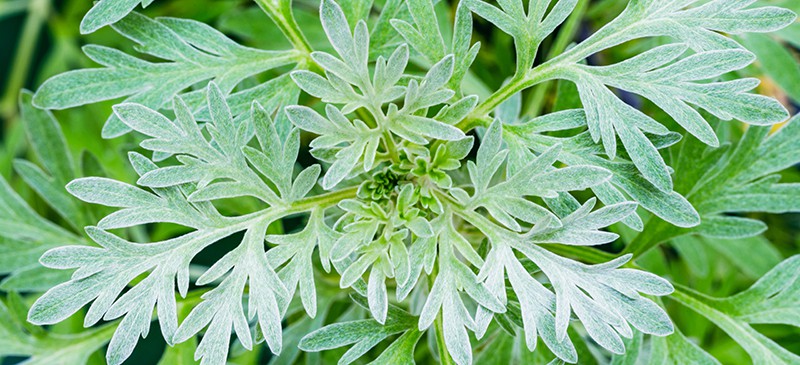
What do Edgar Degas, Vincent van Gogh and Pablo Picasso all have in common aside from their incredible painting abilities? These three artists all shared a love of absinthe, a botanical spirit made from wormwood, anise and fennel.
Absinthe is currently illegal in the U.S. as well as many other countries, but it’s still available in Europe. You may have heard of wormwood because of its inclusion in this famous European beverage, but did you know that it also holds an ability to aid many common and serious health concerns?
It’s true. Wormwood is actually used to eliminate intestinal worms, especially roundworms and pinworms. This is exactly why it’s commonly recommended as part of a parasite cleanse.
Just how powerful is wormwood? Well, it’s owed thanks and praise for being the source of the key ingredient for the herbal drug artemisinin, which is touted as the most powerful anti-malarial on the market.
And it doesn’t stop there. Scientific research also shows that wormwood can even kills cancer cells. Wormwood tea can also be used to treat anorexia, insomnia, anemia, a lack of appetite, flatulence, stomach aches, jaundice and indigestion.
Wormwood herb is used in alcoholic beverages while the wormwood star is mentioned in the bible. Truly an intriguing plant to say the least, but can this herb really kill parasites and cancer? Studies say yes, and the positive medicinal effects keep on coming.
Of course, there is good reason for caution with wormwood products (like absinthe) as well, but once you learn about thujone, you’ll see why not all wormwood products are created equally.
What Is Wormwood?
What is wormwood exactly? Artemisia absinthium is an odorous, perennial that belongs to the Asteraceae or Compositae family, more commonly known as the daisy family. This artemisia plant releases an aromatic odor and has a spicy, bitter taste.
Many species of the artemisia family tend to have medicinal properties. It’s related to Artemisia vulgaris, or mugwort, another medicinal herb.
The wormwood plant is native to Europe and parts of Africa and Asia. Today, it also grows wild in the U.S., most commonly along roads or paths.
Also called shrub wormwood, Artemisia absinthium is a shrubby plant that typically grows to be one to three feet tall. It has gray-green or white stems covered by fine hairs and yellowish-green leaves that are hairy and silky. The leaves of the plant have glands that contain resinous particles where the natural insecticide is stored.
Sweet wormwood (Artemisia annua), also known as sweet annie, sweet sagewort, annual mugwort or annual wormwood, is a common type of wormwood native to temperate Asia but naturalized in parts of North America.
Wormwood can be used either fresh or dried. All the aerial portions (stem, leaves and flowers) of the plant have medicinal uses and wormwood tea is commonly consumed for a range of ailments.
The essential oil is extracted from the leaves and flowering tops by steam distillation. One study of the essential oil of Artemisia absinthium found that it contains at least 28 components representing 93.3 percent of the oil. The main components are β- pinene (23.8 percent) and β- thujone (18.6 percent).
Thujone is the potentially poisonous chemical found in wormwood. Distilling the herb in alcohol increases the thujone concentration, which is what makes absinthe such a debatable liquor of choice.
Wormwood’s biologically active compounds include:
- acetylenes (trans-dehydromatricaria ester, C13 and C14 trans-spiroketalenol ethers, and others)
- ascorbic acid (vitamin C)
- azulenes (chamazulene, dihydrochamazulenes, bisabolene, camphene, cadinene, sabinene, trans-sabinylacetate, phellandrene, pinene and others)
- carotenoids
- flavonoids (quercitin 3-glucoside, quercitin 3-rhamnoglucoside, spinacetin 3-glucoside, spinacetin 3-rhamnoglucoside, and others)
- lignins (diayangambin and epiyangambin)
- phenolic acids (p-hydroxyphenylacetic, p-coumaric, chlorogenic, protocatechuic, vanillic, syringic and others)
- tannins
- thujone and isothujone
- sesquiterpene lactones (absinthin, artabsin, anabsinthin, artemetin, artemisinin, arabsin, artabin, artabsinolides, artemolin, matricin, isoabsinthin and others)
Benefits
Whether you’re using wormwood tea, extract, tincture or ointment, the benefits of this therapeutic herb are vast.
1. Beats Malaria
Malaria is a serious disease caused by a parasite that is transmitted by the bite of infected mosquitoes and invades human red blood cells. Artemisinin is an extract isolated from the plant Artemisia annua, or sweet wormwood.
Artemisinin is an herbal drug that’s the most powerful antimalarial on the market. It’s known for quickly reducing the number of parasites in the blood of patients with malaria. The World Health Organization recommends artemisinin-based combination therapies as first-line treatment for uncomplicated P. falciparum malaria.
Recent experiments have shown that artemisinin is effective against the malaria parasite because it reacts with the high levels of iron in the parasite to produce free radicals. The free radicals then destroy the cell walls of the malaria parasite.
2. Fights Cancer Cells
According to recent studies, artemisinin can battle iron-enriched breast cancer cells similar to the way it eliminates malaria-causing parasites, making it a potential natural cancer treatment option for women with breast cancer.
Cancer cells can also be rich in iron since they commonly soak it up to facilitate cell division. Researchers in a 2012 study tested samples of breast cancer cells and normal breast cells that had first been treated to maximize their iron content. The cells were then treated with a water-soluble form of artemisinin, an extract of wormwood.
Results were quite impressive. The normal cells showed little change, but within 16 hours, almost all of the cancer cells were dead and only a few normal cells were killed. Bioengineer Henry Lai believes that because a breast cancer cell contains five to 15 more receptors than normal, it absorbs iron more readily and hence is more susceptible to artemisinin’s attack.
3. Gets Rid of Parasites
Wormwood is used to eliminate intestinal worms, including pinworms, roundworms and tapeworms. Pinworms are the most common worm infection in the U.S. with pinworm eggs spread directly from person to person. Roundworms, or nematodes, are parasites that also infect human intestines, and tapeworms are long, flat worms that infect animal and human intestines.
A 2018 animal study published in the Journal of Helminthology indicates that wormwood induced worm paralysis, death and ultrastructural alternations.
And a study conducted in Sweden shows that for the purpose of deworming farm animals, a combination of wormwood, mugwort, chicory and common tansy are believed to have anti-parasite properties.
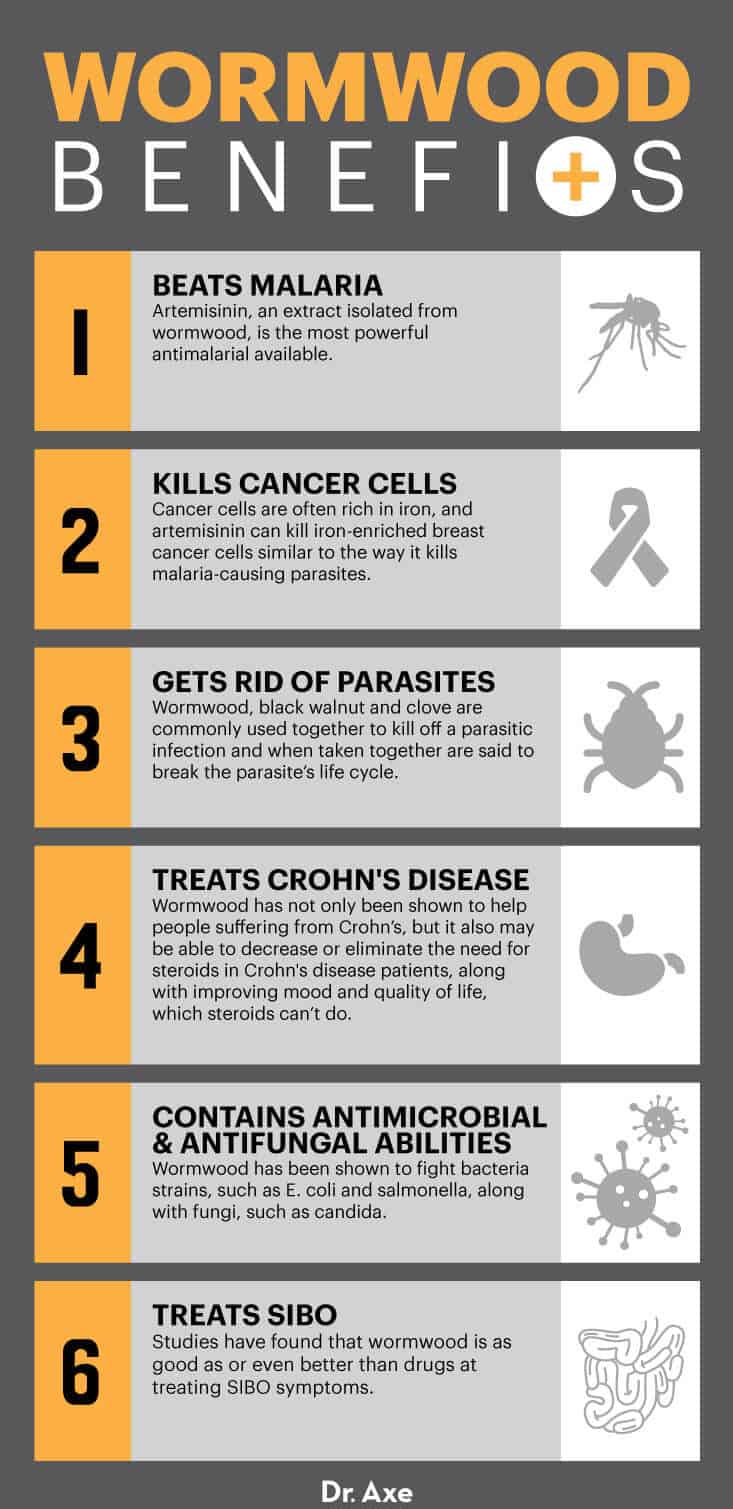
4. Treats Crohn’s Disease
In Germany, a double-blind study examined the effectiveness of an herbal blend containing wormwood at a dose of 500 milligrams three times per day versus a placebo over 10 weeks in 40 patients suffering from Crohn’s disease who were already on a steady daily dose of steroids.
This initial stable dose of steroids was maintained until week 2, after that a defined tapering schedule was started so that by the beginning of week 10 all the patients were steroid-free.
Researchers found that there was a steady improvement in Crohn’s disease symptoms in 18 patients (90 percent) who received wormwood in spite of the decrease of steroids. After eight weeks of treatment with wormwood, there was almost complete remission of symptoms in 13 (65 percent) patients in this group as compared to none in the placebo group. This remission lasted until the end of the observation period, which was 20 weeks (12 weeks later), and the addition of steroids was not necessary.
The results were truly impressive and suggestive of wormwood being able to decrease or eliminate the need for steroids in Crohn’s disease patients. Additionally, results indicate that wormwood has positive effects on mood and quality of life, which is not achieved by other standard Crohn’s disease medications.
5. Contains Antimicrobial and Antifungal Abilities
In vitro studies have shown that the essential oils of wormwood have antimicrobial activity. Research published in the Journal of Agricultural and Food Chemistry suggests that wormwood oil exhibits a broad spectrum of antimicrobial activity against several bacterial strains, including E. coli and salmonella.
Every year, salmonella is estimated to cause 1 million food-borne illnesses in the U.S. alone, with 19,000 hospitalizations and 380 deaths. E. coli is another concerning type of bacteria that can cause a range of issues from diarrhea to urinary tract infections to pneumonia and other illnesses.
Not only can wormwood kill bacteria, but it’s also been shown to kill fungi. Research shows that essential oil distilled from the aerial parts of Artemisia absinthium inhibited the growth of a very broad spectrum of tested fungi (11 to be exact). The wormwood essential oil also showed antioxidant properties during testing.
Another study published in Planta Medica concludes that A. absinthium oil inhibits the growth of Candida albicans. This is the the most common type of yeast infection found in the mouth, intestinal tract and vagina, and it may affect skin and other mucous membranes.
6. Treats SIBO
Many people turn to natural and alternative treatments when it comes to problems with their gastrointestinal health, and for good reason. Studies show that herbal remedies like wormwood tea or capsules are as good or even better at fighting small intestinal bacterial overgrowth or SIBO symptoms.
Today’s typical treatment of SIBO is limited to oral antibiotics with varying rates of effectiveness. A 2014 study had 104 patients who tested positive for newly diagnosed SIBO take either a high dose of rifaximin or an herbal therapy daily for four weeks.
The herbal products were specifically chosen because they contained antimicrobial herbs like wormwood, oregano oil, thyme and berberine extracts, which have been shown to provide broad-spectrum coverage against the types of bacteria most commonly involved in SIBO.
Of the patients who received herbal therapy, 46 percent showed no evidence of SIBO on follow-up tests compared to 34 percent of rifaximin users. Adverse effects reported among those taking rifaximin included anaphylaxis, hives, diarrhea and C. difficile colitis, while only one case of diarrhea and no other side effects were reported in the herbal therapy group.
The study concluded that herbal therapies are at least as effective as rifaximin for eradication of SIBO. Additionally, the herbal therapy with wormwood appears to be just as effective as triple antibiotic therapy for individuals who don’t respond to rifaximin.
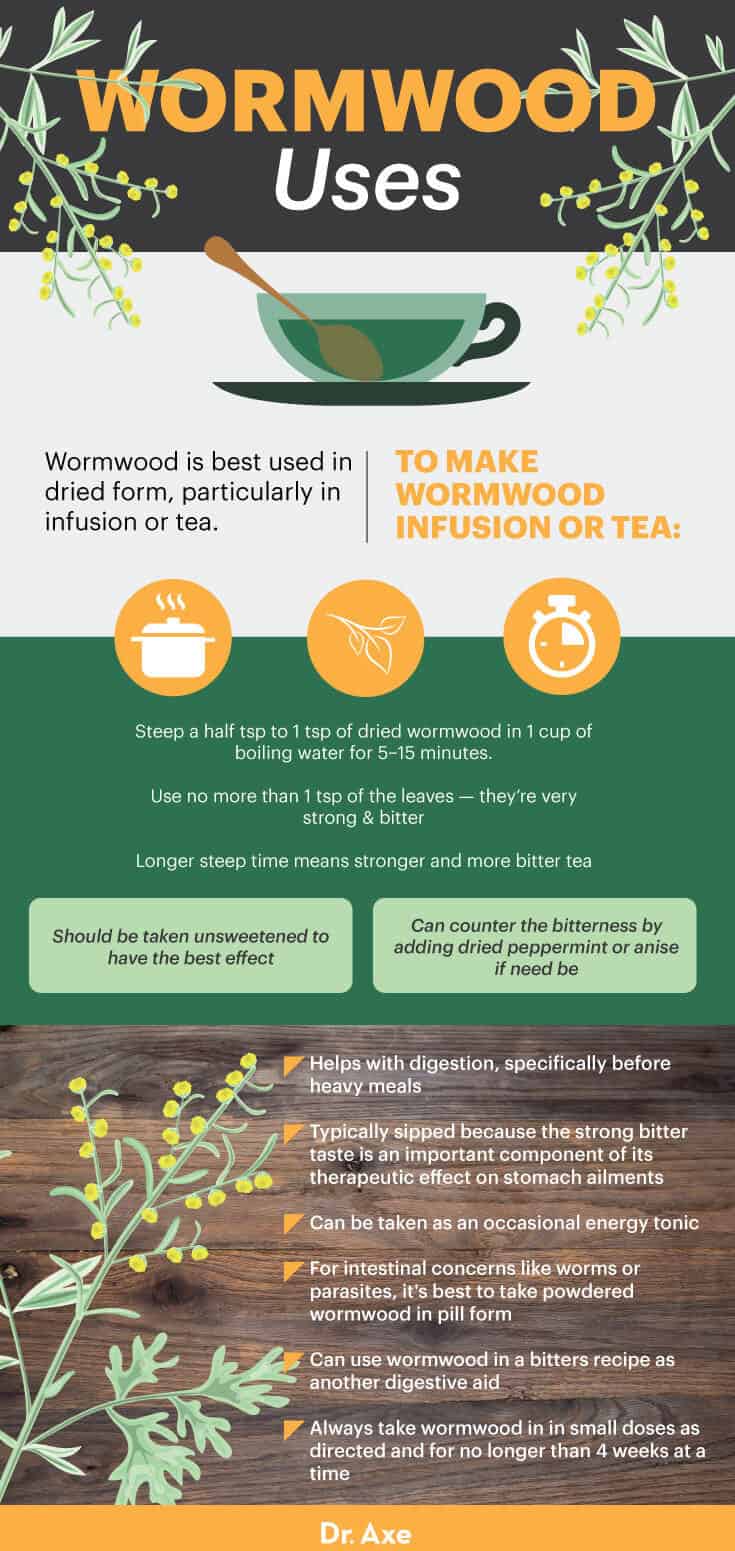
How to Use
Wormwood is commercially available at health stores and online as an essential oil, as well as in capsule, tablet, tincture and liquid extract forms. It can also be used in fresh or dry form to make an infusion or tea.
It’s best used in dried form, which contains little, if any, thujone. To make an infusion, follow this wormwood tea recipe:
- Steep a half teaspoon to one teaspoon of dried or fresh wormwood in one cup of boiling water for five to 15 minutes.
- It’s important that you use no more than one teaspoon of the leaves as they’re very strong and bitter. Longer steep time will make for a stronger wormwood tea, but also a more bitter tea.
- Wormwood tea should be taken unsweetened to have the best effect, but you can counter the bitterness by adding dried peppermint or anise.
Wormwood tea can be especially helpful for digestion, specifically before heavy meals that may likely cause gas and bloated stomach. Research even suggests that wormwood helps to relieve symptoms of Crohn’s disease.
Wormwood tea dosage varies, depending on what you’re using it for. Wormwood tea preparations are typically sipped because the strong bitter taste is an important component of its therapeutic effect on stomach ailments. It can also be taken as an occasional energy tonic.
For intestinal concerns like worms or parasites, it’s best to take powdered wormwood in pill form. You can also use wormwood and other botanicals in a homemade bitters recipe. Bitters make an excellent digestive aid.
Wormwood tea or other products should only be taken under the supervision of a professional. It should always be taken in small doses as directed and for no longer than four weeks at a time.
Side Effects, Allergies and Drug Interactions
Wormwood herb is not meant for long-term use. Make sure you don’t exceed recommended doses because excessive consumption could be highly toxic. It may be best to use wormwood in dried form, which contains little, if any, of the volatile oil thujone.
The FDA lists wormwood unsafe for internal use due to the toxicity of thujone oil. However, it’s considered to be safe when taken by mouth in the amounts commonly found in food and beverages, including bitters and vermouth, as long as these products are thujone-free.
Using wormwood for longer than four weeks or at higher than recommended doses may lead to nausea, vomiting , restlessness, insomnia, vertigo, tremors and seizures.
Wormwood products that contain thujone, like absinthe, can be unsafe when taken by mouth. Absinthe effects/thujone effects can include restlessness, difficulty sleeping, nightmares, seizures, dizziness, tremors, muscle breakdown, kidney failure, vomiting, stomach cramps, urine retention, thirst, numbness of arms and legs, paralysis, and death.
Don’t take this herb in any form if you’re pregnant or breast-feeding. There have been documented abortifacient and emmenagogue effects of wormwood.
If you’re allergic to ragweed and other plants in the Asteraceae/Compositae family, then wormwood may cause an allergic reaction.
If you have porphyria (a group of disorders that result from a buildup of natural chemicals that produce porphyrin in your body), then you should know that the thujone present in wormwood oil might increase your body’s production of chemicals called porphyrins, which could make your porphyria worse.
If you have epilepsy or any other seizure disorder, speak with your doctor before using this herb. The thujone in wormwood cause cause seizures, especially in people who have a tendency toward seizures.
Wormwood is not recommended for people with kidney disorders. The oil might cause kidney failure. If you have kidney concerns, don’t take this herb before talking with your doctor.
It’s not advised to use the essential oil in aromatherapy since it contains an extremely high amount of thujone, which is a convulsant and neurotoxin.
Be cautious and speak with your doctor before combining wormwood with any anticonvulsant, which is a medication used to prevent seizures. Since these medications and wormwood can both affect brain chemicals, this herb may decrease the effectiveness of anticonvulsants.
Wormwood Interesting Facts
The name wormwood is derived from ancient use of the plant and its extracts as an intestinal anthelmintic, antiparasitic drug that expels parasitic worms and other internal parasites from the body.
In ancient Egyptian times, it was a commonly used medicinal plant, specifically for anal pain, and as an additive to wine. Later on it was used in European folk medicine to induce labor. The plant, when steeped into a strong wormwood tea, has been used traditionally in Europe as well as a bitter stomach stabilizer to stave off indigestion and loss of appetite.
A favorite alcoholic beverage in 19th century France, absinthe was said to be addictive and associated with a collection of serious side effects known as absinthism or irreversible damage to the central nervous system.
Absinthe was made popular by some very well-known writers and artists, such as Ernest Hemingway, Henri de Toulouse-Lautrec, Édouard Manet, Edgar Degas, Vincent van Gogh, Pablo Picasso and Oscar Wilde. The manic depressive painter Vincent van Gogh was addicted to absinthe, and some say his continual drinking of it led to many of his paintings having a green or yellowish tint (due to the thujuone’s hallucinatory effects) — and that the wormwood actually enhanced his epilepsy.
Absinthe is an anise-flavored spirit derived from several botanicals. Absinthe ingredients include the flowers and leaves of wormwood, anise and fennel. It’s illegal in the U.S. as well as many other countries. However, it’s not banned in some European Union countries as long as the thujone content is less than 35 milligrams per kilogram.
Thujone is the potentially poisonous chemical found in wormwood. Distilling wormwood in alcohol increases the thujone concentration. Thujone-free wormwood extract is currently used as a flavoring in alcoholic beverages like vermouth.
Wormwood, or its derivative chemical components, have famously been mentioned in many a novel, play and in other art forms, from Bram Stoker’s “Dracula” to John Locke essays to “Romeo and Juliet.”
There are several Bible references to this herb as well. The word “wormwood” appears several times in the Old Testament, translated from the Hebrew term la’anah (which means “curse” in Arabic and Hebrew).
It’s also spoken of in the New Testament in the Book of Revelation: “The third angel sounded his trumpet, and a great star, blazing like a torch, fell from the sky on a third of the rivers and on the springs of water — the name of the star is Wormwood. A third of the waters turned bitter, and many people died from the waters that had become bitter.” (Rev 8:10–11)
Final Thoughts
- Absinthe is a botanical spirit made from wormwood, anise and fennel, but that’s not all wormwood is good for. It’s used to eliminate intestinal worms, especially roundworms and pinworms, and it’s the source of of the key ingredient for the herbal drug artemisinin, which is the most powerful antimalarial on the market.
- It’s also been shown to kill cancer cells and treat anorexia, insomnia, anemia, a lack of appetite, flatulence, stomach aches, jaundice and indigestion.
- Specifically, this herb has been proven to beat malaria, kill breast cancer cells, get rid of parasites, treat Crohn’s disease, contain antimicrobial and antifungal abilities, and treat SIBO.
- Wormwood is commercially available at health stores and online as an essential oil, as well as in capsule, tablet, tincture and liquid extract forms. It can also be used in fresh or dry form to make an infusion or tea.
- Wormwood should only be taken under the supervision of a professional. It should always be taken in small doses as directed and for no longer than four weeks at a time.
https://www.npr.org/sections/goatsandsoda/2019/01/03/680542815/if-a-worm-makes-you-sick-can-this-cup-of-tea-cure-you
If A Worm Makes You Sick, Can This Cup Of Tea Cure You?

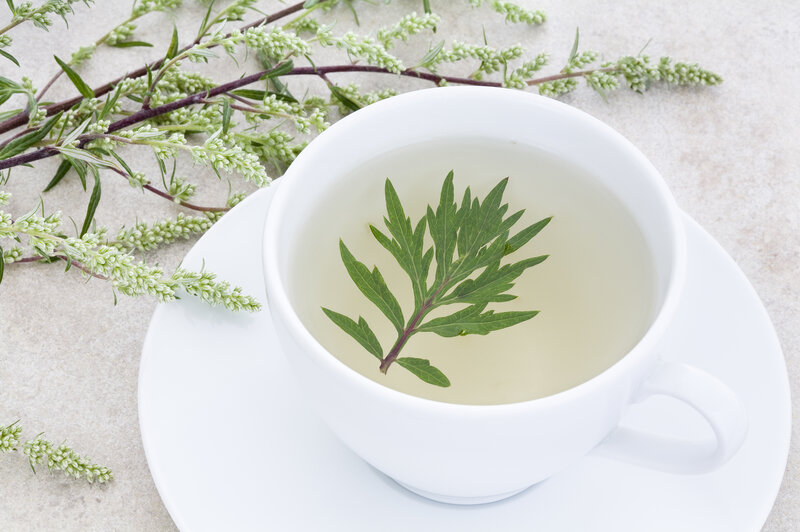
Schistosomiasis is listed as a "neglected" tropical disease by the World Health Organization — one of those diseases that's been overlooked by modern medicine.
It mainly hits poor people in poor countries — and it hits a lot of them, up to 200 million a year. There are only a few drugs available to treat it. There are no designer drugs being cooked up in a lab in Europe for schistosomiasis. Doctoral students rarely pen their thesis on this disease.
But schistosomiasis can also be "neglected" by the very people it attacks. It can be a stealth disease. The infection starts slowly. A flatworm penetrates the skin of someone walking or working or swimming in contaminated water. The person doesn't feel sick. They pick up more parasites.
The host still feels fine, doesn't even know he or she is infected. The worms start having sex. They multiply. As the parasite population grows the person starts to feel sluggish, slightly off. The worm invasion may cause a fever or some abdominal pain but most people don't realize something's wrong. In parts of Africa and South East Asia where schistosomiasis is rampant, people can be infected for years before they start feeling sick.
The standard treatment is a drug called praziquantel — three doses spread out over the course of one day can cure most people of the worms that cause schistosomiasis.
But what if tea from a local plant worked just as well?
Pam Weathers, a biologist at Worcester Polytechnic Institute, has spent a lot of time studying how artimisinin and other derivatives of the wormwood shrub attack malaria parasites in people. She figured wormwood might also kill the worms that cause schistosomiasis.
So along with her colleagues she ran a trial on 800 people in the Maniema Province in the east of the Democratic Republic of Congo, all of whom had schistosomiasis. Half were treated with the drug, and half got wormwood tea.
In a new study published this month, she reports that sweet wormwood tea can cure schistosomiasis faster and with fewer side effects than the most common drug treatment.
"They had to drink these tea infusions daily for seven days and then you would see what happened to their worm infestations, which is not a pretty thing to do," she says with a laugh. "It means looking at fecal samples to see if the eggs are gone. I'm glad it wasn't in that lab but that's how it has to be detected."
The people who got the conventional drug and the people who drank the tea all were completely cleared of the parasites. But the group sipping the wormwood infusions got rid of the parasites faster and reported fewer side effects. "It [the tea] is much more benign on the patient," she says. The pharmaceutical treatment with praziquantel can cause headaches, nausea and fatigue.
One downside of the sweet wormwood tea is that despite the "sweet" in its name, it's actually quite bitter. Some people like it while others hate it.
Weathers falls in the hater group and was surprised to find that anyone thought it tastes good. "I'm like, you're kidding me because I can't stand it," she says.
But one of the benefits of using sweet wormwood is that the shrub grows readily in lots of the warm tropical places where schistosomiasis is a problem.
"The thought initially was that they we're going to try and let people grow the plant in their own gardens and then just make their own tea," Weathers says. This turned out to be not as easy as it might seem. The tea infusion had to be the right strength to be effective, and people had to be told to not store the prepared tea for more than a day or it would lose efficacy.
The new study from Weathers and her colleagues doesn't tackle those logistical issues. It simply set out to compare the wormwood tea treatment against the common drug therapy. And in that regard wormwood tea was a success.
"This is an important disease," says Sue Montgomery, who heads the parasitic disease branch of the Centers for Disease Control and Prevention. Montgomery wasn't involved with the wormwood tea study and says she doesn't want to comment directly on it. She notes that in other studies wormwood has showed promise in killing immature stages of the schistisoma parasite.
"But those are all in studies that have yet to be scaled up to the point where those drugs would be used in control programs," she says. Which is also true of Weathers wormwood tea study. It's still in the study stage and the tea is not yet being widely used to combat schistosomiasis.
The bigger problem with schistosomiasis is that just purging the parasites by pill or by tea won't lead to the elimination of the disease.
Schistosomiasis is spread in a cycle involving people and a particular species of freshwater snails.
"You have to have three things occurring in the same place to have transmission of schistosomiasis," Montgomery says. "You need people who are infected with the parasite. You need water sources that contain the appropriate snails that are intermediate hosts. And you have to have a situation where human waste is making its way into that water." Human feces and urine carry the parasite's eggs back out to the water source.
So just killing off all the parasites that are inside people doesn't do any good if they can get re-infected the next day by contaminated water.
"It's almost impossible to get rid of [schistosomiasis] just by treating repeatedly," Montgomery says. "What it really requires is improvements in water and sanitation."
And upgrading an entire community's water and waste systems is a lot harder than giving a patient a pill or some tea.
But tackling schistosomiasis, Montgomery says, is important. As more and more worms accumulate in a person, Montgomery says, the individual suffers a lack of energy and has trouble digesting food. As the number of worms swells and they lodge their eggs in various organs, many people end up with a fibrosis of the liver. And in a worst case scenario ...
"It influences the blood circulation, then it leads to enlarged blood vessels around the liver, which sometimes burst into your esophagus," Montgomery says. "And you can actually end up bleeding out from the esophagus because of the altered circulation caused by this chronic high level infection. So that's a really awful scary story, and it does not happen often but that's one of the causes of deaths associated with schistosomiasis."
The disease is so under-researched that there isn't even good data on exactly how many people are suffering or dying from schistosomiasis. The World Health Organization estimates that schistosomiasis kills between 25,000 and 200,000 people a year.
It's possible that some simple treatments like wormwood tea could help combat it. But the first challenge may be to stop neglecting this potentially fatal disease.
CorrectionJan. 7, 2019
The audio version of this story incorrectly refers to snails as crustaceans. Snails are in fact part of the mollusk family, along with slugs, clams, mussels and octopuses.
Support independent journalism today.
NPR is your trusted source for reliable reporting, thoughtful analysis and civic dialogue. We're here, delivering the news, providing context and keeping you updated on what's happening in the world. This is only possible because of donations from people like you. If you valued this story, then take a moment and donate to an NPR station in your community. It will truly make a difference.
No comments:
Post a Comment
Note: Only a member of this blog may post a comment.