
What makes us think our generation is exempt from seeing history repeat itself? There are many past examples where people were led to believe that something that was regarded as safe, turned out to be very dangerous.
Things we used to think were perfectly safe:
Smoking
DDT
Thimerosal
Teflon
Asbestos
Baby powder
Roundup
Atrazine
Mercurochrome
https://www.buzzfeed.com/hannahmarder/dangerous-things-people-used-to-think-were-normal
http://www.newmoa.org/prevention/mercury/projects/legacy/personalcare.cfm
https://www.toptenz.net/10-deadly-things-we-used-to-think-were-safe.php
- Hardcore Narcotics. ...
- Asbestos. ...
- Radioactive Toys. ...
- Radioactive Drinks. ...
- Bloodletting. ...
- Mercury. ...
- Lobotomies. ...
- Tapeworms.
https://www.history.com/news/cigarette-ads-doctors-smoking-endorsement
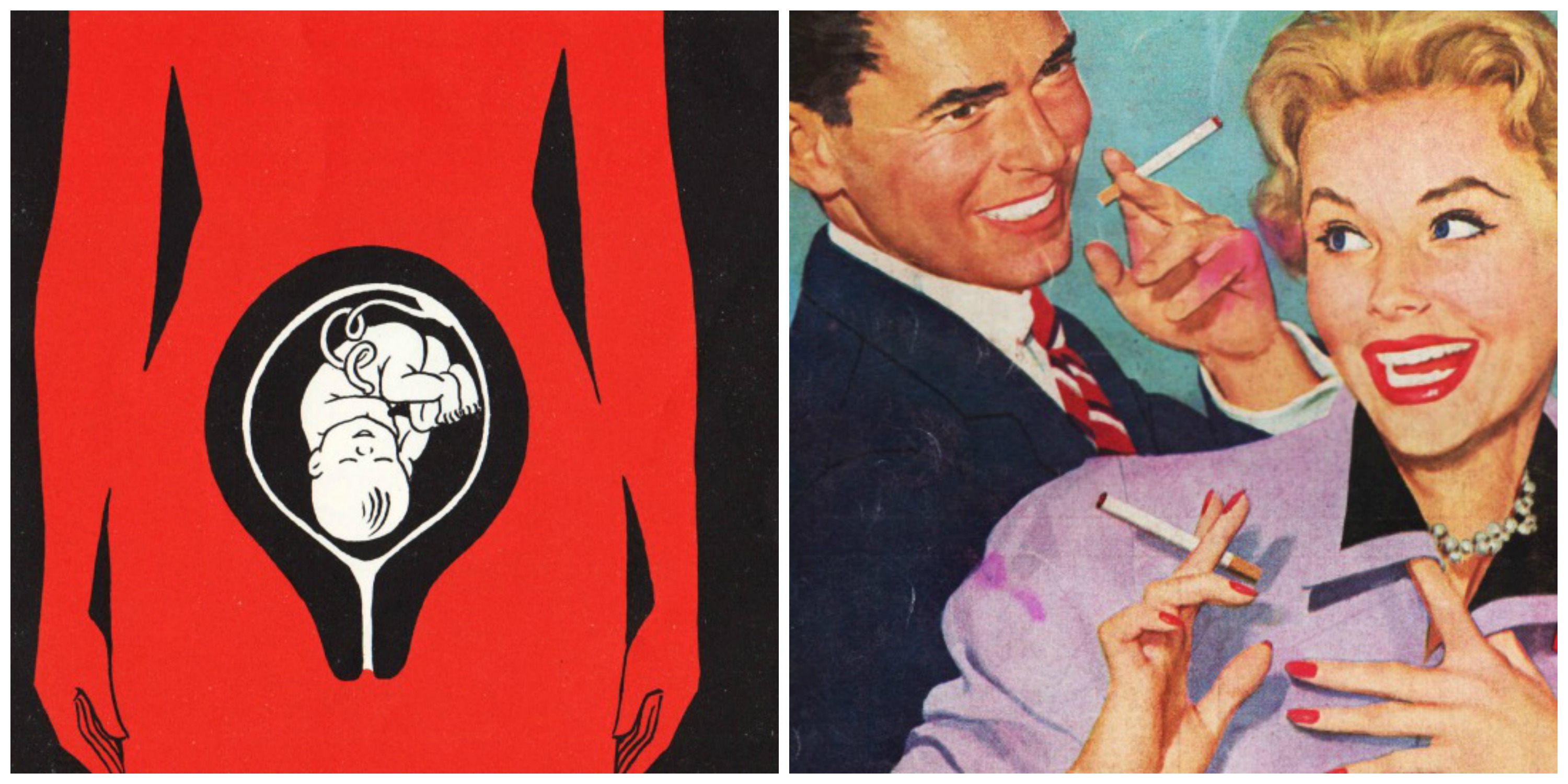


What cigarette do doctors says causes less throat irritation? In the 1930s and 40s, tobacco companies would happily tell you it was theirs. Doctors hadn’t yet discovered a clear link between smoking and lung cancer, and a majority of them actually smoked cigarettes. So in cigarette ads, tobacco companies used doctors’ authority to make their claims about their cigarettes seem more legitimate.
To the modern-day reader, the pitching of cigarettes as healthy (even to youth and pregnant moms) and the use of doctors’ endorsements may appear horrifying. Yet before 1950, there wasn’t good evidence showing that cigarette smoking was bad for you.

A 1930 Lucky Strike advertisement.
From the collection of Stanford Research Into the Impact of Tobacco Advertising
“People started to get worried in the ‘40s because lung cancer was spiking; the lung cancer death rate was going through the roof,” says Martha Gardner, a history and social sciences professor at Massachusetts College of Pharmacy and Health Sciences. “People noticed that and were worried about it, but that didn’t mean they knew it was cigarettes.”
Yes, cigarettes did cause coughing and throat irritation. But companies used this to their advantage to promote their product as better than the competition. It wasn’t all cigarettes that gave you problems—it was just those other ones.
The first cigarette company to use physicians in their ads was American Tobacco, maker of Lucky Strikes. In 1930, it published an ad claiming “20,679 Physicians say ‘LUCKIES are less irritating’” to the throat. To get this number, the company’s ad agency had sent physicians cartons of Lucky Strike cigarettes and a letter asking if they thought Lucky Strikes were “less irritating to sensitive and tender throats than other cigarettes,” while noting “a good many people” had already said they were.

1937 Philip Morris advertisement claiming their brand cleared up irritation of the nose and throat.
From the collection of Stanford Research Into the Impact of Tobacco Advertising
Unsurprisingly, many doctors responded positively to this biased, leading question, and Lucky Strike ads used their answers to imply their cigarettes must be medically better for your throat. In 1937, the Philip Morris company took that one step forward with a Saturday Evening Post ad claiming doctors had conducted a study showing “when smokers changed to Philip Morris, every case of irritation cleared completely and definitely improved.” What it didn’t mention was that Philip Morris had sponsored those doctors.
Philip Morris continued to advertise “studies” it sponsored through the 1940s, the decade that saw the introduction of penicillin. “The American public is thinking about medicine in such a positive way and science in a positive way,” says Gardner, who co-authored an American Journal of Public Health article about doctors in cigarette ads. “So framing it that way seems like it’ll help appeal to people.”
To this end, the R.J. Reynolds Tobacco Company created a Medical Relations Division and advertised it in medical journals. Reynolds began paying for research and then citing it in its ads like Philip Morris. In 1946, Reynolds launched an ad campaign with the slogan, “More doctors smoke Camels than any other cigarette.” They’d solicited this “finding” by giving doctors a free carton of Camel cigarettes, and then asking what brand they smoked.

1946 cigarette advertisement launched by R.J. Reynolds Tobacco Company.
From the collection of Stanford Research Into the Impact of Tobacco Advertising
By the mid-1950s, when tobacco companies had to confront good evidence that their products caused lung cancer, advertising strategies started to shift. “What happens is, all the different cigarette companies kind of work together to try to promote the idea that…we don’t know yet if it’s harmful,” Gardner says. In 1954, these companies released “A Frank Statement to Cigarette Smokers” arguing that research showing a link between cancer and smoking was alarming but not conclusive. Therefore, the companies were forming a research committee to investigate the issue.
After this, cigarette ads stopped featuring doctors because this was no longer a convincing tactic. Doctors were coming out against cigarettes, culminating in 1964 with the U.S. Surgeon General’s report that smoking causes lung cancer, laryngeal cancer and chronic bronchitis.
Still, tobacco companies continued to maintain, through their research committee, that there was still a “controversy” over whether cigarettes were unhealthy until 1998. That year, the Tobacco Institute and the Committee for Tobacco Research (as it was then known) disbanded in accordance with a lawsuit settlement.

Soon after e-cigarettes debuted in Europe in 2006, tobacco companies began investing heavily in vaping. The Food and Drug Administration noted in 2018 that vaping was increasing at an alarming rate among teens, raising concern that more young people were becoming addicted to nicotine. In 2019, six deaths and hundreds of cases of vaping-related lung illness were reported. By September, 2019, the U.S. Health Secretary Alex Azar said the FDA planned to take flavored e-cigarettes off the market.
https://www.the100yearlifestyle.com/doctors-recommend-smoking/
Doctors Recommend Smoking?

It’s hard to believe that there was a time that doctors recommended smoking! “26,000 doctors recommend smoking” was a common Lucky Strike cigarette ad that blanketed all forms of media. Similar ads blanketed the media by Camel and many other brands. Cigarettes were considered so “safe” that they were marketed to children in the form of candy cigarettes!

From Cool to Catastrophe
What was once considered a cool, totally safe social activity, we now know is directly linked to cancer, lung disease, heart disease, stroke, and the list goes on. According to the CDC, “Smoking causes 90 percent of all lung cancer deaths and 80 percent of all deaths from chronic obstructive pulmonary disease (COPD).” It’s hard to believe that the FDA and CDC still allow these products to be marketed to the public!
Cigarettes are not the only example of this. Baby aspirin is another! Does one per day keep the doctor away? NO! Just the opposite is true.

In a large scale, seven-year study, researchers found no correlation between daily low-dose aspirin and reduced heart attack, stroke, or dementia, as it has been touted for years to do. In fact, what they did find was that daily aspirin intake was associated with increased risk of major bleeding, cancer, and death.
What about lowering your cholesterol? How about low-fat diets?
The reality is that with the introduction of low-fat diets came an increase in obesity, heart disease, and diabetes. Why? When you reduce or remove the content of fat, which is an essential component of our diet, food manufacturers add sugar, artificial flavors, and fillers in their place.
The hype on cholesterol is extremely concerning, especially with the connections being made to Statin drugs and dementia! Consider the following from researcher and author, Zoë Harcombe, “Cholesterol is found in nearly every cell of your body and is essential to good health. It plays a role in hormone production, digestion, the manufacture of vitamin D following sun exposure, and helps protect your cell membranes.”
So why then would we want to reduce this from our diet? And the link of cholesterol to heart disease has been discredited in study after study. We also know that cholesterol consumed in the diet, “has no impact on the cholesterol level in your blood.”
Beliefs Versus Truths
So many of the beliefs that people base their habits and opinions on are found later to be false. There was a time that people and society swore the world was flat!
Prehistoric beliefs related to smoking, aspirin and low fat can lead to unnecessary suffering. Germs, antibiotics, immunity, vaccines and healing in general are additional areas where our beliefs have become skewed and outdated.
Many people have prehistoric beliefs about chiropractic care. Chiropractic care, for example, is now realized to be one of the safest health care options available, 10,000 times safer than surgery according to a new Gallup Poll. Even more importantly, as a part, of a lifestyle, Chiropractic Lifestyle Care can help you stay healthy.
Open Your Mind. Trust Your Body!
It is very important to keep your mind open, find trusting resources over cool ones, and trust your innate intelligence. Be proactive in eliminating stress and interference from your brain, nervous system, mind and body. Use common sense and be strong enough to say yes to the things that are good for you and say no to the madness of the marketing machines.
Your 80, 90 or 100 is coming. Learn to love the things that are good for you and enjoy a sensational century.
https://www.cdc.gov/tobacco/data_statistics/fact_sheets/health_effects/effects_cig_smoking/index.htm
https://www.candyfavorites.com/history-of-candy-cigarettes
https://www.healthline.com/nutrition/6-graphs-the-war-on-fat-was-a-mistake#section6
https://articles.mercola.com/sites/articles/archive/2018/12/12/the-truth-about-cholesterol.aspx
https://www.cdc.gov/features/antibioticuse/index.html
https://www.drugabuse.gov/drugs-abuse/opioids/opioid-overdose-crisis
https://www.theguardian.com/news/2005/jun/02/thisweekssciencequestions.cancer
Can You Buy Your Way to the First Page on Google Search?
Can you buy your way to the first page of Google search results, or even the first position?
I get cold calls regularly from people who claim they can do just that for a small recurring fee. Sounds intriguing. But is there any truth to it? (Ranking first for your company name doesn’t really count.)
There obviously is a way to get listed first in Google search for money. It’s called Google Ads (formerly Adwords). That’s the paid advertisements that you see at the top of your Google search results. If you’re willing to pay the highest price per click for your chosen keywords and your website is deemed relevant and useful to users by the Google search algorithm, then you have a pretty good chance of being able to snag the first position in the search results.
Being at the top of the page could equal a big payoff, or it could wipe out your bank account. It all depends on how much you stand to earn per sale and how big your ad budget is. But clearly, buying that top paid position for the right price is a pretty good possibility.
But how about organic search?
Can you buy your way to the top of the Google organic search results?
The simple answer is no.
Google doesn’t sell positions in organic search results. They wouldn’t be very “organic” if you could buy them, would they?
The way to climb the ladder to the top of organic search results is via SEO – search engine optimization – which according to Google is a combination of lots of factors with the main one being superior content that gives value to the reader along with an awesome user experience. And lots of high quality links that point to your content pages.
Can money buy great content and SEO?
It sure can.
With the right budget you can hire writers to create a steady stream of new content around your keywords. You can also hire a marketing team to share that content on social media and anywhere else your target prospects might be. They can form relationships with influential bloggers who might then let you publish a guest post or 2 and reach a new, huge target audience.
Large companies have the resources to do all of that and more. Many of them are. But that doesn’t mean that you can’t compete in your own niche, as long as you can refine the parameters of that niche. You probably won’t be able to compete for a keyword like “shoes”, but you do have a good chance of competing for “shoes in Smithtown, PA” (insert your own town, county, area, zipcode etc).
No matter how narrow you target, you still need good, optimized content on your website or blog to get Google’s attention and love. You also need to share that content to spread the word and possibly get inbound links. If you can do all of that on your own or in-house, go for it!
Most small and midsized business don’t have the expertise in-house, and they aren’t willing or able to invest in full time talent. That’s where digital marketing agencies come in. We can create your content, do your SEO and social media marketing for much less than it would cost you to do it in-house.
So, can you buy your way to the first page in Google? By investing in superior content, SEO and social media marketing, you’ve got a good fighting chance.
If you’d like to learn more about how to improve your website to attract more visitors and generate more leads, contact us now.
No comments:
Post a Comment
Note: Only a member of this blog may post a comment.