
Please have a look at this video, which contains REAL DATA FROM THE CDC, that shows most pandemics were almost completely eradicated before vaccines were introduced.
Dissolving vaccine illusions, with Roman Bystrianyk
THE TRUTH ABOUT VACCINES - EPISODE 2 PREVIEW || WHAT’S IN VACCINES? ARE VACCINES EFFECTIVE?
WHAT ABOUT POLIO?
Dr Suzanne Humphries, MD - Smoke, Mirrors, & The "Disappearance" of Polio (Vaccines)
Corbett Report - Fact Check - Polio Vaccines+ - 46m - Mini Documentary
Dr. Tenpenny drops some truth bombs about Polio, in this video...
THE UNTOLD TRUTH ABOUT VACCINES - DR. SHERRI TENPENNY, D.O. (VACCINE EXPERT)
Sister Kenny
I had never heard about Sister Kenney before, till I learned about her through a video with Dr. Suzanne Humphries. She talks about her in this video (this link will go straight to the part where she talks about Sister Kenney).
Sister Kenny- A Miracle For Polio
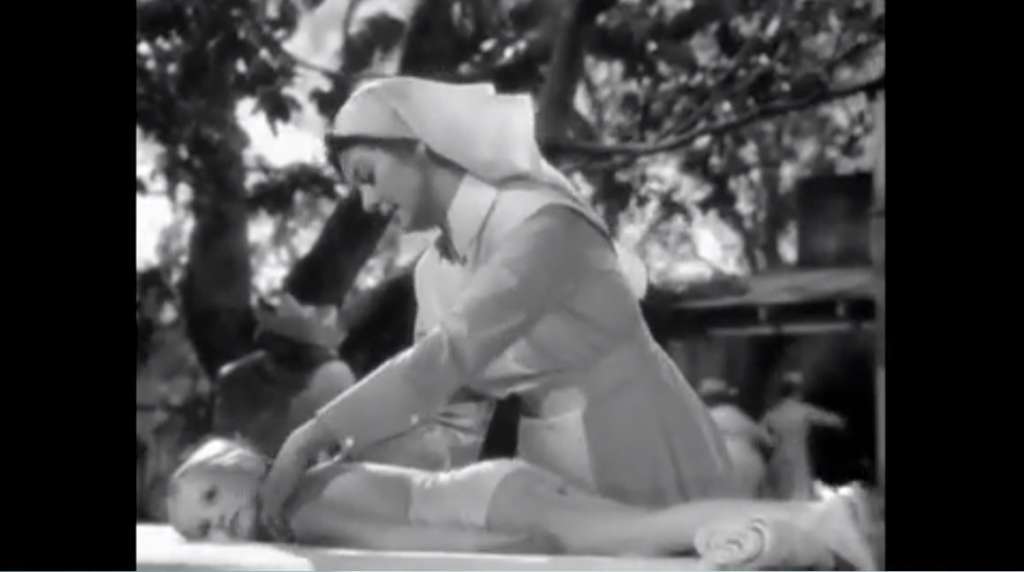
Polio Wars: Sister Kenny and the Golden Age of American Medicine

Top review from the United States

And They Shall Walk - The Life Story of Sister Elizabeth Kenny - Written in collaboration with Martha Ostenso- Copyright, 1943 - By DoDD, Mead & Company, Inc. Written in the United States of America Hard Cover- 281 Pages No ISBN written any were in book.
This book is the life story of Sister Elizabeth Kenny's written in her own words. Elizabeth was born in Australia and was number 8 of 9 children, the youngest being sickly as a child and was named Bill. When she was 14 years old she fractured her wrist and found out the nearest doctor was 40 miles away. When the doctor examined Elizabeth he took a medical liking to her and he said she needed to stay with-in his care for several weeks, to be sure the wrist healed properly. Resulting from her stay at Dr. Aeneas McDonnell home Elizabeth was introduction of Anatomy talks and many anatomy books, all she could read. A few years later she took her anatomy learning and rigid a wooden man string pulley and demonstrated the full workings of the human body's muscular system and this wooden model physically showed all the muscles origins, insertions, striations and the active movements each muscle performed. She took this learning and applied it to an exercise program and developed and applied this treatment to her sickly weaker, younger brother Bill, and surprisingly over time it did help Bill to develop his body strength, Bill later became a loyal addition to the Australia military and save many of lives. Due to the low amount of medical personal in the area Elizabeth at 23 years old decided to become a bush nurse to address this medical issue and after studying hard she accomplished her nursing training. Then on a cool fall night she was to encounter her first case of Infantile Paralysis or Polio.
The child in question was a two year old neighbor's daughter which Elizabeth always called Pet. Since Elizabeth never encounter the disease before she wrote to the bush doctor DR. Aeneas McDonnell and he telegrammed her back, stating Polio no known cure, just treat the symptoms as best as you can. Since Polio causes the muscles to contract and tighten Elizabeth decided to treat the muscular spasms which she observed upon close examination and she decided from this examination to use heat and decided that direct heat was the best way to accomplish this! So she took soft wool blankets and made them into strips and put them into boiling water and wrung them out to almost steaming dry and then wrapped the child's limbs with the rags and almost instantly the child relaxed and stopped whimpering and actually fell asleep. When the child woke up Pet cried I want them rags that well my legs. And out of the mouths of babes, the treatment for Polio was born. For Pet the two year old knew the heat made her feel better and she wanted more, and Elizabeth put the whole family into Operation Wool Blanket around the clock and several weeks later the child was walking on her own. Quickly the word of Pet's full walking recovery spread across the Bush like wild fire and whenever a child contracted Polio the child was without hesitation taken to Sister Elizabeth and every time the child recovered. When the doctor finally showed up and found out what she discovered he told her she was in for the ride of her life time for the medical world was not ready for such a simple cure from a non medical women. As the years slipped by Kenny treated thousands of children without one bit of acknowledgement from the medical world of her country. For the medical men in her part of the world in reality mentality decided the Orthodox Theory was the correct treatment. Meaning binding muscles, joints and bone under plaster and Polio Braces was the correct medical treatment. Which in actuality causes over time immobility, rigid joints, decreased movement, stiffen muscles, increased spasms and perfectly straight stiff bone posture with posture deformities because spasm contracting muscle tissues or basically Yin screwing with Yang, pulling muscles out of full alignment , causing a fully frightened, terrified unmoving, ridged child and parents.
This book is really a wonderful book. It talks about Polio case after case and after you read this book and acknowledge each child and the way Kenny deals with each child"s spasm limb you will fully understand what a spasm is and how it effects sensory synapses and how Kenny reset the spasmatic tissue correcting the signal that the nerve is sending to and through the muscle(s) to produce normal muscular movement.
30 years later The Kenny treatment was only acknowledged in the medical world when Sister Kenny left her native country and came to America. For the United State wanted Sister Kenny Gift, A treatment a ray of hope where light and self movement and independence was so very dim. For the USA observed that 80% of all Polio Victims after being treated by the Kenny treatment went on to live very happy non painful and self productive lives. On December 17th 1942 the Elizabeth Kenny Institute was opened in the City of Minneapolis and the Sister was awarded the Parent Magazine Award For outstanding Service to Children. Later she was to meet President's Franklin Roosevelt who was also inflected with the disease of Polio, and due to this meeting The National Foundation for Infantile Paralysis or the March of Dimes was formed. Even though Polio was eradicated with the creation of the Polio vaccination This book I would recommend to all people who deal with the muscles of the human body in anyway for it will teach you many thing about muscle tissues. This book took about a month of on and off reading and was wonderful reading. I rate it a ten.
This was a great review:
https://www.goodreads.com/book/show/2046113.And_They_Shall_Walk

As you see, I’ve given it 5 stars, but really, it’s her life that deserves the 5 stars; the book has a few flaws. The first few pages aren’t especially grabby; her writing style seems old-fashioned and stilted, and her descriptions of the natural beauty of her native Australia went on way too long for my taste. But on the plus side, she had a sense of humor and peppered her life story with a few chuckle-worthy anecdotes. Most of all, though, it was her dedication to her patients and her fight against the medical establishment that made me want to cheer at the end. I can’t recommend the book highly enough, but just in case you don’t read it, I’m going to present my own detailed summary here and link to a few videos that really tell her story. Sister Kenny is someone everyone should know about.
*SPOILER ALERT*
As a religious person, the first thing that caught my eye in the narrative was Elizabeth’s introduction to the study of anatomy. It was clear Divine Providence! She was an athletic girl, and at age 14, she broke her wrist while horseback riding. Because she lived in the outback, her parents had to travel a long way to get her to a doctor, but instead of staying overnight in a hospital, she recuperated in the doctor’s own home. The doctor's name was Dr. Aenas John McDonnell, and he became one of the main influences of her life. He loaned her anatomy books, and her particular focus was on how muscles worked. When she returned home, she began to put her new knowledge to practical use by putting her younger brother, the classic “90-pound” weakling, on an exercise plan. He ended up a decorated soldier in WWI.
By the time she was 23, she was already an active outback nurse, treating even the aborigines, which is another thing that makes her distinctive. She does express some of the racism of her time and place in her description of the aborigines, but mostly she rises above it. So in 1931, when she encountered her first case of polio, it was an aborigine who delivered a handwritten message to the nearest telegraph office several miles away so that she could learn from Dr. McDonnell himself what these strange symptoms were. And here I’ll quote from the book directly. *SUPER SPOILER ALERT*
”There were four children in the family, but it was the little girl, my special pet, who was ill. She lay upon a cot in the most alarming attitude. One knee was drawn up toward the face, and the foot was pointed downward. The little heel was twisted and turned outward, or abducted, as we say. One arm lay with flexed elbow across the chest. Any attempt to straighten a member caused the child extreme pain. The little golden-haired girl who had gladdened my former stay in this humble abode was indeed very sick, and with an ailment that was unknown to me.
“For the moment I felt beaten, since I did not know what to do until I could get the necessary medical advice. This must come by telegram. The nearest telegraph office was several miles away. There was nothing to do but to ride it out, send my message, and await the answer. The waiting seemed years instead of hours, and during that interval a very agitated father of seven children came to me with the appalling announcement that his ten-year-old son and his four-year-old daughter had been taken with what he called the “cow disease,” and neither of them could stand or walk.
“’They went lame yesterday, just like the cattle have been doing for the past two or three weeks,’ he explained, ‘and today they can’t move.’
“The distance between the two homes was four miles.
“In my anxious suspense, the reply to my telegram was anything but heartening. It read, ‘Infantile paralysis. No known treatment. Do the best you can with the symptoms presenting themselves.’ It was signed by Dr. Aenas McDonnell.
“Within the space of a few days, three more cases were reported to me, making six in all. I shall deal here with only the first case, as it was typical in respect to both the symptoms and the treatment which I employed.
“Fortunately, perhaps, I was completely ignorant of the orthodox theory of the disease. . . I set to work at once to relieve the mounting distress that was evident in the whole being of the disease-racked child. . . I knew the relaxing power of heat. I filled a frying pan with salt, placed it over the fire, then poured it into a bag and applied it to the leg that was giving the most pain. After an anxious wait, I saw that no relief followed the application. I then prepared a linseed meal poultice, but the weight of this seemed only to increase the pain.
“At last I tore a blanket made from soft Australian wool into suitable strips and wrung them out of boiling water. These I wrapped gently about the poor, tortured muscles. The whimpering of the child ceased almost immediately, and after a few more applications her eyes closed slowly and she fell asleep.
“Oh, sleep, O gentle sleep, I thought gratefully, Nature’s soft nurse!
“After a short while, however, the little slumberer awoke fretfully and cried out, ‘I want them rags that wells my legs!’
“And so the little girl of the Australian bushland unknowingly spoke her approval of a treatment that was one day to become the subject of much heated debate among the learned members of the medical world.”
I love that story. It was the birth of the Kenny method, which, as I said above, prevented permanent paralysis in 87% of the patients treated with it. I love it especially because it illustrates the very same credo of innovation mentioned in Need, Speed, and Greed : address the patient’s need. What she observed from the “symptoms presenting themselves” was muscle spasm, and she experimented with different applications of heat until she got it right. The standard treatment of the time was to immobilize the affected muscles, usually by braces, but all that did was ensure that the paralysis was permanent. Of course, Sister Kenny is a little disingenuous here and in the rest of her book in saying that the treatment was painless. Alan Alda, one of the more famous people who received her treatment, said it was incredibly painful. So did one of the former patients interviewed in this history video, which, incidentally, won a prize for the middle schooler who put it together. But both of them say that her method is the reason they can walk today.
Sister Kenny continued to use her method on polio patients, but despite her phenomenal results, she met with resistance. The medical establishment did not believe that polio caused muscle spasm, but muscle weakness, which I assume is why they felt the affected limbs had to be fortified with braces. But Sister Kenny knew she was right and that people’s lives were at stake, so she fought. I mentioned her sense of humor; well, she could also have an acid tongue. But she wasn’t completely without support. Some doctors took her side, as did grateful parents and patients. Eventually, the Mayo Clinic gave her a clinic of her own. It is still an active physiotherapy center today.
As I said at the beginning, Sister Kenny was a celebrity in her time, and what shows celebrity status more than a Hollywood biopic? Sister Kenny’s biopic was made in 1946, and I expect it’s good; she was allowed input on all the medical aspects of the film. The scriptwriter had an afterword in my copy of the book, and it was excellent. I’m looking forward to getting hold of it, but for now, here’s a scene.
Sister Kenny died in 1952, three years before the vaccine was released to the public. Some might say it was a shame she didn’t live to see it, but who knows? Perhaps she became the advocate for it in Heaven. She sure was one heck of an advocate for polio victims on earth.
LIFE AS I KNOW IT: Polio pioneer was shunned by the establishment
Sister Elizabeth Kenny transformed the lives of millions of children around the world and the best we can do is refer to her as 'hidden hero'

Opinion
Don't miss out on the headlines from Opinion. Followed categories will be added to My News.
INSPIRING stories of women are in overdrive at the moment thanks to the catalyst hashtag campaigns that continue to gain traction daily. Unlike other attempts to raise the status of women in society, this time the momentum isn't going to flounder until it actually happens.
International Women's Day could just as likely be titled "year" or "decade" depending on how slowly this goes, as everyone from the media to the corporate world and sporting organisations, politicians and new age dudes scramble to play catch-up in the smash-the-patriarchy game.
While females are the main protagonists in this mission, other humans neglected by society due to their race, sexuality, religion, physical appearance, abilities etc, are also riding this momentum as we push forward in the fight for diversity and recognition across all facets of society.
But back to stories of inspiring women. At this rate it would be easy to name one a day for the rest of my life but you have to start somewhere so thought I'd go with a woman who is regarded as one of our "hidden heroes" - a title that plenty of women who do really amazing stuff would be pretty familiar with, much like the term quiet achiever or, more aptly, the invisible or taken-for-granted achiever (hello to all the mothers of future adult members of society out there).
Now you would think that developing a revolutionary treatment for polio that helped thousands of children around the world would warrant you something better than hidden hero status in your own country.
If she were a he it wouldn't be a stretch to imagine there would be a few bronze tributes and portraits of him hanging in national institutions of note.
But not in Sister Elizabeth Kenny's case. She's not a household name but what she did was transform thousands of households during the early 20th century when polio was rampant.
She had no formal training but pioneered a technique that went against the medical establishment which, you guessed it, was a pretty blokey affair back in the 1930s and '40s.
Despite no formal qualifications beyond early mentoring by a family doctor after a broken arm piqued her interest in anatomy, she began her career as a bush nurse followed by a volunteer role during World War I, her four years' service earning her the title of Sister, something she cherished her entire life.
It during the early days bush nursing she encountered her first polio victim. Unsure exactly what it was she used instinct rather than what was considered the medical protocols of the time, not so much an act of defiance but not knowing exactly what she was dealing with.
She used hot baths and compresses to relieve pain instead of drug injections, and performed gentle movements with the patient's limbs, stretching and strengthening them rather than the traditional practice of immobilisation by binding and using braces and callipers. The results spoke for themselves and despite harsh criticism as she went on to challenge, rather loudly, the inconsistencies in the medically endorsed techniques. Doctors loathed her but her success meant she was begrudgingly allowed to set up clinics around Australia by the reluctant health department.
She also took a trip to England to set up a facility and published books on the subject but her methods were never fully accepted.
Her gender, her lack of qualifications, her persistent challenging of the establishment, all grated, and when they tried to discredit or ridicule her she fought back harder. After all she was right and everyone else was wrong as well as being astonishingly stupid it was said.
Perhaps to rid themselves of the defiant loud mouth and the humiliating success she was enjoying Sr Kenny was sent to United States in 1940 to teach her much maligned method.
After facing a difficult start doctors in Minneapolis finally gave her the opportunity she longed for and the city became her base for the next 11 years of her life. She soon became an American hero, setting up the Sister Kenny Institute and championing what became the Kenny Method. She received many honours from invitations to lecture internationally to honorary degrees to pop culture's finest accolade, having a Hollywood film made after her.
Her autobiography, And They Shall Walk, was published in New York in 1943.
Despite this success, she remained the centre of bitter controversy, partly because of her intolerance of any opposition. She returned to Australia several times during this period with little acclaim, on one occasion even greeted with royal commission, another attempt to damn her methods.
Between 1934 and her death on November 30, 1952, Sister Kenny and her flock treated millions of polio victims across the world.
Such was the profound effect she had on her patients thousand of letters remain in US archives known as the Kenny Papers and include innumerable letters from former patients who expressed their joy and gratitude at having been treated and cared by her, how much happier their lives had played out because of her. This wasn't just because she cured them but because she made them happy while they and their parents were in the midst of a life of hell. Children at this particular place and time were the luckiest in the world.
One of those was a young Alan Alda, the M*A*S*H actor who once slammed doctors in Australia during a talk show, calling them out on their arrogance and egos after having his body transformed by Sister Kenny's method.
Thankfully Sr Kenny had no time for the establishment that condemned her but she always had time for her "kids".
A robust woman, with white hair often covered with a big hat, Sr Kenny was an imposing figure. She could speak gently to a young patient one minute and harshly criticise a doctor the next.
During the final years of her life before she retired in 1951, she made journeys throughout America, Europe and Australia in final effort for her methods to be accepted while we waited for a vaccine. She developed Parkinson's Disease and died in Toowoomba where her resting place is marked with a simple headstone.
Apparently Sr Kenny didn't like the word miracle worker. The science, however questionable, was sound and the therapy worked. The kids got better. And that warrants more than being known as a hidden hero, plain and simple.
"It's better to be a lion for a day than a sheep all your life." Sister Elizabeth Kenny.
Originally published as LIFE AS I KNOW IT: Polio pioneer was shunned by the establishment
From this page....
Nicholas Gonzalez, M.D. – Scientifically No Polio Vaccine was Needed

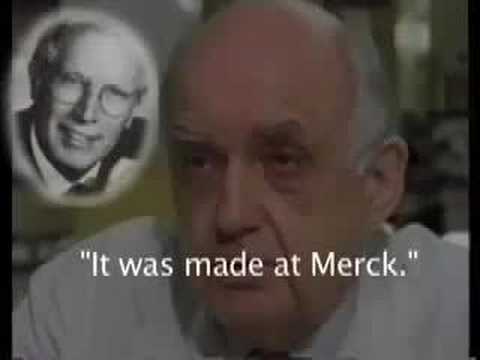
Dr. Maurice Hilleman worked for Merck who developed the SV40 cancer-causing polio vaccine
Health Impact News Editor Comments
While most believers in vaccines like to point to polio as a disease that was eliminated by vaccines, the history of polio and the polio vaccine paints a far different picture than what most believe about polio and the polio vaccine today.
Nicholas Gonzalez, M.D. – Scientifically No Polio Vaccine was Needed
by Nicholas Gonzales, M.D.
GreenMedinfo.com
Excerpts:
I think, in the current debate, it would be a most useful exercise to go back in time, to review historical examples of allegedly or presumably catastrophic infectious disease, specifically two examples, that of polio and Keshan’s disease, for which in both cases a vaccine was thought to be the only solution.
I remember the hysteria generated in the media by polio, the well-funded advertising campaigns by organizations such as the March of Dimes, relying on, of course, emotional arguments to raise money from “regular” moms and dads and Girl Scout and Boy Scout troops all over the country.
My childhood vision of polio was that of a true catastrophe, threatening the entire population of the United States, with our only hope the dedication and hard work of our wonderful research scientists who were extolled in the press on a near daily basis.
As a fledging research immunologist under Dr. Good somewhat fascinated by DuBos’ perspective, I began to investigate the actual epidemiology and ecology of polio. As I was to learn it turned out that polio “epidemics” as they were called, didn’t really emerge until the late 19th, and early 20th century. I had been taught in medical school that the epidemic nature of polio showed itself because of growing population density in urban areas associated with poor sanitation. Though this position seemed logical, since polio transmits through a fecal oral route, the opposite has proven to be the case.
Studies from the late 1940s, before the availability of the Salk vaccine, indicated that in low-income urban areas up to 90% of the population showed antibodies to polio, though most who tested positive had no recollection of having been infected and had not experienced any residual neuro-muscular problems. For them, the disease seemed no more serious than a brief upper respiratory infection or gastroenteritis.
True, the number of deaths from the disease and cases of paralytic polio did increase significantly in the early 1950s, but these numbers were hardly at the level of full-blown catastrophe. For example, in 1949, considered an epidemic year, 42,173 cases were identified in the US, with 2, 720 deaths. Anyone unfortunate enough to be killed, or struck down and left paralyzed would be an individual tragedy, but the numbers just were not there for a major epidemic as has often been portrayed. Even throughout the so-called “epidemic” years of the late 1940s and early 1950s most contracted the virus without any recognition they had been infected with the “deadly” polio organism.
Ironically, the increasing incidence of paralytic cases and deaths, though still relatively small, occurred as intensive public health campaigns to clean up the cities went into full force. As in most instances, Nature doesn’t work the way the human mind would like it to work. It turns out all these highly funded and well-intentioned efforts to prevent polio by cleaning out and sterilizing the cities came inevitably with unintended consequences.
In its usual ecological setting, prior to these public health experts at work, polio rarely struck infants younger than six months old, most commonly infecting children between six months and four years of age when the disease usually presented in its “common cold” form. With improved sanitation, polio tended to hit at later ages, even into adulthood, when it was quite a different, far more aggressive illness.
So, with improved sanitation, fewer children were exposed to the disease, more adults were, and the results in adults were disastrous. In “unclean” urban areas, early exposure mitigated the severity of the illness, with the added benefit of providing lifetime immunity. With improved sanitation the disease became far more deadly.
In this context I am reminded of more recent studies demonstrating that children allowed to play in the mud and muck – as I was as a child before germ-phobia became itself an epidemic – and who attend day care centers where they are exposed to all manner of drippy noses and minor infections, tend to have far less asthma, far fewer allergies, and far stronger immunity, than their over-protected colleagues.
I think myself so fortunate that I contracted, and endured, the usual childhood illnesses, including measles, mumps, and chicken pox, even a minor brush with Epstein Barr. For me, and for all my school friends, these diseases were hardly anything worth remembering particularly, leaving us somewhat disabled for a few days, with much-appreciated time off from school and a certain amount of parental pampering. No one I knew was left with encephalomyelopathy, nor any other serious neurological deficit as a result of their experiences with any of these viruses. I do believe these illnesses served me a valuable function, testing my immune system, letting it flex its muscles, teaching it how to work against a mild infection so that someday it might effectively deal with a more serious organism.
I see so many patients in their 20s and 30s, the first of the highly-vaccinated generation, coming to my office unable to function, having been exposed to some viral illness like Epstein-Barr, or Borrelia, or some associated “coinfection,” who five and ten and fifteen years later despite aggressive treatments of all types, both alternative and conventional, are unable to function, finish school, hold a job, at times – and you all know patients like this – unable to leave their room (except initially to see me). These are young adults with immature immune systems, whose immune cells either underperform, don’t perform at all, or that over-react, with immune regulation gone haywire. We can get these patients well, fortunately, but they often endured quite a bit a suffering for long periods of time. And these aren’t the kids with autism, these are young people with promising futures and careers ahead, sidelined and sidetracked by some trivial little virus.
When we think about the child paralyzed by polio or the poor debilitated diphtheria-infected Asian children, we need to step back for a moment, and realize Nature really isn’t the enemy, it’s so often – as Dubos made clear 50 years ago – what we do as individuals, as cultures, and as governments that makes a tolerable, manageable problem into something worse, and this includes force-feeding vaccination. When these discussions begin, just remember the negative blowback from those “improved” public health measures in urban areas, that made polio a much worse disease than it had been, and left in their wake death and disability.
Speaking scientifically, it appears that no polio vaccine was really needed any more than it was needed for Keshan’s. Instead, we should have let kids be kids, playing in the mud, letting their immune systems grow and mature as Nature intended, without interference by well-intentioned and completely misguided science.
Read the Full Article, “Some Thoughts on the Vaccination Debate – by Nicholas Gonzalez, MD,” at GreenMedInfo.com
About the Author
Nicholas J. Gonzalez, M.D., graduated from Brown University, Phi Beta Kappa, magna cum laude, with a degree in English Literature. He subsequently worked as a journalist, first at Time Inc., before pursuing premedical studies at Columbia. He then received his medical degree from Cornell University Medical College in 1983. During a postgraduate immunology fellowship under Dr. Robert A. Good, considered the father of modern immunology, he completed a research study evaluating an aggressive nutritional therapy in the treatment of advanced cancer. Since 1987, Dr. Gonzalez has been in private practice in New York City, treating patients diagnosed with cancer and other serious degenerative illnesses. His nutritional research has received substantial financial support from Procter & Gamble and Nestle. Results from a pilot study published in 1999 described the most positive data in the medical literature for pancreatic cancer.
Propaganda and the Polio Vaccine
by Jeffry John Aufderheide
VacTruth.com
Excerpts:
The polio effort was a benchmark for the public to mentally accept the concept “shots prevent disease” and [that diseases can be] conquered by science.
However, hidden to most Americans was an elaborate Public Relations scheme being carefully and methodically applied to their psyche. Propaganda was used heavily to promote the National Foundation for Infantile Paralysis and the March of Dimes solution to the polio epidemics: a vaccine.
If you didn’t know, the polio vaccine was created by culturing the poliovirus on monkey testicles and kidneys. The polio vaccine was later found to be contaminated with the dangerous cancer causing SV40 (Simian Virus 40).
This clip is just a small taste of how American citizens were blanketed with vaccine propaganda.
Edward Bernays also worked for the American Tobacco Company. Ever heard of the term “tobacco science?”
The reason for showing you this clip is to demonstrate to you the handy work of Bernays. Doctors are being used as tools to push science funded by the tobacco companies, just like Bernays described they would be.
Read the full article, “The Media Uses These Powerful Tricks to Condition You to Accept Vaccines,” at VacTruth.com.
Dr. Bernard Greenberg’s 1962 Congressional Testimony on Polio
In testimonies given at US Congressional Hearings in 1962, Dr. Bernard Greenberg, head of the Department of Biostatistics of the University of North Carolina School of Public Health, testified that not only did polio increase substantially (50 percent from 1957 to 1958 and 80 percent from 1958 to 1959) after the introduction of mass vaccination programs, but statistics were manipulated to give the impression of the effectiveness of the Salk vaccine. Dr. Greenberg gave the following reasons why it appeared that polio decreased after the vaccine was given:
* Redefinition of an epidemic: More cases were required to refer to polio as epidemic after the introduction of the Salk vaccine (from 20 per 100,000 to 35 per 100,000 per year) ·
* Redefinition of the disease: In order to qualify for classification as paralytic poliomyelitis, the patient had to exhibit paralytic symptoms for at least 60 days after the onset of the disease. Prior to 1954 the patient had to exhibit paralytic symptoms for only 24 hours. Laboratory confirmation and the presence of residual paralysis were not required. After 1954, residual paralysis was determined 10 to 20 days and again 50 to 70 days after the onset of the disease. “This change in definition meant that in 1955 we started reporting a new disease, namely, paralytic poliomyelitis with a longer lasting paralysis,” testified Dr. Greenberg. ·
* Mislabeling: After the introduction of the Salk vaccine, “Cocksackie virus and aseptic meningitis have been distinguished from paralytic poliomyelitis, whereas prior to 1954 large numbers of these cases undoubtedly were mislabeled as paralytic polio,” explained Dr. Greenberg.
Source: Intensive Immunization Programs, Hearings before the Committee on Interstate & Foreign Commerce, House of Representatives, 87th Congress, 2nd Session on H.R. 10541, Washington DC: US Government Printing Office, 1962; pp. 96-97
Polio Vaccine Pioneer Doctor Admits Polio Vaccine Caused Cancer
Dr. Maurice Hilleman was the developer of Merck’s vaccine program. He developed over three dozen vaccines, more than any other scientist in history. He was a member of the U.S. National Academy of Science, the Institute of Medicine, the American Academy of Arts and Sciences, and the American Philosophical Society. He received a special lifetime achievement award from the World Health Organization. Hilleman was one of the early vaccine pioneers to warn about the possibility that simian viruses might contaminate vaccines. In the interview below he states: “vaccines have to be considered the bargain basement technology for the 20th century.”
In a censored interview with Dr. Maurice Hilleman that has been published on YouTube, Hilleman admits Merck’s responsibility in unleashing the SV40, a cancer-causing monkey virus, via their polio vaccine. He also reveals that they probably also spread the AIDS virus in the same manner.
Transcript
Dr. Len Horowitz: Listen now to the voice of the world’s leading vaccine expert Dr Maurice Hilleman, Chief of the Merck Pharmaceutical Company’s vaccine division relay this problem he was having with imported monkeys. He best explains the origin of AIDS, but what you are about to hear was cut from any public disclosures.
Dr Maurice Hilleman: and I think that vaccines have to be considered the bargain basement technology for the 20th century.
Narrator: 50 years ago when Maurice Hilleman was a high school student in Miles City Montana, he hoped he might qualify as a management trainee for the local JC Penney’s store. Instead he went on to pioneer more breakthroughs in vaccine research and development than anyone in the history of American medicine. Among the discoveries he made at Merck, are vaccines for mumps, rubella and measles…
Dr Edward Shorter: Tell me how you found SV40 and the polio vaccine.
Dr Maurice Hilleman: Well, that was at Merck. Yeah, I came to Merck. And uh, I was going to develop vaccines. And we had wild viruses in those days. You remember the wild monkey kidney viruses and so forth? And I finally after 6 months gave up and said that you cannot develop vaccines with these damn monkeys, we’re finished and if I can’t do something I’m going to quit, I’m not going to try it. So I went down to see Bill Mann at the zoo in Washington DC and I told Bill Mann, I said “look, I got a problem and I don’t know what the hell to do.” Bill Mann is a real bright guy. I said that these lousy monkeys are picking it up while being stored in the airports in transit, loading, off loading. He said, very simply, you go ahead and get your monkeys out of West Africa and get the African Green, bring them into Madrid unload them there, there is no other traffic there for animals, fly them into Philadelphia and pick them up. Or fly them into New York and pick them up, right off the airplane. So we brought African Greens in and I didn’t know we were importing the AIDS virus at the time. [emphasis added]
Miscellaneous background voices:…(laughter)… it was you who introduced the AIDS virus into the country. Now we know! (laughter) This is the real story! (laughter) What Merck won’t do to develop a vaccine! (laughter)
Dr Maurice Hilleman: So what he did, he brought in, I mean we brought in those monkeys, I only had those and this was the solution because those monkeys didn’t have the wild viruses but we…
Dr Edward Shorter: Wait, why didn’t the greens have the wild viruses since they came from Africa?
Dr Maurice Hilleman: …because they weren’t, they weren’t, they weren’t being infected in these group holding things with all the other 40 different viruses…
Dr Edward Shorter: but they had the ones that they brought from the jungle though…
Dr Maurice Hilleman: …yeah, they had those, but those were relatively few what you do you have a gang housing you’re going to have an epidemic transmission of infection in a confined space. So anyway, the greens came in and now we have these and were taking our stocks to clean them up and god now I’m discovering new viruses. So, I said Judas Priest. Well I got an invitation from the Sister Kinney Foundation which was the opposing foundation when it was the live virus…
Dr Edward Shorter: Ah, right…
Dr Maurice Hilleman: Yeah, they had jumped on the Sabin’s band wagon and they had asked me to come down and give a talk at the Sister Kinney Foundation meeting and I saw it was an international meeting and god, what am I going to talk about? I know what I’m going to do, I’m going to talk about the detection of non detectable viruses as a topic.
Dr Albert Sabin …there were those who didn’t want a live virus vaccine… (unintelligible) …concentrated all its efforts on getting more and more people to use the killed virus vaccine, while they were supporting me for research on the live viruses.
Dr Maurice Hilleman: So now I got to have something (laughter), you know that going to attract attention. And gee, I thought that damn SV40, I mean that damn vaculating agent that we have, I’m just going to pick that particular one, that virus has got to be in vaccines, it’s got to be in the Sabin’s vaccines so I quick tested it (laughter) and sure enough it was in there.
Dr Edward Shorter: I’ll be damned
Dr Maurice Hilleman: … And so now…
Dr Edward Shorter: …so you just took stocks of Sabin’s vaccines off the shelf here at Merck…
Dr Maurice Hilleman: …yeah, well it had been made, it was made at Merck…
Dr Edward Shorter: You were making it for Sabin at this point?
Dr Maurice Hilleman: …Yeah, it was made before I came…
Dr Edward Shorter: yeah, but at this point Sabin is still just doing massive field trials…
Dr Maurice Hilleman: …uh huh
Dr Edward Shorter: okay,
Dr Maurice Hilleman: …in Russia and so forth. So I go down and I talked about the detection of non detectable viruses and told Albert, I said listen Albert you know you and I are good friends but I’m going to go down there and you’re going to get upset. I’m going to talk about the virus that it’s in your vaccine. You’re going to get rid of the virus, don’t worry about it, you’re going to get rid of it… but umm, so of course Albert was very upset…
Dr Edward Shorter: What did he say?
Dr Maurice Hilleman: …well he said basically, that this is just another obfuscation that’s going to upset vaccines. I said well you know, you’re absolutely right, but we have a new era here we have a new era of the detection and the important thing is to get rid of these viruses.
Dr Edward Shorter: Why would he call it an obfuscation if it was a virus that was contaminating the vaccine?
Dr Maurice Hilleman: …well there are 40 different viruses in these vaccines anyway that we were inactivating and uh,
Dr Edward Shorter: but you weren’t inactivating his though…
Dr Maurice Hilleman: …no that’s right, but yellow fever vaccine had leukemia virus in it and you know this was in the days of very crude science. So anyway I went down and talked to him and said well, why are you concerned about it? Well I said “I’ll tell you what, I have a feeling in my bones that this virus is different, I don’t know why to tell you this but I …(unintelligible) …I just think this virus will have some long term effects.” And he said what? And I said “cancer”. (laughter) I said Albert, you probably think I’m nuts, but I just have that feeling. Well in the mean time we had taken this virus and put it into monkeys and into hamsters. So we had this meeting and that was sort of the topic of the day and the jokes that were going around was that “gee, we would win the Olympics because the Russians would all be loaded down with tumors.” (laughter) This was where the vaccine was being tested, this was where… so, uhh, and it really destroyed the meeting and it was sort of the topic. Well anyway…
Dr Edward Shorter: Was this the physicians… (unintelligible) …meeting in New York?
Dr Maurice Hilleman …well no, this was at Sister Kinney…
Dr Edward Shorter: Sister Kinney, right…
Dr Maurice Hilleman: …and Del Becco (sp) got up and he foresaw problems with these kinds of agents.
Dr Edward Shorter: Why didn’t this get out into the press?
Dr Maurice Hilleman: …well, I guess it did I don’t remember. We had no press release on it. Obviously you don’t go out, this is a scientific affair within the scientific community…
Voice of news reporter: …an historic victory over a dread disease is dramatically unfolded at the U of Michigan. Here scientists usher in a new medical age with the monumental reports that prove that the Salk vaccine against crippling polio to be a sensational success. It’s a day of triumph for 40 year old Dr. Jonas E Salk developer of the vaccine. He arrives here with Basil O’Connor the head of the National Foundation for Infantile Paralysis that financed the tests. Hundreds of reporters and scientists gathered from all over the nation gathered for the momentous announcement….
Dr Albert Sabin: …it was too much of a show, it was too much Hollywood. There was too much exaggeration and the impression in 1957 that was, no in 1954 that was given was that the problem had been solved , polio had been conquered.
Dr Maurice Hilleman: …but, anyway we knew it was in our seed stock from making vaccines. That virus you see, is one in 10,000 particles is not an activated… (unintelligible) …it was good science at the time because that was what you did. You didn’t worry about these wild viruses.
Dr Edward Shorter: So you discovered, it wasn’t being inactivated in the Salk vaccine?
Dr Maurice Hilleman: …Right. So then the next thing you know is, 3, 4 weeks after that we found that there were tumors popping up on these hamsters.
Dr. Len Horowitz: Despite AIDS and Leukemia suddenly becoming pandemic from “wild viruses” Hilleman said, this was “good science” at that time.
See Also:
Did Vaccines Really Eradicate Polio?
The REAL History Behind the Polio Vaccine
Dissolving Illusions: Disease, Vaccines, and The Forgotten History
by Dr. Suzanne Humphries and Roman Bystrianyk
Free Shipping Available!
Learn More

You can see a LOT of links about how vaccine-induced polio is actually making polio cases RISE, by looking at the links on this page. Thanks to Chris S. for sharing this.
https://www.theliberationstation.com/polio-vaccines-blog.html
6 Comments