
https://findanyanswer.com/what-are-3-types-of-food-emulsions
Is lemon juice an emulsifier?
Potent In Vivo Antiviral Activity of the Herpes Simplex Virus Primase-Helicase Inhibitor BAY 57-1293
Even high doses of BAY 57-1293 were well tolerated in the animal experiments described here. As a primary sulfonamide, however, BAY 57-1293 is a weak inhibitor of mammalian carbonic anhydrase (IC50, 2 to 5 μM).
In summary, we showed that the thiazolylsulfonamide BAY 57-1293 is highly efficacious in the treatment of HSV-1 and HSV-2 infections in a variety of animal models and is superior to the drugs currently in use. Thiazolylsulfonamides therefore should have the potential to become new standards in the treatment of HSV disease.
https://www.ncbi.nlm.nih.gov/pmc/articles/PMC4474391/
https://pubmed.ncbi.nlm.nih.gov/17049593/
https://www.organic-beauty-recipes.com/top-5-natural-emulsifiers-in-diy-beauty-products/
Top 5 Natural Emulsifiers in DIY beauty products
You can support me creating new DIY beauty recipes by joining Patreon here! Every month I'll send you a beautifully designed, printable PDF of the last month's posts. It's like a mini-magazine, and is a lovely way to collect my recipes!
You can also check out my favorite shopping lists on Amazon . I will receive a small commission from the affiliate program Amazon if you order something and this is at no additional cost to you!
‘Emulsifier’ and ‘emulsion’ are words that get used a lot in DIY beauty products. Cosmetic companies use all sorts of chemical or synthetic emulsifiers, but the good news is that there are plenty of natural emulsifiers out there too! Here are my top 5 natural emulsifiers so you don’t have to use chemicals ever again, beeswax, candelilla wax, carnauba wax, rice bran wax and organic liquid lecithin.
What is an emulsion
This may seem like a scary word out of a chemistry class, but it is actually a simple process that helps you to create a smooth consistency in your beauty products. An emulsion is simply a mixture of molecules that create a smooth blend of all the same size molecules. For instance, a lighter oil may have small molecules and a heavier butter may have large molecules. To mix them successfully, you will need an emulsifier. The emulsifier helps to bridge the small molecules and the larger molecules, resulting in molecules that are all the same size. Emulsifiers also helps blend oil and water molecules.
Cosmetic companies use all sorts of chemical or synthetic emulsifiers, but the good news is that there are plenty of natural emulsifiers out there too!
100% Natural emulsifiers
These emulsifiers are completely natural. You may choose different ones to use in your products based on texture or nutrient content.
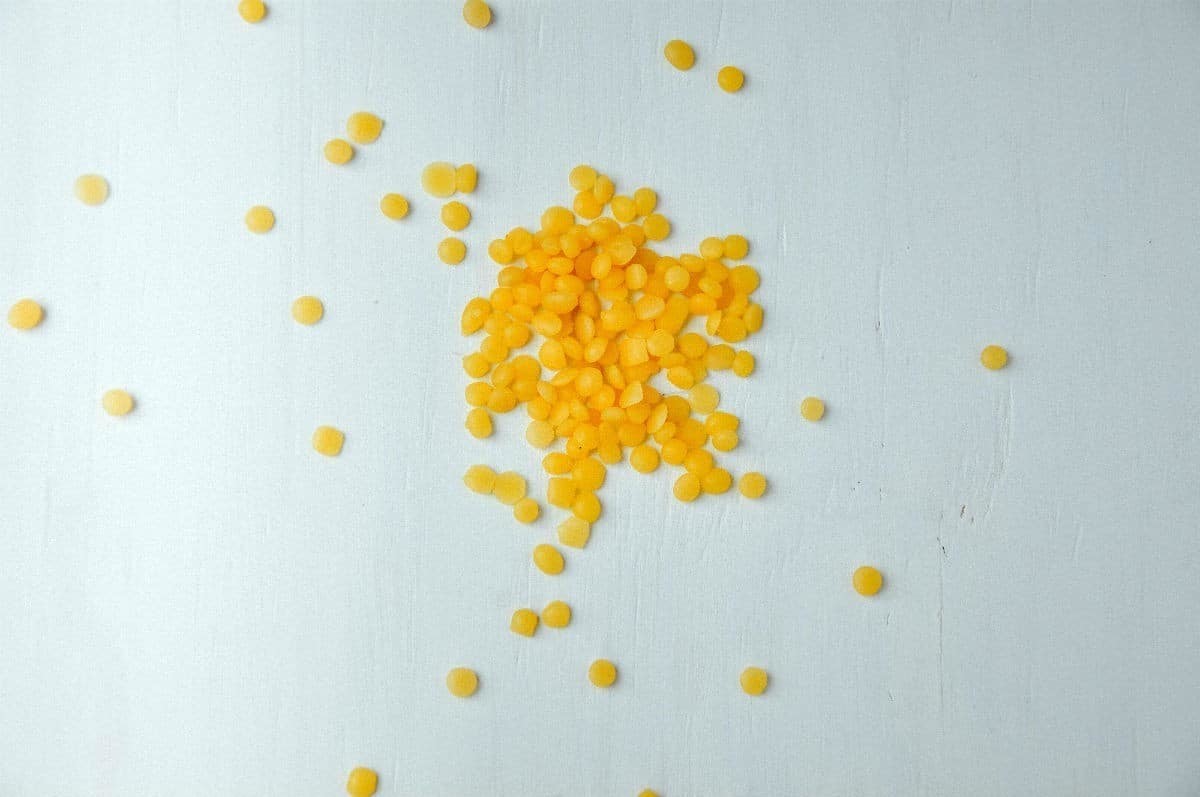
Top 1 Natural Emulsifier – Beeswax
Beeswax is made from the honeycomb of bees and provides a natural protective barrier when applied to the skin. It is also an anti-inflammatory, moisturizing wax with a thick, tacky texture, which makes it a good stiffening agent in DIY beauty products. This is one of my favorite natural emulsifiers because it is very versatile. You can use it to create lip balm, lip gloss, salves, body butter, creams, massage bars, candles, wood polish and much more!
Melting point is 62 to 64 °C.
Check out my honey lip balm recipe like Burt bee’s here.

Top 2 Natural Emulsifier – Candelilla Wax
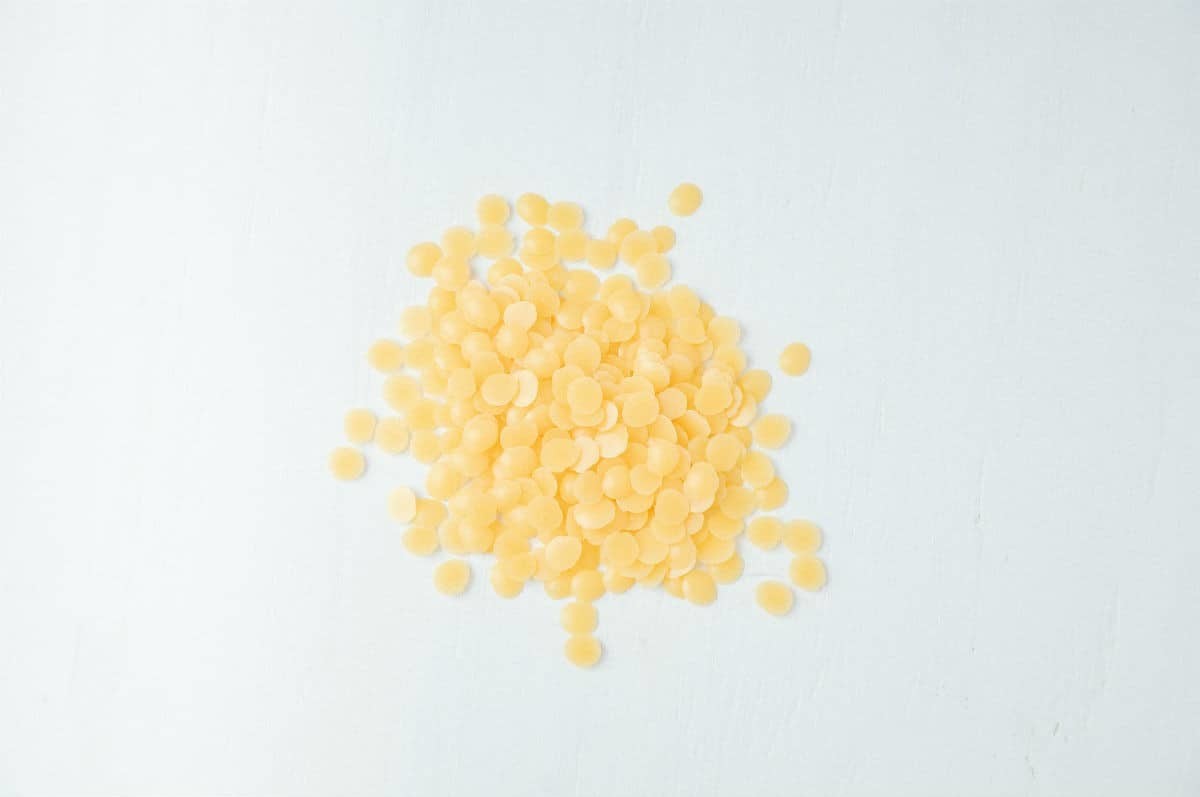
Candelilla wax is a great vegan alternative to beeswax and is made from the candelilla shrub. It is similar in texture to beeswax. While it is a bit denser than beeswax, candelilla wax absorbs easily into the skin and is full of nutrients. Great to use as a vegan alternative to beeswax!
Melting point is 68-73 oC.
Check out my vegan lip balm recipe here.

Top 3 Natural Emulsifier – Carnauba Wax
Carnauba wax is an edible wax made from a Brazilian palm tree. It is one of the hardest natural waxes available and it provides a glossy finish in natural cosmetics. It is highly emollient, delivering moisture to the skin.
Melting point: 80-86 oC
Check out my coconut oil body butter here.


Top 4 Natural Emulsifier – Rice Bran Wax
Rice Bran Wax (Oryza Sativa) is a wax that can be used in lipstick, salves, body butter but also creams and lotion. This is a good alternative to use if you are vegan.
The melting point is 75/80C.
Check out my favorite lipstick recipe that uses rice bran wax here.


Top 5 Natural Emulsifier – Liquid Lecithin
Liquid Lecithin is a naturally occurring fat found in both plants and animals. Lecithin is an emulsifier and restores skin health by reducing flakiness and dryness. It is also used as a thickener, stabilizer, mild preservative, moisturizer, and emollient in natural beauty products. The only thing I do not like about lecithin is thatit comes from from soybeans and is solvent extracted.
Naturally-derived emulsifier
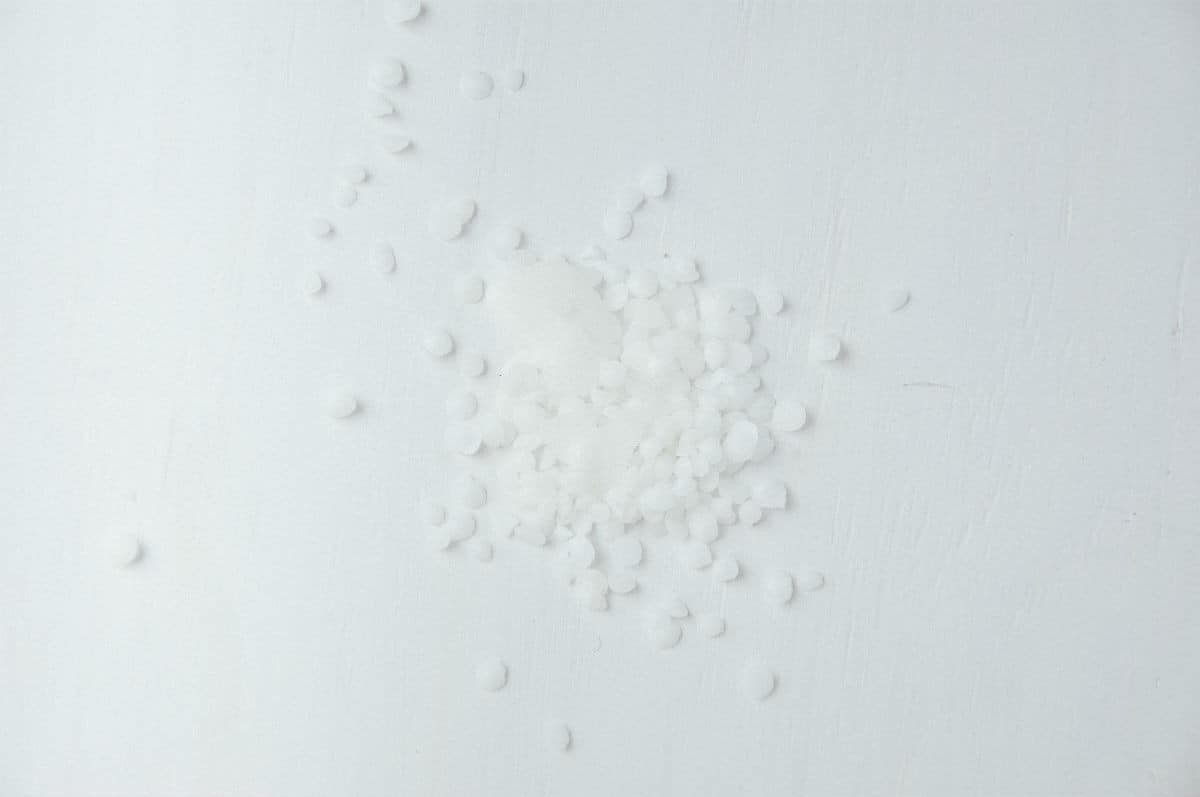
Naturally derived emulsifiers means they are not 100% natural and are made in a lab, a good example is Emulsifying wax (also called polawax) . This one comes from from palm and is additive-free, making it a good alternative to the 100% natural emulsifiers listed above. This has a high melting point and can help to create an ultra-smooth cream The downside of using emulsifying wax is that you will have to use a preservative because usually you are mixing water with oil and this does not last long without spoiling and getting mold.

Why you might choose to use a Naturally-derived emulsifier
I personally don’t use emulsifiers that are made in a lab on a daily basis. They can, however, be useful if you want to make a liquid lotion that is not greasy. If you are looking to recreate the non-greasy texture of more conventional beauty products, using an emulsifier is the way to go. Just keep in mind, your beauty product will NOT be 100% natural.
Can you make a cream or body butter without an emulsifier?
The answer may surprise you, but it is a ‘yes’. And it is my favorite way of making a cream or body butter without any beeswax, or emulsifying wax.
Basically, if you use a butter and a carrier oil and mix them very fast, it will create a cream and even sometimes a whipped body butter. Even though it is not a proper emulsion, the end result is still a body cream.
Check out my anti-aging face cream recipe without beeswax here.
How to make a basic cream or lotion using an emulsifier
To make a cream or lotion with an emulsifier, you will need to:
1/Melt down the emulsifying wax, or natural wax with your other ingredients
2/ Blend thoroughly with your other ingredients.
Be sure to pay attention to the ratios your specific recipe calls for.
If you are inventing your own recipe using a natural emulsifier, you typically want to be between 5% to 10% of the emulsifier in the mixture.
Please let me know if you have any questions and if you are using any other natural emulsifiers in the comments below!

Formulation and evaluation of acyclovir microemulsions

Incorporation of Lipids into Herpes Simplex Virus Particles 
The synthesis of lipids in BSC 1 cells and their association with herpes simplex virus was studied. Radioactive choline was found to be incorporated mainly into lecithin. Infection of cells with herpes simplex virus did not affect the synthesis of cellular lipoproteins. Infected cells, prelabelled with radioactive choline, yielded virus particles which contained radioactively labelled cellular lipids. Treatment of herpes virus particles with sodium deoxycholate caused the dissociation of the particles and the release of capsomeres and soluble proteins.
- Received:
- Accepted:
- Published Online:
Antiviral Nanodelivery Systems: Current Trends in Acyclovir Administration

Abstract
Poor bioavailability of acyclovir in the treatment of viral infections remains one of the major drug delivery concerns of pharmaceutical manufacturers and researchers. Nanoparticulate systems have been exploited with the aim of improving the current pharmacological limitations of acyclovir administration. In fact, nanoparticles do offer many advantages, especially in terms of their physicochemical stability and sustained-release properties. Besides, they are made of biocompatible materials, which are nontoxic to cells. Acyclovir has been a focus since the last decade as one of the low bioavailability drug models loaded in various types of newly synthesized drug delivery vehicles. In this review, compositions and formulations of nanosized acyclovir particles, as well as their stability and pharmacokinetic profile, are discussed in further detail.
https://pubs.acs.org/doi/10.1021/acsomega.7b00554

No comments:
Post a Comment
Note: Only a member of this blog may post a comment.