
This virus seems to THRIVE in an acidic environment, and just ONE soda can be so acidifying, it would take gallons of alkaline water to flush it out of your system.
Check out this list of acidic beverages, that were pH-tested by the American Dental Association. It was SHOCKING to see just how many popular drinks in the US are below a pH of 3.0!
I want to know who in the world came up with term "soft drinks"? It must have been someone in the beverage industry, because the term "soft" gives us the illusion that they're harmless, but they're far from it.
Well, I just googled it, and this is what pops up at the top of the page. Yeah, not too surprising.

Why Are They Called Soft Drinks?
https://zidbits.com/2011/07/why-are-carbonated-beverages-called-soft-drinks/

The word ‘soft drink’ owes its origin to simple advertising. The makers of artificial (and natural) flavored carbonated beverages were having a difficult time marketing their product nationally thanks to the fact that the name for these beverages varied from region to region and even city to city. For instance, in different parts of the United States and Canada, flavored carbonated beverages can be referred to as pop, and in other parts, soda, in yet other parts there are other names.
In my opinion it really should be called a "hard drink," but I guess that's just reserved for alcohol, so the soft drink industry saw this as a great opportunity to make the public think soda pop is harmless. It's amazing how easily we can fall for stuff when someone just gives it the right name. Humans have been throwing people way off, by just changing the name of a thing, for centuries. Reminds me of that story about how Greenland preferred to be called Iceland, because they didn't want too many people going there.
Kombucha is a great alternative to soda because it's actually fizzy and sweet, but it doesn't have all those added chemicals, and it's actually GOOD FOR YOU! When I buy it at the store, it runs anywhere from $2 to $3.50 a bottle, so I need to start making my own. I researched Kombucha kits, and am going to order this one, based on the reviews (almost 3,000 reviews, 5 star average).
This is the kit I'm going to buy, based on the 3,000+ 5 star reviews.


https://www.healthline.com/nutrition/13-ways-sugary-soda-is-bad-for-you#TOC_TITLE_HDR_15
This is a great article that can be found here:
Sugar = Inflammation!
The Connection Between Sugar, Acidity, and Inflammation.
By: Dr. Hardick
Sugar Wrecks pH Balance: Research shows an alkaline state is healthier for your body, and most tissues and cells maintain an alkaline pH balance. Sugar does the opposite: It imbalances pH and makes you more acidic, increasing your risk for numerous problems including kidney stones, chronic inflammation, and oxidative stress. Research shows an alkaline pH is healthier for your body. Sugar makes pH more acidic.The pH of your blood is tightly regulated and usually stays around 7.35 to 7.45.When experts talk about acidic or alkaline foods, they refer to your urine pH, since blood pH stays relatively stable. Urine pH provides clues about numerous things include cellular health and nutrient status.
However, excess sugar can lower pH between cells. Excess sugar also creates sodium and potassium imbalances, contributing to that more acidic environment. Combine that with lostcalcium in the urine and decreased sodium bicarbonate (the body’s major buffer) and you’ve got a perfect recipe for metabolic acidosis.
Coupled with fewer higher-alkaline foods like fruits and vegetables, your body becomes more acidic while lowering its main buffer (serum bicarbonate). Metabolic stress ensues in your liver, pancreas, kidneys, and other organs.
Studies show overall people who eat more refined sugar consume fewer fruits and vegetables, creating sodium to potassium imbalances that mess with your body’s buffering system, creating – you guessed it – an even more acidic environment between your cells.
An acidic environment also stresses your body out. Sugar-triggered metabolic acidosis raises your stress hormone cortisol, keeping your body on high alert and cranking out more free radicals that damage mitochondria (your cells’ energy plants) while accelerating aging and ramping up fat storage.
Acidity also flips the switch for cytokine production, spiking inflammation and free radical production. An acidic environment also stresses out your liver, kidneys, pancreas, and other organs, ramping up those inflammatory and oxidative stress pathways, damaging cells and sometimes leading to cancer.
Sugar, Chronic Inflammation, and Oxidative Stress: The acidic environment excess sugar creates contributes to two major killers that often occur together: Chronic inflammation and oxidative stress.Chronic inflammation plays a role in every disease on the planet. Numerous culprits contribute to chronic inflammation, including insufficient sleep, lack of exercise, and stress.
So does sugar. Excessive amounts can also increase oxidative stress, creating an antioxidant imbalance that leads to metabolic damage. Oxidative stress weakens your antioxidant defense, dampening your body’s ability to clean up this oxidative damage. Studies also link oxidative stress to obesity and chronic diseases like cancer. That particularly becomes true when you eat a diet low in omega-3 fatty acids, dietary fiber, and antioxidant-rich foods like vegetables.
Sugar and Disease: So, sugar makes your body acidic, which increases chronic inflammation and oxidative stress, spiking obesity and nearly every disease on the planet. Consequently, obesity and disease increase chronic inflammation and oxidative stress, creating a vicious cycle.
What ensues is often catastrophic and sometimes deadly. Insulin resistance, which paves the path for Type 2 diabetes and other problems, might be sugar’s biggest culprit. Many overweight or obese people also have some form of insulin resistance, which becomes a major player for inflammation.
None of this occurs in a vacuum. Metabolic syndrome – an umbrella term that affects 34 million Americans and includes insulin resistance but also high blood sugar levels, hyperlipidemia, high blood pressure, weight gain, and high uric acid levels – also increases inflammation and oxidative stress.
Taubes, like some other experts and recent studies, pins sugar as the chief driver for insulin resistance and metabolic syndrome.
Many studies particularly blame fructose. Yes, fruit contains fructose, but getting 15 grams of this simple sugar from an apple becomes far different than a soda. For one, that apple comes packaged with nutrients, fiber, and antioxidants that buffer its fructose load.
Is water harming or helping patients’ teeth?
If your patients are doing all the "right" things but still battle caries, consider that their troubles may be coming from an unexpected source.
We all have seen it, those patients who do the right things yet still battle tooth decay. It seems that every time they present for continuing care, they have new caries. It may be recurrent around a crown or composite. It may be root caries or radiographs that reveal new incipiencies. How can this be happening when they do all of the right things? It has come to my attention recently that there might be an answer.
There are countless contributing factors that can raise the risk for decay, such as diet, exposure time, insufficient biofilm control, saliva quality, and xerostomia, to name a few.1–3 We recommend fluorides, remineralizing pastes, saliva substitutes, and products that contain xylitol, as the research indicates these to be effective in controlling caries.4–7 Yet, for some, nothing seems to help. What are we missing? There is clearly another factor involved. When things just don’t add up, we must look elsewhere. So, let’s probe a little further into pH.
What is pH?
pH is a measure of hydrogen ion concentration that determines the acidity or alkalinity of a solution, which ranges from 0 to 14. The lower pH indicates acidity, while a high pH indicates alkalinity. Neutral is a pH of 7. 8
pH is a crucial factor in decay.8 The critical pH is the point at which the tooth begins to decalcify. The critical pH of enamel is 5.2–5.5. The critical pH of dentin is 6.8!9 If you’re like me, you’ve had countless conversations with patients that go something like this: “When you consume anything other than water, your mouth becomes a more acidic environment. Cavity-causing bacteria are more virulent in an acidic environment. It takes approximately 30 minutes for your mouth to recover from an acid attack. The longer you expose your teeth to this acidity …” The key point in this conversation is “anything other than water.”
Several pH testing products are available to the general public and to the dental community to use in their offices. Our office uses a simple, decisively indicative litmus system that collects stimulated saliva for a period of time. The kit tests pH as well as the saliva’s ability to buffer acidity. This has been extremely useful in determining the quality of an individual’s saliva. I’ve been surprised by the number of patients whose sample saliva failed to sufficiently buffer an acidic specimen. This is an ideal situation to prescribe some of the pH-regulating products I mentioned.
 Some of the materials used in testing acidity and alkalinityMore about water
Pure water should be neutral.10 What could possibly be more innocuous than water? It’s the purest substance in everyday life, right? Perhaps not. Recent studies and countless amateur home scientists have proven that water is not always a neutral 7.0. In fact, many bottled waters have been found to be remarkably acidic.11–12
I tested 12 brands of bottled waters, my home tap water, and the water we use in patient care at the office. I was shocked to see the results of my experiment. The majority of bottled waters tested below the critical pH for enamel and dentin demineralization. Even worse, none of the alkaline waters that claim to have a pH of 8.4 or higher reached neutral, much less alkalinity. Surprisingly, our office water and my home water both tested comfortably above 7.0.
Home pH neutralizers use acid neutralizing filters or chemical feed pumps to neutralize pH with calcium carbonate, calcite, or magnesium oxide.13 Water ionizers work via electrolysis to separate the alkaline water from the acidic.14 I was able to make some of the bottled waters I tested more alkaline by adding very small quantities of sodium bicarbonate. This was done for the sake of science; therefore, I caution against recommending this to patients without consulting their physicians, as it would be contraindicated for patients with sodium-restricted diets.
Sodas and coffee are the most universally known acidic beverages. Yet, according to a study published in the Journal of the American Dental Association, 93% of juices, flavored waters, teas, and energy drinks were also determined to have a pH of less than 4.0.10 Carbonated waters add carbon dioxide as a preservative and disinfectant, and it also contributes to the refreshing fizz. Carbon dioxide lowers the pH. Therefore, even flavored and carbonated waters are not as innocuous as they may seem.15
It appears we were ill informed. But I do feel that alkaline water can be the key to reducing caries as long as the pH is reliable. I used to eat fat-free food because I was told fat would make me fat. My father was told to eat liver once a week because it would be good for his heart. Water is good for us, but maybe not all water. Yeah, OK. Change is inevitable, so we must accept it, learn from it, and run with it. Seek more truths and embrace more change.
Only part of the story: The danger of soft drink beverages requires a closer look at the chemistry
Anne Guignon, RDH, says the effect of dental erosion caused by soft drink beverages can be understood by examining the chemistry more closely.
ANNE NUGENT GUIGNON
The 18th century phrase, "A little knowledge is a dangerous thing," has withstood the test of time. Steadfast beliefs often shatter quickly when the scientific community brings forward new information. As responsible clinicians, we need to be open to what the research is telling us and figure out a way to translate the information into digestible sound bites that convey the most accurate information.
A perfect case in point is what researchers are now reporting about soft drinks and their impact on oral health. For years our focus has been on sugar-laden drinks. Until 10 years ago, sugar-free or diet beverages were considered an acceptable substitute, a belief quickly abandoned when scientists started considering pH levels.
In 2004, von Fraunhoffer published a landmark study that evaluated the erosive potential of 15 different drinks as compared to water. The study measured the overall weight loss of pieces of teeth exposed to commercial soft drinks over a period of two weeks, which clearly demonstrated that low pH beverages cause significant erosion issues.1
There were several other key studies that involved drinks and teeth. Saliva was not a part of these study designs; therefore, there were no bacteria to increase the acid load and no saliva to neutralize the acid pH levels in the drinks. Of the 15 drinks studied by von Fraunhofer, the pH levels of the carbonated beverages and canned iced teas fell between pH 2.9 and 3.4. The only exception was root beer with a pH reading of 4.8.1
Study results reported a much higher erosive potential for citrus-based drinks and canned iced tea as compared to the brown, cola-based drinks. The erosive potential of both diet and regular Mountain Dew far surpassed all other products tested, while root beer had an erosive potential very close to water.1 What was going on? Clearly, the dental community needed to rethink their recommendations.
In 2007, Owens and Kitchen looked at four popular beverages from a slightly different standpoint. Their study, also conducted over a 14-day period, used a standard microscope and scanning electron microscopy to determine the effects of Coke, Diet Coke, Gatorade, and Red Bull on enamel integrity. Third molars free of caries were used in the experiment. Half of the occlusal surface of each experimental tooth was coated with red nail polish to form a protective barrier from the drinks.2
Teeth exposed to the regular and diet cola beverages sustained substantial enamel erosion; however, the teeth subjected to Gatorade and Red Bull also developed erosive lesions that showed extensive damage to the enamel, exposing large areas of dentin.2 Again, the study did not involve any bacteria, only teeth submersed in the test beverages over time.
Some basic chemistry
Before discussing the remaining results, let's review some basic concepts. For those of you who don't want to dust off your old chemistry books, here's a refresher on three critical principles. While the term pH gets tossed around a lot, remember pH measures the acid or alkaline level of a substance at a given point in time. The pH scale is logarithmic, so Coca Cola's pH of 2.49 is 10 times more acidic than Red Bull's pH at 3.41. If the pH value was the only information available, it would make sense to conclude that Red Bull might be the safer drink to consume. But this is where a little bit of information is dangerous.
Titratable acidity measures the total amount of acid, not the acid value at a point in time. The titratable acidity (TA) for Coke is 18.3, while the TA value for Red Bull is 51.9, a value nearly three times higher than that of Coke.2 The Owens and Kitchen study demonstrates that a higher TA value is a critically important piece of information in understanding why energy drinks have such an impact on tooth structure.
A third basic chemistry concept impacts the findings from both of these studies. Citric acid is technically classified as a weak organic acid, but that can be misleading to those of us who are not chemists. In reality, citric acid is a strong chelator that tightly binds to calcium, thus increasing the erosive potential of citrus-based drinks over drinks that contain phosphoric acid, such as the brown drinks.3
Advising patients about beverages
Fast forward to the modern-day beverages such as energy and sports drinks, or even a legacy drink like Mountain Dew. Each of these is formulated with multiple organic acids, which results in a higher TA than colas that are formulated only with phosphoric and carbonic acid, the ingredient responsible for the fizz.
While there has been a dramatic downward shift in carbonated beverage consumption over the past 10 years, consider the explosion in the number of flavored waters, energy and sports drinks, and drops and powders designed to flavor water. Consumption of citrus and floral teas, beverages like kombucha, and drinks to support digestion are also on the rise.
Numerous studies over the last decade have found that the most erosive beverages are those with low pH that have a high titratable acidity.4-10 A 2013 study evaluated the erosive potential of energy drinks as compared to sport drinks and found tooth erosion from energy drinks to be twice that of sports drinks.11 A number of studies have concluded that the titratable acidity is a significant predictor for enamel dissolution. None of these studies included the role bacteria play in producing acids. The role of fermentable carbohydrates must also be considered as a contributor to the acid overload.
We need to start reading labels. Citric acid is not the only problem. Manufacturers use a wide variety of acids to improve the taste of foods and beverages. Acids are everywhere, and they each contribute to the specific flavor profile of beverages. The most widely used acids for flavoring are citric, malic, lactic, tartaric, and phosphoric. Each acid added to a food or beverage increases the TA.6
Research shows tap water, freshly brewed coffee and tea, plain carbonated water, black and green teas, root beer,1 and fruit smoothies that contain yogurt12 all have a low erosive potential. Unlike other carbonated beverages, root beer contains only one acid, carbonic acid, and the proteins in yogurt bind the fruit acids in the smoothies.
Additional factors can further complicate the role of acids in the development of erosion and caries. When working with patients, remember to include factors such as dry mouth, eating frequency, unhealthy saliva, and ineffective biofilm disruption in the discussion. Understanding why beverages pose a significant chemical hazard to oral health will help us guide our patients to healthier selections. RDH
https://www.arizonaadvancedmedicine.com/articles/2013/june/soda-diet-soda-flavored-water/
Soda, Diet Soda, Flavored Water
Soda and sweetened beverages are often the most common source of young people’s sugar intake. The average teenage male drinks an estimated 868 cans of soda pop each year. Overall, Americans are consuming twice as much soda pop as they did 25 years ago. And they’re spending $54 billion a year on it. That’s twice what we spend on books.[1]
Soda is the subject of bans at schools and higher sales taxes for good reason, not just for the sugar content.
Weak Bones and Mineral Loss and Free Radicals
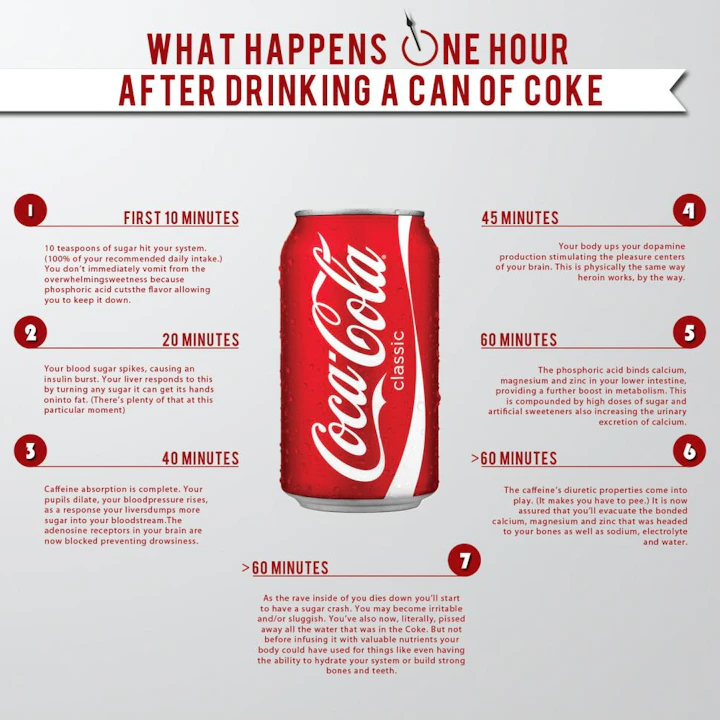
Soda drinkers are less likely to get sufficient vitamin A, calcium, or magnesium.[2] Sugar depletes magnesium, and the high levels of phosphoric acid in soft drinks can combine with calcium and magnesium in the gut to cause a loss of these vital minerals.
Doctors are now seeing young people engaged in sports break their femur - also known as the thigh bone and the strongest bone in the human body - and some are questioning if the phosphorus in soda pop has weakened the bones more than anyone expected. Phosphoric acid gives that tangy aftertaste. Ever used Naval Jelly for removing rust? That’s phosphoric acid at work. There is some research suggesting cola consumption increases the amount of calcium measured in urine, meaning cola triggers calcium leaching out of bone.
Researchers at Rutgers University discovered in 2007 that beverages made with high fructose corn syrup contain high levels of reactive carbonyls, a free radical linked to tissue damage, the development of diabetes, and the occurrence of diabetes complications. Reactive carbonyls are elevated in the blood of individuals with diabetes and linked to the complications of that disease. Eating fructose can block the ability of insulin to regulate how body cells use and store sugar and other nutrients for energy, leading to obesity, metabolic syndrome and type 2 diabetes.
The Plastic Connection
A chemical called bisphenol A (BPA) is used to make plastics hard, and in 2008, Health Canada banned it from baby products. News reports prompted many people to trade in their polycarbonate #7 water bottles for glass, stainless steel, or “BPA-free” plastics. However, maximum exposure to BPA is thought to come from the linings of canned food, especially acidic foods like soda pop and tomato sauce.
Both Coca-Cola and Pepsi officials use BPA in the epoxy resin linings of their soda cans.[3]
Evidence is accumulating that ongoing exposure to BPA might be contributing to a boatload of medical maladies. Effects at even low BPA exposure appear to include: prostate cancer, breast cancer, early puberty onset, alterations in gender-specific behavior, decreased sperm count, effects on fertility, effects on obesity and insulin resistance, behavioral issues including hyperactivity, increased aggressiveness, impaired learning and others. BPA mimics naturally occurring estrogen, a hormone that is part of the endocrine system, the body’s finely tuned messaging service.
The Endocrine Society concluded in 2009 that because of BPA’s hormonal action at trace levels, there may be no safe level of exposure.
University of Missouri biologist Fred Vom Saal explains the concern:
“It’s like putting a time bomb into the organs of your baby that later on in life are going to cause those organs to malfunction.”[4]
Ninety-five percent of Americans were found to have BPA in their urine in a 2004 biomonitoring study by the Centers for Disease Control and Prevention (CDC).
The Southampton Study – Food Colorings and Hyperactivity
A much anticipated British study came out in September, 2007, looking at whether the colored dyes added to so many soft drinks, fruit drinks, and junk food, trigger hyperactivity in children. The connection has been suspected for decades.
Scientists from Southampton University tested more than 300 children, aged 3 and 8, by giving them fruit drinks containing a common mixture of food colorings and preservatives (sodium benzoate).
This was a double-blind-placebo-control study; the mixtures were designed to reflect what a typical child might eat in the course of a normal day. It is the largest trial of its kind to date.
Results clearly demonstrated an increase in hyperactivity. Most importantly, the study confirmed deterioration in behavior occurs in children in the general population, not just in those identified as suffering from hyperactivity.
As reported in one of Britain’s largest newspapers, The Guardian, September 6, 2007:
“Parents are to be warned of the dangers of giving their young children drinks, sweets and cakes containing specified artificial additives, as a result of new findings being made public for the first time today which confirm their link with hyperactivity and disruptive behaviour. “The government’s Food Standards Agency is taking the significant step of issuing revised guidance to consumers recommending that they steer clear of products containing certain E-numbers if their children are showing signs of hyperactivity or attention deficit hyperactivity disorder (AD/HD). “The release of the new public health advice follows the results of the biggest UK study into the links between hyper-activity and chemical food additives, which was commissioned by the government and published today in the medical journal The Lancet.
“But the move has confounded experts and health campaigners, who say the government had missed an opportunity to take a tougher line by banning the additives completely instead of placing a huge burden on parents. Adults are being advised to check for additives by scrutinising labels, yet many sweets and cakes are sold loose without labels, as is ice cream.
“… Professor Jim Stevenson, who headed the Southampton study, said: “We now have clear evidence that mixtures of certain food colours and benzoate preservative can adversely influence the behaviour of children…”
“Dr Andrew Wadge, the FSA’s chief scientist, said: “We have revised our advice to consumers: if a child shows signs of hyperactivity or AD/HD then eliminating the colours used in the Southampton study from their diet might have some beneficial effects.” “A spokesman for the Hyperactive Children’s Support Group said: “This research confirms what many of us have known for 30 years. But we seriously question the implementation of the new advice. Is it practical to expect parents to quiz headteachers about additives in school meals, or to ask parents about the contents of party bags?”[5]
Other concerned parties were quick to pile on:
“… Such additives are derived from industrial textile dyes and are used entirely for cosmetic purposes; to make junk food appealing. These additives are completely unnecessary and are banned under organic standards. … The FSA’s reaction is totally inadequate. It is surely time for the agency to take a lead role in addressing this issue through new policies to prevent the use of food additives unless they are required for food-safety reasons.
“As with the issues of pesticide residues and genetically modified food, the FSA is still giving the benefit of the doubt to the food industry over artificial food ingredients, even when there are rising public health concerns.”
Emma Hockridge
Soil Association[6]Eric Schlosser, author of Fast Food Nation, also chimed in:
“The overwhelming majority of our additive intake today has been part of the diet of humans for generations: yeast, salt, sugar, baking powder. But thousands of other additives, derived from both natural and synthetic sources, have recently become commonplace in western eating. What are these substances doing to our bodies and our minds? We are just beginning to find out. …
“The packaged food industry and the fast food industry are dependent on the use of such additives to prevent spoilage, to allow the transport of products long distances, and to maintain uniformity. Any finding that such additives pose a threat to human health will threaten the financial health of these industries. And that is why so few large-scale studies have been conducted. The absence of adequate information greatly benefits the producers of industrial food. In the United States there is an extremely cozy relationship between the food industry and the government agencies that are ostensibly regulating it.”[7]
Back in the United States, the Feingold Association, an advocacy group concerned with children and diet, reminded its members that food colorings are not just in soda and fruit drinks:
“Children also consume food dye in their toothpaste, their shampoo (through the scalp), their hand lotion (through their skin), their cereal, their juice drinks, their mac ‘n cheese, etc. In fact, in 1977 the National Academy of Sciences did a huge study on 12,000 people and determined that most people in the United States eat up to an average of 317 mg of food dyes per day. The amount children in the UK consume is likely to be close to that.
“As far as we know, the reason that they did not use BHA, BHT, or TBHQ, is that these preservatives have already been removed from most food for children in the UK. Possibly, therefore, the children consume much more sodium benzoate than American children.[8]
A Norwegian study in 2006 showed that teenagers who drank the most soda (an average of four or more glasses a day) scored highest on measures of behavioral difficulties, hyperactivity, mental distress and overall mental health problems. The researchers pointed out that children with high soda consumption are more likely to skip meals and eat less nutrient-dense foods than children with lower consumption, thus making them more likely to develop nutritional deficiencies. “These findings make a strong comment about the need to make soft drinks less available in schools, homes and events for kids,” said lead researcher Lars Lien. “Together with all the other compelling evidence of detrimental effects of sugar, I think the evidence from this study strengthens the call to make changes as a society.”[9]
Preservatives and DNA Damage
Sodium benzoate is a preservative. It prevents mold and thereby gives a product a long shelf life. Because so many food “products” are no longer fresh, preservatives are widely used in the processed food industry. It is most often found in soft drinks, vinegar, and mouthwash.
Sodium benzoate has already been the subject of concern about cancer. When mixed with the additive vitamin C in soft drinks, it forms benzene, a carcinogenic substance.[10] Benzene damages bone marrow and can cause anemia because of a decrease in red blood cells. It can also cause excessive bleeding and depress the immune system. Surveys have found unlawfully high levels of benzene in some soft drink brands.[11]
Professor Peter Piper, a professor of molecular biology and biotechnology at Sheffield University, rang a loud warning bell about it in 2007. He tested the impact of sodium benzoate on living yeast cells in his laboratory. What he found alarmed him: the benzoate was damaging an important area of DNA in the “power station” of cells known as the mitochondria.
“These chemicals have the ability to cause severe damage to DNA in the mitochondria to the point that they totally inactivate it: they knock it out altogether. The mitochondria consumes the oxygen to give you energy and if you damage it – as happens in a number if diseased states – then the cell starts to malfunction very seriously. And there is a whole array of diseases that are now being tied to damage to this DNA – Parkinson’s and quite a lot of neuro-degenerative diseases, but above all the whole process of ageing. The food industry will say these compounds have been tested and they are completely safe. By the criteria of modern safety testing, the safety tests were inadequate. Like all things, safety testing moves forward and you can conduct a much more rigorous safety test than you could 50 years ago.”[12,13]

No comments:
Post a Comment
Note: Only a member of this blog may post a comment.